
Before a soccer game, eat a normal meal built around carbs, with some protein and not much fat, 3 to 4 hours before kickoff. If hunger hits later, a small carb snack 30 to 60 minutes out is fine. Sip water all day.
That's where the Academy of Nutrition and Dietetics (eatright.org, reviewed October 2025) and KidsHealth from Nemours (reviewed April 2026) both land. Knowing the rule is the easy part for most US families. Fitting it around an 8 a.m. Saturday rec game, a 6 p.m. weeknight match or a tournament with three games in a day is where it gets tricky, so the timing section below works through each one.
What are the best things to eat before a soccer game?
Mostly carbs, a bit of protein, and as little fat as you can manage in the last few hours. KidsHealth describes carbs as an important source of fuel for a young athlete and says the meal 3 to 4 hours out should have plenty of them, some protein, and little fat.
The best pre-game meal is usually one your kid has eaten a dozen times before without trouble. Game day is a bad day to find out a new food doesn't sit well.
What should you eat before soccer practice?
The same building blocks as game day, just with less riding on it. Practice is a good place to test which breakfast or after-school snack works for your kid, so game day holds no surprises.

Which carbohydrate foods work best?
Grains and starchy foods. The Academy suggests whole-grain breads, crackers, cereals, pasta and potatoes at meals and snacks. In a US kitchen that's oatmeal, a bagel, whole-wheat toast, cereal and milk, leftover pasta, or a baked potato. Fruit like a banana or an apple rounds it out.
Which protein foods work best?
Ordinary ones, spread across the day. The Academy recommends some protein at each meal and with most snacks, such as eggs and whole-grain toast or a sandwich, and names tofu and beans as plant-based options. KidsHealth adds that most kids already get plenty of protein through a balanced diet, so nobody needs a shake.
What about fat?
Keep it low before a game. KidsHealth notes that fat takes longer to digest, which can cause an upset stomach, and the Academy says higher fat foods slow digestion. A little peanut butter on toast is fine. A cheeseburger and fries at 10 a.m. for an 11 a.m. game is not the plan.
What are some good pre-game meal ideas?
Simple, familiar plates built on a carb, with some protein on the side. A few that fit the guidance:

- Oatmeal with a sliced banana and a glass of milk
- Scrambled eggs on whole-wheat toast with a piece of fruit
- A turkey sandwich on whole-grain bread with an apple
- Pasta with tomato sauce and some chicken
- Rice and beans with a tortilla
None of these needs anything you can't find at a regular grocery store, and all of them work as leftovers in a lunchbox when the game is after school.
How soon before a soccer game should you eat?
Three to four hours for a full meal and under an hour for a small snack. The Academy says the body needs three to four hours to digest a regular meal, while a small snack like a granola bar can be eaten 30 minutes to an hour in advance. With less than three hours to go, KidsHealth suggests a lighter meal or snack that includes easy-to-digest foods that contain carbs.
Here's how those two rules play out for the kickoff times US youth teams actually get. Shift the times by 15 minutes to match your drive.
| Kickoff | Main meal | Optional snack | Example |
|---|---|---|---|
| 8:00 a.m. Saturday rec | Lighter breakfast around 6:00 to 6:15 (a full meal 3 to 4 hours out isn't realistic) | 7:00 to 7:30 | Toast with peanut butter and half a banana, the other half in the car |
| 11:00 a.m. | Full breakfast 7:00 to 8:00 | 10:00 to 10:30 | Oatmeal, fruit and milk, then a granola bar |
| 2:00 p.m. | Lunch 10:00 to 11:00 | 1:00 to 1:30 | Turkey sandwich and an apple, then crackers |
| 6:00 p.m. weeknight | School lunch, then a mini-meal around 2:30 to 3:00 | 5:00 to 5:30 | Bagel or leftover pasta after school, then a piece of fruit |
The weeknight game is the one that trips families up. The Academy points out that many student athletes compete after school, which makes lunch a big part of the day's fuel, and it suggests a hearty lunch with foods from as many food groups as possible. A kid who traded lunch for extra recess and grabbed chips at 5:45 is starting on very little.
The night before the game
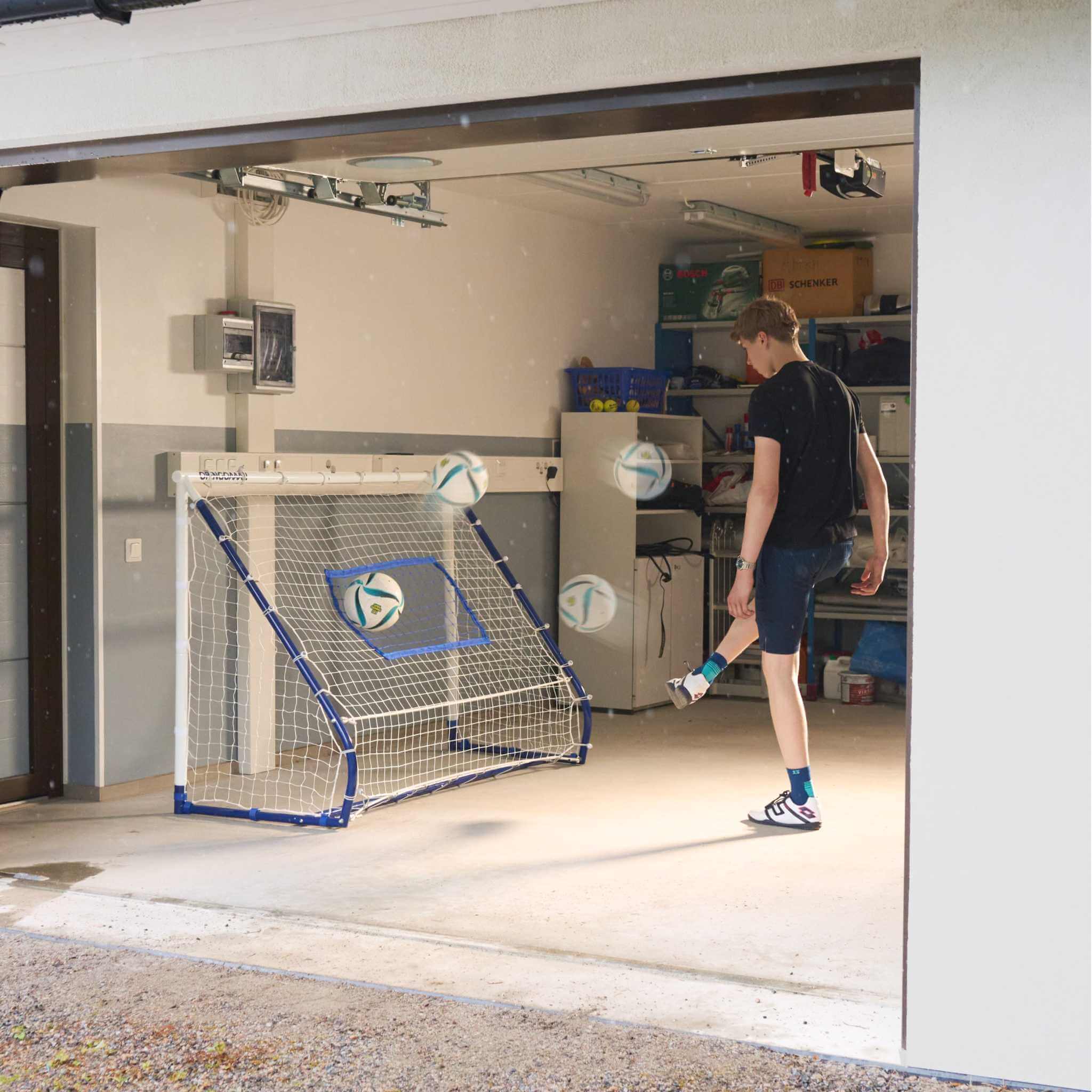
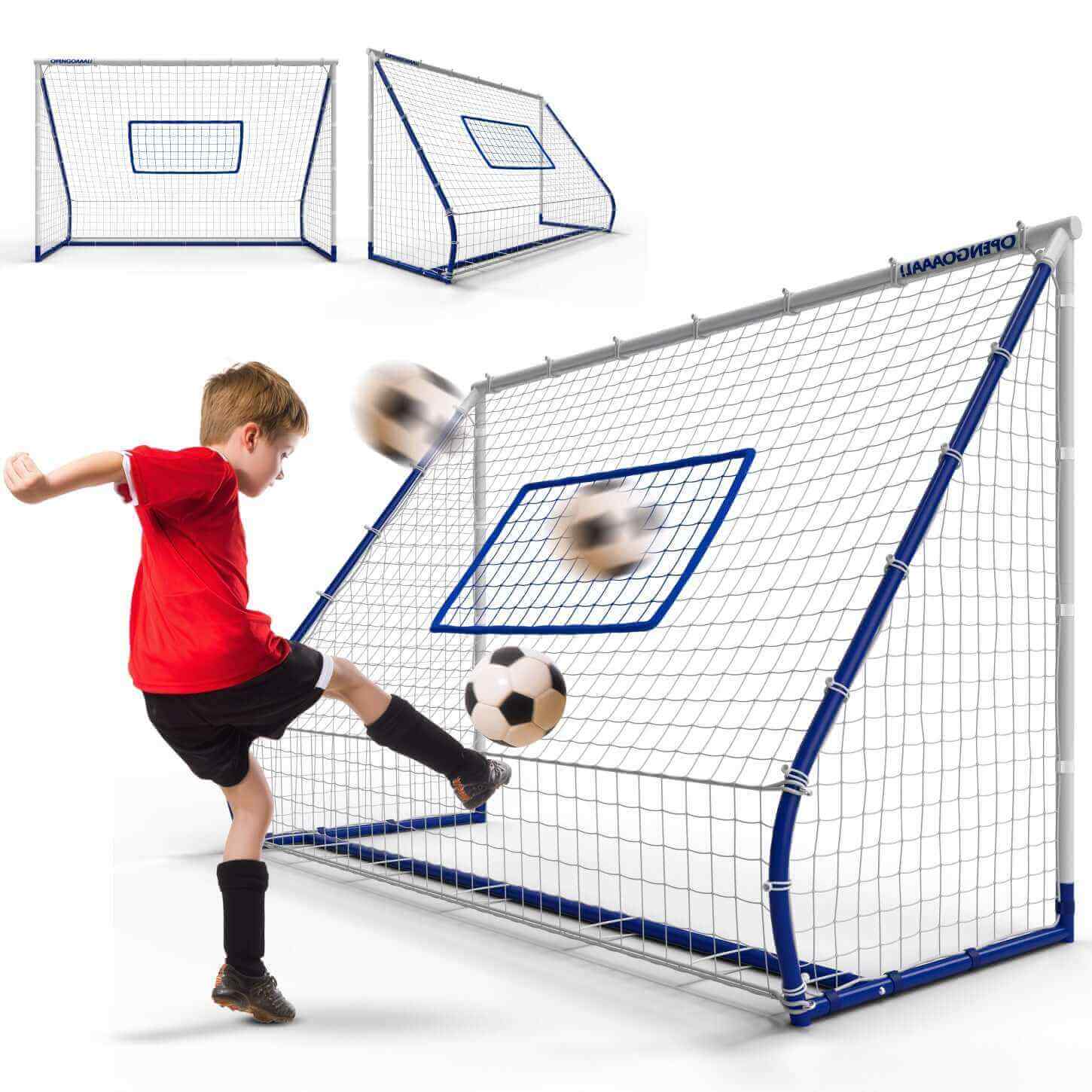
A regular family dinner your kid knows well is the right call: pasta night, tacos, or rice with chicken and vegetables. Nothing new, nothing very greasy, and early enough that everyone's in bed on time. If they want to kick a ball around first, keep it to an easy 10 minutes of passing. A backyard Open Goaaal® 3-in-1 Soccer Goal Trainer combines a goal, rebounder and backstop, so the ball comes back and a short session stays short instead of turning into a hunt along the fence.
1 to 2 hours before the game
A lighter meal or a snack, mostly carbs: toast or half a bagel with a little peanut butter, cereal with milk, or a banana and some crackers. This is the window where KidsHealth's "lighter meal or snack" advice applies.
Right before the game
Small or nothing. The Academy's advice is to keep snacks light as you get closer to game time, so a few crackers or half a granola bar in the 30 to 60 minutes before the warm-up is plenty, along with water.
During the game
Mostly water. KidsHealth advises water before physical activity and every 15 to 20 minutes throughout, and the Academy suggests about ½ cup every 15 minutes during activity. Halftime orange slices are a fine tradition. Sports drinks have a narrower job: KidsHealth says they can be a good choice for kids who do intense physical activity for more than one hour, and the Academy keeps water as the go-to for anything under 60 minutes.

What should players eat at a tournament with several games?
Let the gap between games decide, using the same two rules each time. Three hours or more until the next kickoff leaves room for a real meal. Under an hour means a small snack and water.
- 45 to 90 minutes between games: a snack only, such as half a bagel, crackers, a banana or orange slices, plus water.
- About 2 hours: a lighter, carb-heavy mini-meal right after the first game, like a sandwich and fruit, then nothing heavy.
- 3 hours or more: a proper lunch, then a light snack before the next warm-up.
Between and after games, the Academy points to bananas and fat-free or low-fat yogurt or milk, which contain potassium and carbohydrates. A bag of bananas and a few yogurt tubes on ice cover most of a tournament Saturday. The rest of the cooler: a big water jug plus a named bottle per player, oranges and apples, bagels, crackers and pretzels, sandwiches, ice packs, wet wipes and a trash bag. If you still need something to carry the gear, our roundup of soccer backpacks covers the options.
FAQs
What should you not eat before a soccer game?
Greasy, fried and very rich food in the last few hours. The Academy says greasy, fried foods and high-fat desserts can leave an athlete feeling tired and sluggish, and puts it bluntly: skip the fries or pizza before practice. Save them for after the final whistle, where they're a perfectly good team tradition. Anything your kid hasn't eaten before is worth skipping too.
Do professional soccer players eat before a game?
Yes, and on a plan. UEFA's 2020 expert group statement on nutrition for elite players (UEFA, October 2020) includes carbohydrate-specific recommendations for before, during and after matches, calling carbohydrate the main fuel for the sport. Youth players don't need a pro's meal plan, but the same idea of carbs at the right time carries over.
What is good to eat on the morning of a soccer game?
A carb-based breakfast timed to the kickoff: oatmeal with fruit, eggs on toast, or cereal and milk when there are 3 hours or more to go, and something lighter like toast with peanut butter for an early game. Check the table above for your kickoff time.
Does eating before a soccer game give you energy?
Food is where the energy comes from. KidsHealth puts it simply: carbohydrates provide energy for the body. The timing matters as much as the food, since a meal eaten too close to kickoff is still being digested when the whistle goes.
What if my kid is too nervous to eat?
Offer something small and familiar earlier in the morning, like a banana or a few crackers, keep water close, and have the post-game snack ready.
This article is general information, not medical advice, diagnosis or treatment. For a persistent or worsening symptom, or any concern about your health, speak to a qualified healthcare professional.
Before the next game
Find the kickoff time on the schedule, read across the table and set two phone alarms, one for the meal and one for the snack. Pack the cooler the night before. At the field, run our 10-minute soccer warm-up. If the season is getting serious, our soccer conditioning drills, how long a soccer game lasts and when soccer season starts help plan the rest, and our soccer goals are there for the backyard sessions in between.