
A toe tap in soccer is a stationary footwork drill: you touch the top of the ball with the sole of one foot, then the other, switching quickly while the ball stays still. It needs one ball and a few square feet of floor, and five minutes a day is plenty.
Below is how to do it properly, the mistakes that turn it into a stumble, a five-minute routine with timings, and the variations to add once the basic version feels easy.
What are toe taps?
Toe taps (also called foundations or ball taps) are alternating light touches on top of a stationary ball with the front of the sole. The ball doesn't roll anywhere. The work is all in the feet: lift, touch, swap, touch, as if you were jogging up a step that happens to be round.
Coaches like them for two reasons. They're the simplest way to get a lot of contacts with the ball in a small space, and they teach the body position used for most close ball work. US Youth Soccer's coaching manual describes that position for dribbling as staying on the balls of the feet, knees slightly bent, arms out a little for balance and a slight lean forward at the waist (US Youth Soccer Skills School manual). A good toe tap looks exactly like that.
They also work as a warm-up. Thirty seconds of quick taps gets the feet moving before a session, and for kids they're an easy first step in ball mastery before moving on to rolls, pull-backs and juggling.
How do you do toe taps?
Set the ball in front of you and tap it with alternating feet, landing each foot back on the ground as the other goes up. Here is the order we teach it in.
- Place the ball. Put it on flat ground about a foot in front of your toes. On grass, find a flat patch or the ball will wobble.
- Get set. Stand on the balls of your feet with knees bent and arms slightly out. Look down at the top of the ball.
- First touch. Lift one foot and rest the front of the sole, under the toes, lightly on top of the ball. Don't push down.
- Swap. Hop slightly so the touching foot comes back to the ground as the other foot lifts and touches the ball. Your feet pass each other in the air.
- Keep the rhythm. Slow and even for the first set. Speed up only when every touch lands on top of the ball and the ball hasn't moved.
- Work, then rest. Go for 30 seconds, rest for 30, and repeat. Build to 45 or 60 seconds of work as it gets easier.
For a young beginner, try it without a ball first. Tap a cone, a shoe or a flat marker on the ground so they get the rhythm before the ball starts rolling away.
What should you keep in mind?
The ball should stay on its spot. If it's rolling, something in the technique is off. These are the usual causes.
- Ball too close. If it's right against your toes, you end up stepping on it or rolling it back. Leave about a foot of space.
- Whole foot on the ball. Use the front of the sole only. Landing the full foot on top shifts your weight onto the ball and the ball rolls out from under you.
- Heavy touches. The touch is a tap, not a stomp. If you can hear it, it's too hard.
- Flat feet. Staying on the heels makes every swap slow. Up on the balls of the feet.
- Head stuck down. Beginners need to look. Once the rhythm is steady, try glancing up every few taps and finding a target in front of you, like a fence post or a parent holding up fingers.
What is a good 5-minute toe tap routine?
Five minutes with a ball, in three short blocks with rest between. The timings below are our own suggestion for a beginner to intermediate player. Cut the work periods to 20 seconds for a 6-year-old.
| Time | What to do | Focus |
|---|---|---|
| 0:00 to 0:30 | Slow toe taps | Every touch on top, ball still |
| 0:30 to 1:00 | Rest, walk around | |
| 1:00 to 1:45 | Quick toe taps | Speed, light touches |
| 1:45 to 2:15 | Rest | |
| 2:15 to 3:00 | Toe taps while turning a full circle around the ball | Eight to ten taps per lap, both directions |
| 3:00 to 3:30 | Rest | |
| 3:30 to 4:15 | Toe taps with a glance up every fourth tap | Head up, call out what you see |
| 4:15 to 5:00 | Free choice: best-of-three count in 20 seconds | Beat yesterday's number |
Run it before school, at the start of a backyard session or while a sibling is warming up. It fits in a driveway, a garage or a hotel room.
What variations can you add?
Once the standard tap is smooth, change the direction or the surface of the foot. Each of these keeps the ball close and the feet busy.
Circle taps. Keep tapping while you step around the ball, first clockwise, then counterclockwise. It's the variation in the routine above, and it's harder than it looks because your hips keep changing angle.
Forward and back. Tap, then roll the ball an inch forward with the sole, tap again, roll it back. The ball moves a little, but it never leaves your control.
Inside taps (tick-tocks). Stand over the ball and knock it gently between the insides of both feet. It's a different motion, side to side instead of up and down, and pairs well with toe taps in one session.
Moving taps. Tap your way along a line of cones, a step at a time. Our soccer footwork drills and ladder drills take quick feet further, and the agility drills you can do anywhere add changes of direction.
If your player likes structure, a marked training surface can help them repeat the same footwork pattern every day. Our SenseMat 360 footwork training mat is one option to look at.
FAQ
How many toe taps should you do a day?
There's no official number. Three to four sets of 30 to 60 seconds, most days, is a sensible place to start. Consistency matters more than the count.
What age can kids start toe taps?
As soon as they can balance on one foot for a second or two. Start without a ball for preschoolers, tapping a cone or a flat marker instead.
Do you do toe taps with the toes or the sole?
The front of the sole, just under the toes. Kicking the ball with the tip of the toe pushes it away.
Should you wear cleats for toe taps?
Wear what you'll train in: cleats on grass, flat-soled sneakers on a hard floor. Socks on a smooth floor give you no grip at all.
Final thoughts: is it worth five minutes a day?
Yes. Five minutes of taps gives a young player a few hundred contacts with the ball, and all it takes is a ball and a patch of floor. Get the basic tap right first, ball still and touches light, then build the routine and add a variation each week. For a warm-up that puts toe taps alongside movement work, see our soccer warm-up drills.
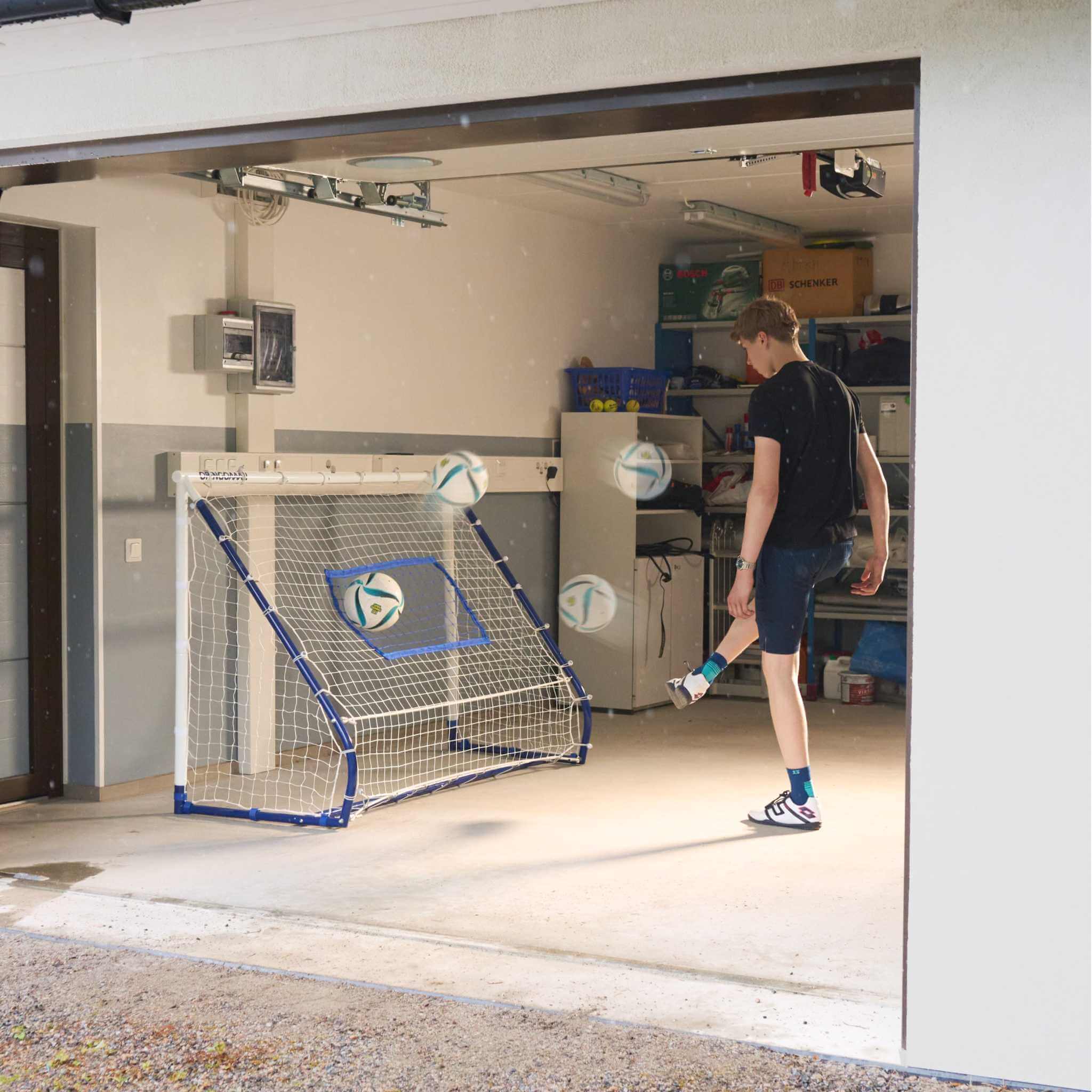
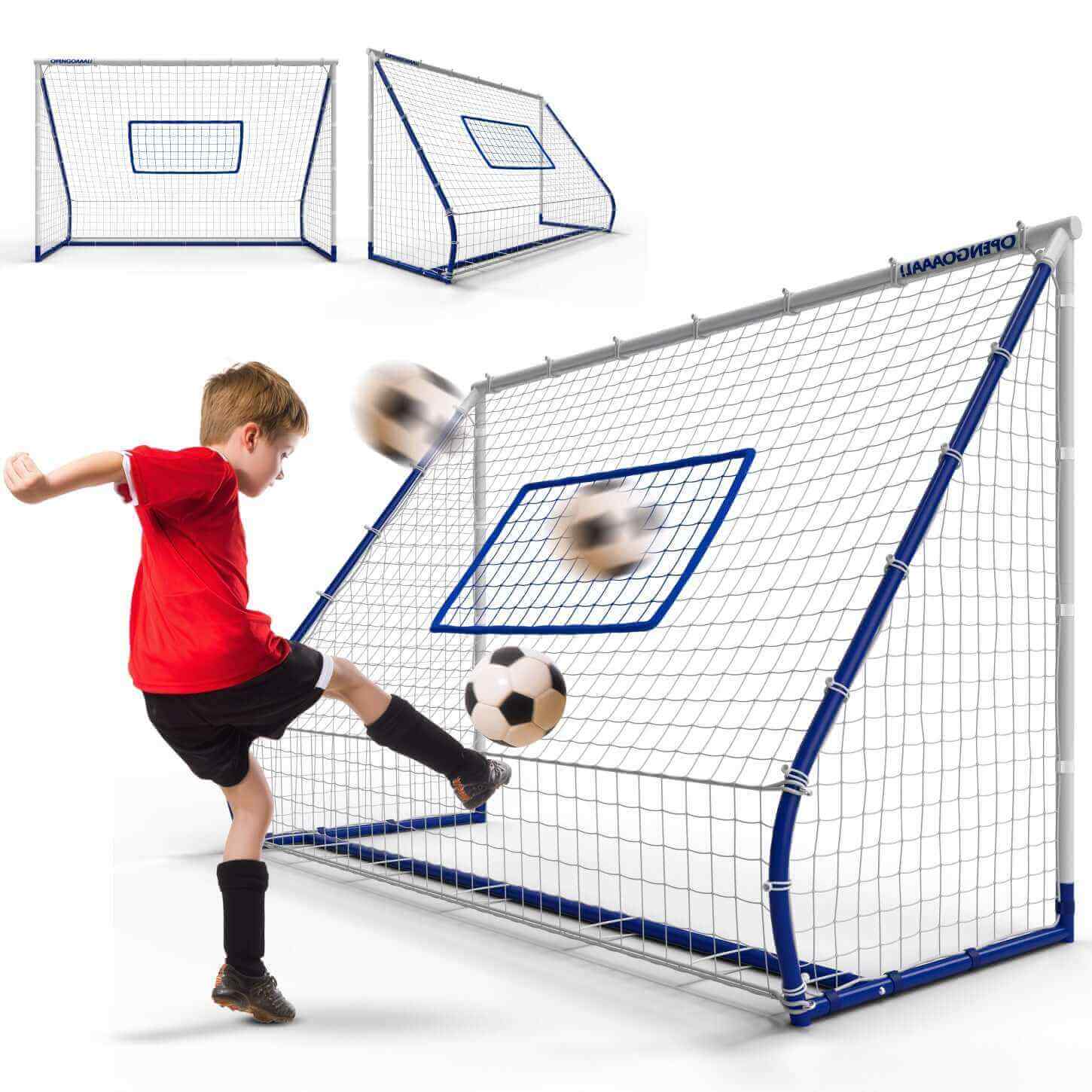
When the taps are done and it's time to shoot, the Open Goaaal® 3-in-1 Soccer Goal Trainer combines a goal, rebounder and backstop, so the ball comes back after a miss and practice keeps going.