
The best soccer possession drills are small games with a numbers advantage, a pass target and a reason to keep the ball: an overload, neutral players, gates or a target square. Below are seven that cover most practice nights, with player counts, space in yards and what to coach in each.
All seven work from about U10 to high school. Pick by how many players you have on the night. The table below sorts them that way, and every drill after it follows the same order.
| Drill | Players | Space | Main idea |
|---|---|---|---|
| 1. Overload without a keeper | 11 to 16 | Half field, two goals | Use the extra players |
| 2. Release the neutrals | 10 to 14 | 40 x 30 yards, two mini goals | Earn the overload |
| 3. Two teams against one | 9 to 18 | 25 x 25 to 35 x 35 yards | Pass count against the clock |
| 4. Four team possession | 12 to 16 | 30 x 30 yards with corner boxes | Short passes, then a switch |
| 5. English squares | 9 to 15 | Two 20 x 15 yard boxes, 10 yards apart | Keep it, then transfer it |
| 6. Find the final pass | 6 to 12 | 30 x 25 yards, 2 x 2 yard target box | Patience before the key pass |
| 7. Spread the field with gates | 8 to 14 | 35 x 35 yards, a gate in each corner | Width and switching play |
Space is our suggestion for teens. For U10 to U12 players, take five yards off each side. U.S. Soccer's game formats cap U9 and U10 at 7v7 and U11 and U12 at 9v9, so keep teams in these drills at or under those numbers for those ages.
1. Overload without a keeper
Play a normal small-sided game on half a field with a goal at each end, but only one team gets a goalkeeper. The team without a keeper gets two or three extra field players instead. First to five goals wins.

The bigger team has the ball more and has to work the goal through patient passing. The smaller team, with the keeper behind them, defends compactly and looks for a quick counter or a long-range shot when they win it back. Swap the keeper to the other team after each game.
What it teaches
The overload team learns to spread out the moment they win the ball. US Youth Soccer's ODP Player Manual (Jan. 2017) puts team shape first in its list of possession principles: when you have the ball, make the field as big as possible. The smaller team practices staying tight and playing quickly, often one or two touches, before the extra players close them down.
2. Release the neutrals
Mark out about 40 x 30 yards with a mini goal on each end line. Put a neutral player on each corner, and a fifth in the center circle if you have the numbers. Neutrals are frozen in place at the start. Split everyone else into two teams.

The team with the ball needs a set number of passes, five is a good start, before they can play the ball to a neutral. That pass "releases" the neutral, who joins the attack until the ball is lost. Only then can the team go for goal. The defending team presses to stop the count. Swap roles every three to four minutes.
What it teaches
Players learn that the numbers advantage has to be earned. Once a neutral joins, the attacking team should stretch wider to use the extra player rather than crowding the ball. Coach the defenders to press the passer before the count gets high.
3. Two teams against one
Split the squad into three equal teams, three to six players each. Two teams combine to keep the ball against the third for 60 seconds. Count completed passes. Then rotate so a new team defends. After three rounds, the defending team that gave up the fewest passes wins.

Size the area to the group. Three teams of three can play in 25 x 25 yards. Three teams of six need 35 x 35 or more. Add a rule each round: two touches, then one; or no player can receive two passes in a row.
What it teaches
With twice as many players on the ball, the attacking group has no excuse for standing still, so the drill shows quickly who moves into space after passing. The defending team learns to press together, because one player chasing alone gets nowhere against a 2-for-1 overload.
4. Four team possession
Mark a 30 x 30 yard square with a smaller 8 x 8 yard box in each corner. Split into four teams of three or four, one team per corner box. Each team sends one defender to the middle of the big square.

Play the ball into one corner box. That team needs five passes inside their box, then plays a pass to another corner. One defender from the middle runs into the box with the ball to pressure, while the other defenders stay central to block the long pass. The team's own defender can drop back into their box to help keep the ball.
What it teaches
Short passing in a tight box, then a longer pass under pressure. The switch is the moment to coach: the ODP manual's principle that the ball doesn't stay in one area for long fits here, because a team that keeps passing in its own corner eventually loses it. It also doubles as a warm-up because everyone is involved from the first whistle; slot it after the movement work in our soccer warm-up drills.
5. English squares
Lay out two 20 x 15 yard boxes with 10 yards of open space between them. Split into three teams. Two teams stand in the boxes, one per box. The third team waits in the middle zone as defenders.

Play the ball to one box. Two defenders run in from the middle. The team in that box needs seven passes in a row, then plays a ball across the middle to the other box. If they do it, the defenders go back to the middle and the drill restarts at the other end. If the defenders win the ball, they swap places with the team that lost it, which now defends from the middle.
To make it harder, send three defenders in, or cap the attacking team at two touches.
What it teaches
Keeping the ball at speed in a small space, then picking the right moment for a longer pass. The pass across the middle needs pace and accuracy, and the receiving team needs to be spread out and ready before it arrives.
6. Find the final pass
Mark a rectangle about 30 x 25 yards with a 2 x 2 yard box in the middle. Play with the attackers outnumbering the defenders: 4v2, 5v3, 6v4 or 7v5 depending on who turns up.
The attackers need six to ten passes, depending on the group. When they reach the count, one attacker can run into the middle box. A completed pass to that player in the box scores a point. If the defenders win the ball, they score a point. First to five wins.
What it teaches
Patience, then timing. The middle box is guarded, so attackers have to keep the ball until a passing lane opens and the runner arrives at the right moment. Too early and the runner is marked; too late and the count has to start over. Talk to the runner about when to go, not just where.
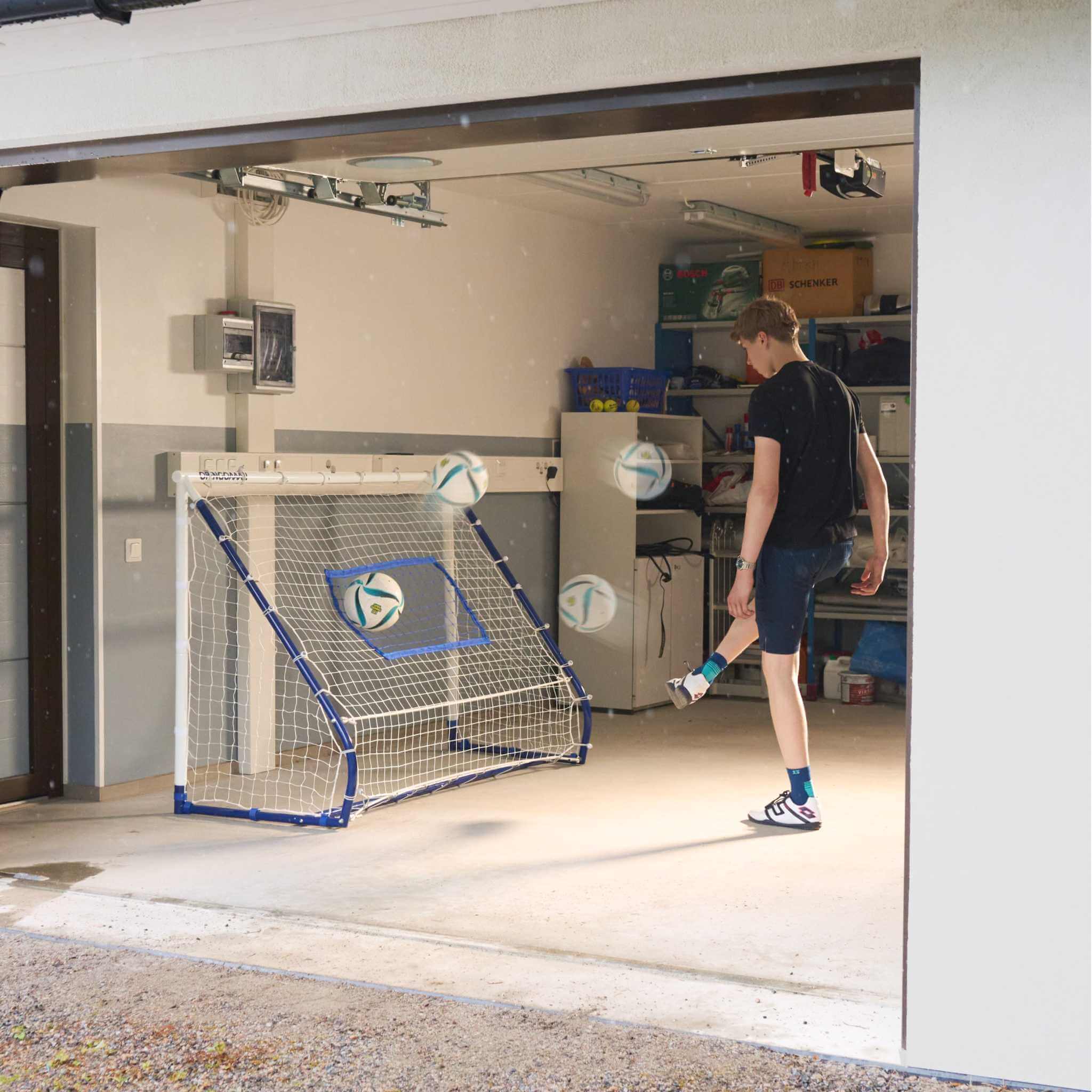
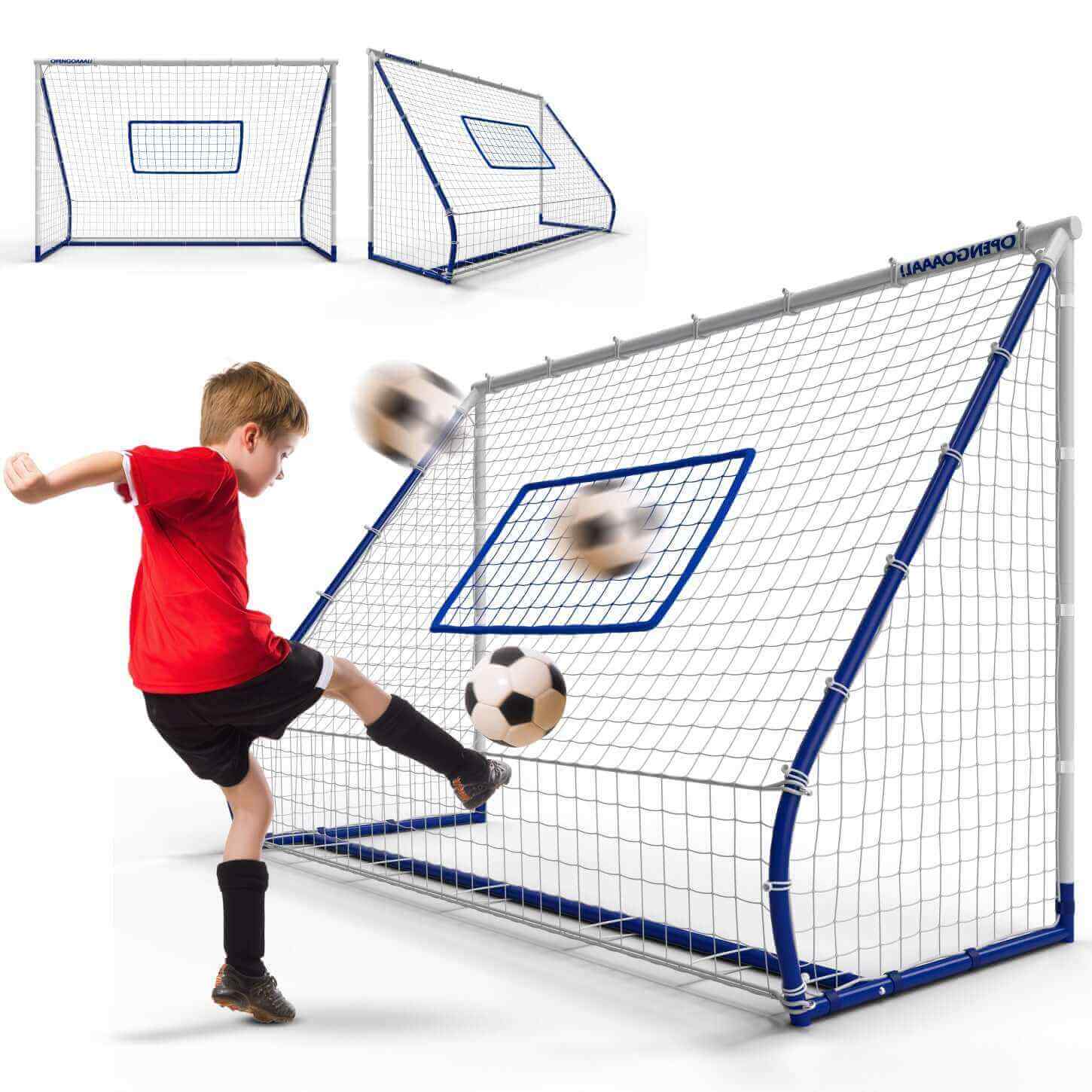
If you're running this one in the backyard with a smaller group, swap the middle box for a goal and finish each sequence with a shot. The Open Goaaal® 3-in-1 Soccer Goal Trainer is a goal, rebounder and backstop in one, so a missed final shot comes back into play and the next sequence starts right away.
7. Spread the field with gates
Use a square about 35 x 35 yards. In each corner, set two cones about 3 yards apart, angled across the corner, to form a gate. Play two even teams.

A team scores by completing a set number of passes, say six, and then passing through any gate to a teammate on the other side. Play for eight minutes and count gates.
What it teaches
Width and switching. Teams that bunch around the ball run out of room fast, while teams that keep players near two or three different gates always have an option. Stop the game when everyone drifts to one side and ask which gate is open. The answer is almost always the one behind them.
What should you coach in every possession drill?
Three habits carry across all seven drills.
- Make the field big. When your team has the ball, spread out. Players near the ball should offer a short option; everyone else should be wide or deep.
- Move after you pass. A player who passes and stands still gives the receiver one fewer option.
- Play quickly. The ODP manual's speed-of-play principle asks for mostly one-touch and two-touch passing, with dribbling saved for the moments that call for it.
For the smallest version of these ideas, start with our rondo soccer guide. For quick combinations between two players, see give-and-go drills, and for passing technique on its own, our 8 soccer passing drills.
FAQ
What is a good possession drill for a small group?
Find the final pass works with six players (4v2). For four or five, a rondo is the better choice.
How long should possession drills last?
Most work best in rounds of two to four minutes with a short rest, for 15 to 20 minutes in total. Shorter rounds keep the pressing sharp.
What age should you start possession drills?
Simple versions with a numbers advantage work from about U9 and U10. Touch limits, neutral players and pass counts suit U11 and older.
Are possession drills the same as rondos?
Rondos are one kind of possession drill, with fixed outside players and defenders in the middle. The drills here use two or more full teams moving around a larger area.
How do you choose the right possession drill?
Count your players, then pick from the table at the top. Start with the simplest rule, keep score, and add one constraint at a time once the group can hold the ball. When possession drills start going well, the next step is turning that possession into chances, which is where our soccer transition drills come in. For training at home between team sessions, browse our backyard soccer goals.