
The best soccer drills for 8 year olds are chase-and-dribble games where every kid has a ball: Fill the Bucket, British Bulldog, Ball Hog, Stuck in the Mud, the 1, 2, 3 Challenge, Sharks and Minnows and Kick the Coach.
All seven run at team practice or in a backyard with three or four kids. Check one thing before you pick: the format your child plays this season. U.S. Soccer's game-format guidance caps U7 and U8 at 4v4 and U9 and U10 at 7v7. And from the 2026-27 registration year, US Youth Soccer, US Club Soccer and AYSO count age groups on an August 1 to July 31 cycle (US Youth Soccer, June 10, 2025), so an 8-year-old could be registered at U8 or U9 this fall. Your league's chart has the final word.
1. Fill the Bucket
Fill the Bucket is a dribbling relay: teams race to park every ball inside a target. Mark a lane about 20 yards long with cones, drop a hula hoop or a small cone square (the bucket) halfway down for each team, and line each team up at one end with a ball per child.


On "go," the first player dribbles out, stops the ball dead in the bucket and sprints on to the far line. Reaching that line sends the next teammate. The team that fills its bucket first wins. Round two runs in reverse: dribble the balls back out.
Coaching notes
The ball has to stop inside the bucket, not roll through it. That single rule is what turns a footrace into a dribble. Brand-new players can carry the ball in their hands the first time through; kids with a season behind them get two cones to weave around on the way out.
2. British Bulldog
British Bulldog is a crossing game. Everyone tries to dribble from one end zone to the other while one or two "bulldogs" in the middle try to win the balls. Lay out a rectangle around 30 by 20 yards and cut it into three strips: safe, danger, safe.

Dribblers start in one safe strip with a ball each, and the bulldogs wait in the middle without one. Anyone whose ball gets knocked out of the rectangle joins the bulldogs for the next crossing. Play until one dribbler is left.
Coaching notes
We run the very first crossing as plain tag, no balls, and the rules are understood in half a minute. Bulldogs play the ball, never the player. If half the group ends up watching from the side, add a cap (everyone's back in after three crossings).
3. Ball Hog
Ball Hog puts most of the group inside a square with a ball and sends a few kids in without one to take it. About three in four start as hogs. The challengers wait outside the cones until your whistle.

Lose your ball and you can chase any ball in the square, your old one included. When a hog boots a ball over the line, the challenger fetches it, so nobody profits from kicking it away. Play 90 seconds, then change who starts outside.
Coaching notes
Ball Hog is where kids end up putting their body between the ball and whoever is chasing it, usually without being told. If you want a picture to show them, our soccer shielding guide has the body shape. Arms out for balance is fine; arms out for pushing is a foul.
4. Stuck in the Mud
Stuck in the Mud is freeze tag with a ball at every child's feet. Mark a square of roughly 20 by 20 yards. One or two mud monsters go without a ball, and everyone else dribbles inside the cones.

Get tagged and you're stuck, feet wide and ball held over your head. A teammate frees you by passing their ball between your legs. Stuck players are allowed to shout for help (they will). When nobody is getting caught, add a third monster.
Coaching notes
Kids start turning away from a monster on their own. Once you see it, show one turn, a pull-back with the sole of the foot, and ask for it on the next escape. Then let the game carry on.
5. 1, 2, 3 Challenge
In the 1, 2, 3 Challenge you call a number and the two kids holding it, one from each team, race in to play 1v1 to a goal. Seat the teams on opposite sides of the goal, number everyone, roll a ball into the middle and shout.


A round ends on a goal or when the ball leaves the area. Calling two numbers makes it 2v2; three makes it 3v3. If your league uses a goalkeeper, U.S. Soccer's U7-U8 coaching guide asks for every player to get a turn in goal, so rotate the keeper every few rounds.
Coaching notes
Put the ball where shots stay short. That same U7-U8 guide lists shooting from 5 to 10 yards, which is a good starting distance. For kids already in 7v7, the U9-U10 guide introduces passing and shooting from mid-range, with a maximum of 20 yards.
6. Sharks and Minnows
Sharks and Minnows plays like British Bulldog at a higher tempo. Minnows start at one end with a ball each; two sharks in the middle try to kick those balls out. A minnow whose ball goes out becomes a shark, and every minnow who reaches the far side survives the round.

When a younger sibling joins, shrink the space, or the sharks never catch anyone. Our Sharks and Minnows guide has more versions, including one where minnows can pass to each other.
Coaching notes
If the same quick kid wins every round, hand them a second ball or make them a shark for a turn, so the rest of the group stays in the game longer.
7. Kick the Coach
In Kick the Coach, every child dribbles a ball and tries to hit the adult with a pass while the adult walks or jogs around the area. A hit below the knee scores a point.

Nobody hitting you? Slow down. Getting peppered? Pick up the pace. In the backyard version the parent gets hit a lot, and that is most of the appeal for an 8-year-old.
Coaching notes
Ask for passes along the ground with the inside of the foot first, laces later. Kids have to lift their heads to find you, so you'll see them looking up between touches. All kicks stay below the knee.
Why choose game-style U8 soccer drills over lines?
The coaching guidance for this age group points that way. U.S. Soccer's U7-U8 guide asks coaches to keep instructions short, use simple words and phrases, give positive and specific praise, and break things up with regular short breaks. A game with one rule and an obvious winner fits that. A drill that takes three minutes to explain does not.
The seven games also slot into the session shape U.S. Soccer teaches grassroots coaches, Play-Practice-Play (February 27, 2018): open with a small game the kids run themselves, move to a targeted activity, then finish with a game played without interruption while the coach mostly watches. Stuck in the Mud makes a good opener, the 1, 2, 3 Challenge works in the middle, and Sharks and Minnows closes things out.
How do you get the most out of soccer drills for 8 year olds?
Match the drills to the format, keep each session short, and use two or three games rather than all seven. Here is how the two formats an 8-year-old might play compare:
| U8 | U9 (10-and-under rules) | |
|---|---|---|
| Maximum format | 4v4 | 7v7 |
| Game length | 4 quarters of 12 minutes | 2 halves of 25 minutes |
| Ball | Size 3 | Size 4 |
| Offside | No | Yes, from U9 |
| Heading | No | No |
Formats come from U.S. Soccer's game-format page. Game length, ball size and the heading ban for players 10 and under come from the US Youth Soccer Policy on Players and Playing Rules (December 5, 2025), Rules 303 and 305. Offside starting at U9 comes from U.S. Soccer's small-sided standards explainer (August 1, 2017). State associations can change the details, so your league's rules come first.
For the backyard, here's a simple week to build around team practice:
| Day | Session | Games from this list |
|---|---|---|
| Tuesday | Team practice | Coach's plan |
| Wednesday | Backyard, 20 minutes | Stuck in the Mud, then Kick the Coach |
| Friday | Backyard, 20 minutes | Fill the Bucket, then 1v1 rounds from the 1, 2, 3 Challenge |
| Saturday | Game day | Cheer from the sideline and keep the coaching for Wednesday |
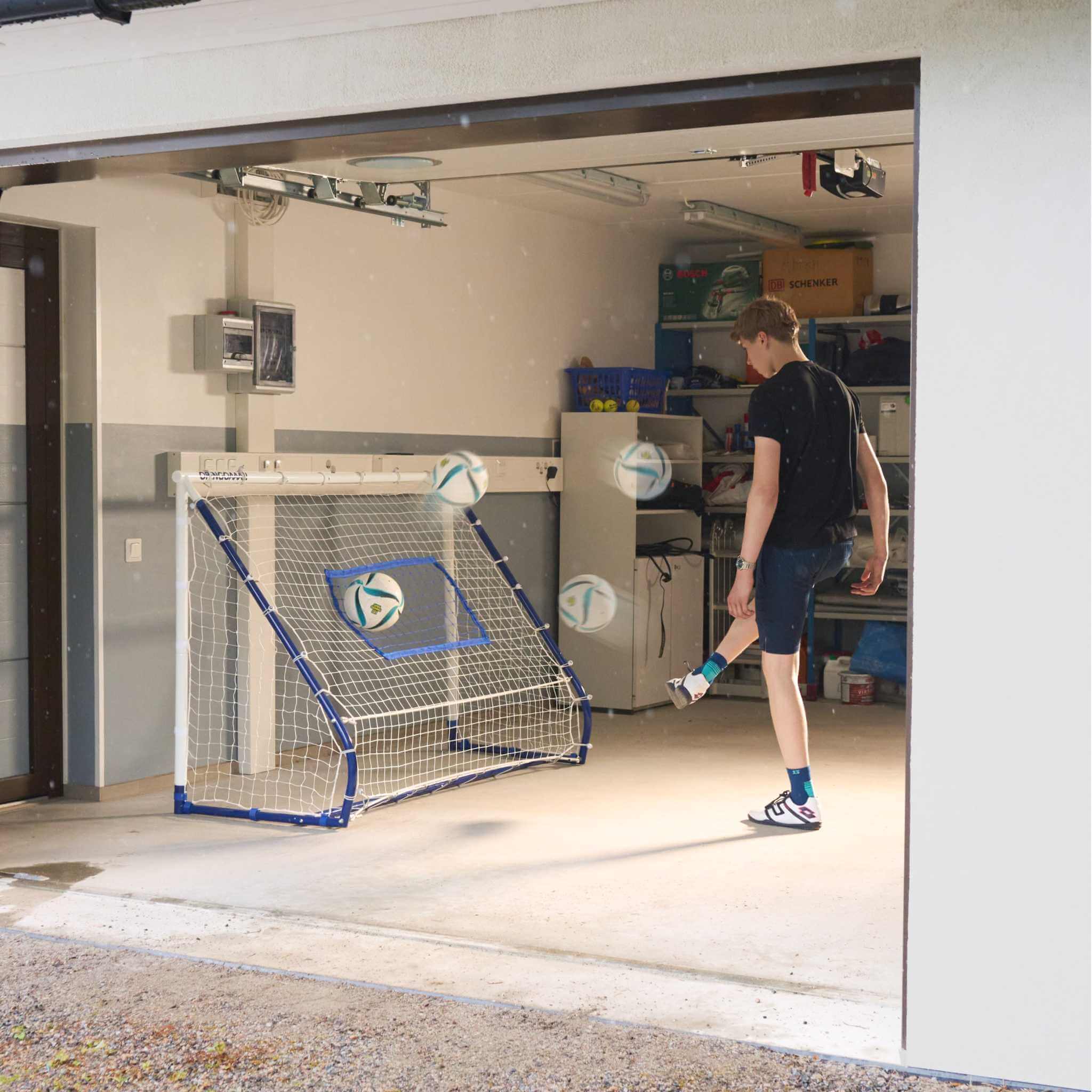
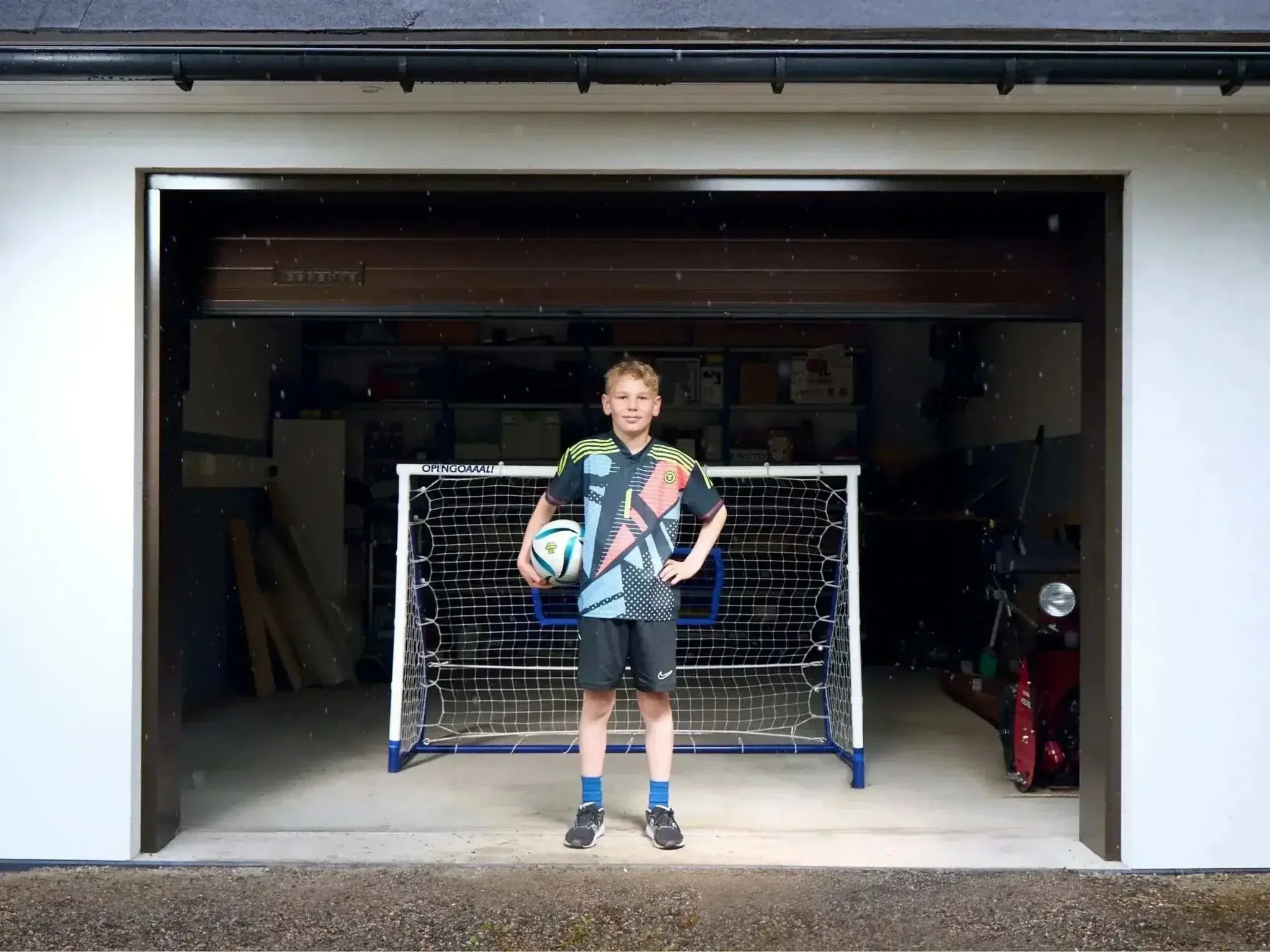
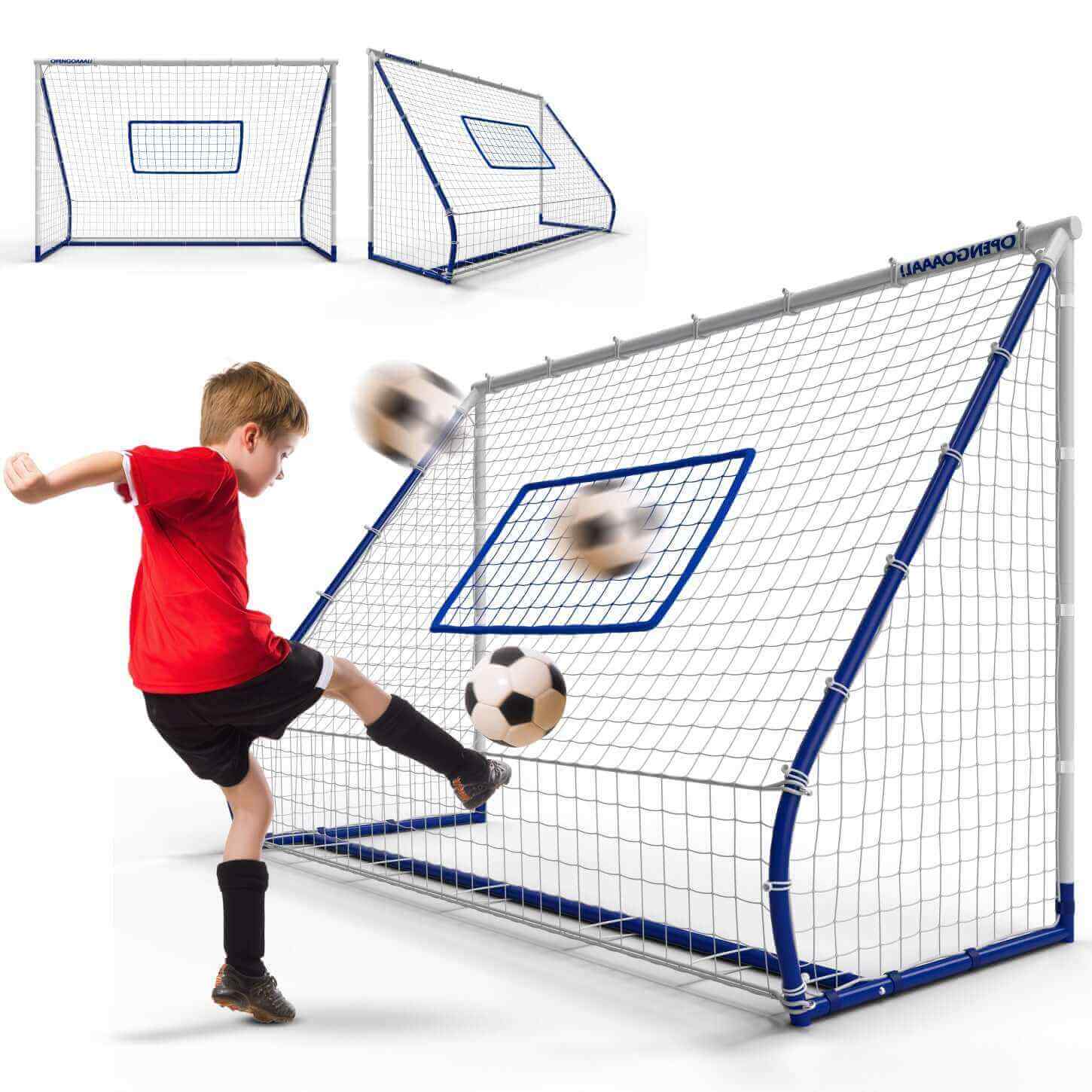
Bring the right ball (our ball size by age guide has the chart), six to eight cones and a phone timer. In our experience, the thing that eats a backyard session is walking after missed shots. The Open Goaaal® Junior 3-in-1 Soccer Goal puts a goal, rebounder and backstop in one frame. Its inner goal is 8 x 4.5 feet and the backstop is 8 feet tall and up to 16 feet wide, so most misses come back to the shooter instead of ending up next door. The first build takes about an hour and a half with two people, and the Junior build video walks you through it. For more two-player ideas, see our 1v1 soccer drills.

Questions parents ask about drills for 8-year-olds
Is my 8-year-old in U8 or U9?
That comes down to the birthday and the league. With the August 1 cycle in place from 2026-27, age groups line up more closely with school grades. U.S. Soccer's age group calculator shows the options for a given date of birth.
What size ball does an 8-year-old use?
A size 3 at U8 and a size 4 at U9 and U10, according to the US Youth Soccer policy table.
Can 8-year-olds head the ball?
No. US Youth Soccer's rule bars players 10 and under from heading in matches and in organized team practice, and U.S. Soccer's age-group guides say the same, so keep backyard games on the ground.
How many drills should one session have?
We use two or three: a game to start, one drill, a game to finish. A fourth mostly adds explaining.
This article is general information, not medical advice, diagnosis or treatment. For a persistent or worsening symptom, or any concern about your health, speak to a qualified healthcare professional.
Final thoughts
Choose two of the seven for this week and keep whichever one the kids ask for again. If the backyard ends up hosting most of the extra touches, the 3-in-1 Soccer Goal Trainer also comes in Standard and Large sizes for bigger yards. Got a younger sibling tagging along? Our U6 soccer drills use the same cones, and fun soccer games for kids covers the afternoons with three kids and one ball.