
The seven 11v11 soccer formations worth knowing are the 4-4-2, 4-3-3, 4-2-3-1, 4-1-4-1, 3-4-3, 4-4-1-1 and 3-5-2. For a youth team new to 11v11, a 4-4-2 is the simplest to teach. The others suit particular players, and each has a weak spot you need to plan for.
In the US, most teams meet these shapes at U13. U.S. Soccer caps play at 9v9 for U11 to U12 and opens 11v11 from U13, so a lot of coaches pick their first full-sided formation the summer before that season. The numbers in each formation run from the back line forward and leave out the goalkeeper.
4-4-2: the simplest place to start
Four defenders, four midfielders, two strikers. Every player has a partner and a clear job: two center backs cover each other, two central midfielders share the middle, the strikers work as a pair, and each wide midfielder has a fullback right behind them. When a 12-year-old suddenly feels lost on a big field, "find your partner" is an instruction they can follow.

The gap is in the center. Against three central midfielders, your two get outnumbered, and the strikers can end up isolated if everyone else sinks back. A common fix is to let the wide midfielders push up and down the flanks so they can get crosses in from the corners.
4-3-3: for a team that likes the ball
Three central midfielders form passing triangles all over the field. One sits in front of the back four (the "number 6" your kid may have heard about) and two play ahead, linking to a central striker and two wide forwards. A team that already plays a lot of rondos will recognize those triangles.

You pay for it at the back. Each fullback has only a winger in front of them, and if that winger doesn't recover, the fullback faces two attackers alone. Make tracking back part of the winger's job from the first practice.
4-2-3-1: built around one striker
Two holding midfielders protect the back four, three attacking midfielders play behind a lone striker, and the striker holds the ball up while the three run beyond. It's a stable shape for a team still learning to defend a big field. Before choosing it, work out whether your number 9 is more of a target or a runner; our center forward vs striker article explains the difference.

Watch for a lonely striker. If the three behind sit too deep, the ball never sticks up front and the team spends the game defending. It also asks a lot of the two wide attacking players, who have to cover the whole flank.
4-1-4-1: a crowded midfield
Picture a 4-5-1 where one of the five drops in front of the defense: that's the 4-1-4-1, with a single striker up top. It packs the middle of the field, so the other team struggles to play through you, and it suits a coach who wants the team hard to break down while players get used to 11v11.

Expect fewer chances. With one striker and four midfielders who are asked to defend first, you need wide players who can get forward quickly when you win the ball, or the striker spends the game alone.
3-4-3: wide and attacking
Three center backs, four across midfield and three forwards. The wide midfielders and wide forwards create two-against-one situations on the flanks, and when you lose the ball the shape can drop into a 5-4-1.

It asks a lot of the wide midfielders, who have to defend and attack the entire touchline. Without depth on the bench to rotate them, it's a hard shape to keep up for a full game. Most youth coaches save it for a team that has already played a season of 11v11.
4-4-1-1: a 4-4-2 with one forward dropped
This is a 4-4-2 with one striker pulled back into the space between the midfield and the front. That second forward helps out the two central midfielders without the defense or wide players changing anything, which makes it an easy adjustment during a game.

The midfield can still be outnumbered, so the midfielders need to move the ball quickly rather than hold it. Teach them to look for the pass before they receive.
3-5-2: keeping a back three from 9v9
Three center backs, two wing-backs, three central midfielders and two strikers. If your 9v9 team defended with three across the back, this keeps that structure, adds wing-backs on the flanks and plays a pair up front. Less relearning in the first month counts for a lot at U13.

The wing-backs carry the load. They cover a whole side of a field that may now be 100 yards or more, and when they push up there's space behind them. If you don't have two players who can do that for a full game, pick a back four. For the older idea of a spare defender behind the line, see our explainer on the sweeper.
How to coach 11v11 soccer positions
Start from your players, not from the formation. Whatever shape you pick, the same three habits make it easier to teach.
Play to your strengths
Choose the shape that fits the squad you have. Three midfielders who are comfortable on the ball point to a 4-3-3. One striker who can hold the ball up points to a 4-2-3-1. Two wide players with a lot of running in them make a 3-5-2 possible. If none of that describes your team, the 4-4-2 is a fine default.
Rotate players
Give players time in more than one position, especially in the first 11v11 season. A center back who has played wide understands what the fullback needs, and you may find a player is better somewhere you hadn't expected. Practice and lower-stakes games are the place to try it.
Don't overcomplicate it
Give each player one or two clear jobs and stick with the same formation for at least four to six weeks. Walk the shape on the field without a ball first, moving it as a group while a coach points the ball left, right, forward and back. Then play 6v6 or 7v7 inside the shape so the lines learn to keep their distance. Changing formations every Saturday teaches players nothing.
What changes when a team moves from 9v9 to 11v11?
Two more players, a much bigger field, a bigger goal and the full Laws of the Game. IFAB Law 3 (2026/27) allows up to eleven players a side, one of them the goalkeeper. Law 1 sets a field 100 to 130 yards long for non-international games and a goal 8 yards wide and 8 feet high. Leagues pick a U13 field size inside or below that range, so check yours. Our soccer field layout guide and regulation goal sizes have the markings.
Offside isn't new. U.S. Soccer's small-sided standards (01.08.2017) bring it in at U9. What's new is the distance between the lines. On a bigger field, a back line that drops too deep leaves a big gap to midfield, and an attacker who receives the ball there has time to turn. Age groups are moving too: from 2026-27, US Youth Soccer, AYSO and US Club Soccer switch to an August 1 to July 31 cycle (announced 10.06.2025), lining U13 up with a school grade.
Which formation fits your team?
| Formation | Choose it if | Watch out for |
|---|---|---|
| 4-4-2 | Your team is new to 11v11 and needs simple partner roles | Two central midfielders outnumbered |
| 4-3-3 | You have three midfielders comfortable on the ball | Fullbacks exposed if wingers don't recover |
| 4-2-3-1 | One striker can hold the ball up | Striker isolated if the three sit deep |
| 4-1-4-1 | You want to be hard to play through | Few players near the striker |
| 3-4-3 | Your wide players can run all game and the bench is deep | Tired wide midfielders late in games |
| 4-4-1-1 | You play a 4-4-2 but need help in central midfield | Midfield still outnumbered against a three |
| 3-5-2 | You played a back three at 9v9 and have two fit wing-backs | Space behind the wing-backs |
What does each position do in an 11v11 formation?
The jobs hold steady across all seven shapes, even when the numbers change. The goalkeeper organizes the back line and starts attacks, and at 11v11 their distribution covers a lot more ground. Center backs defend the middle and stay connected (our soccer defense positions guide covers each role). Fullbacks and wing-backs defend the wide channels first and overlap when the ball is safe. Holding midfielders screen the back line and recycle possession, while attacking midfielders and wingers link play and press when the ball is lost. Strikers score, hold the ball up and lead the press. For how these roles look at younger ages, read our youth soccer positions guide.
How a 3-in-1 soccer goal helps between team practices
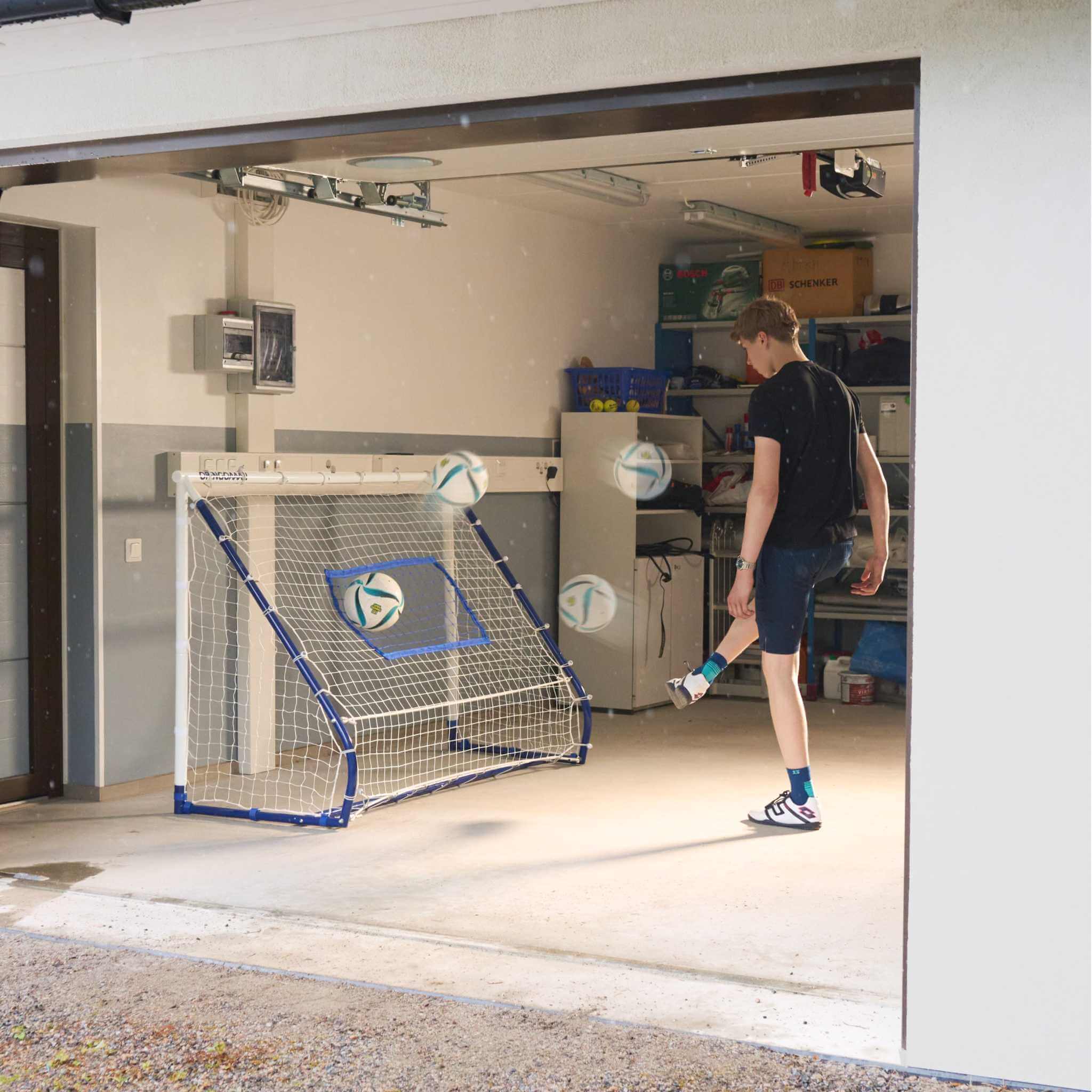
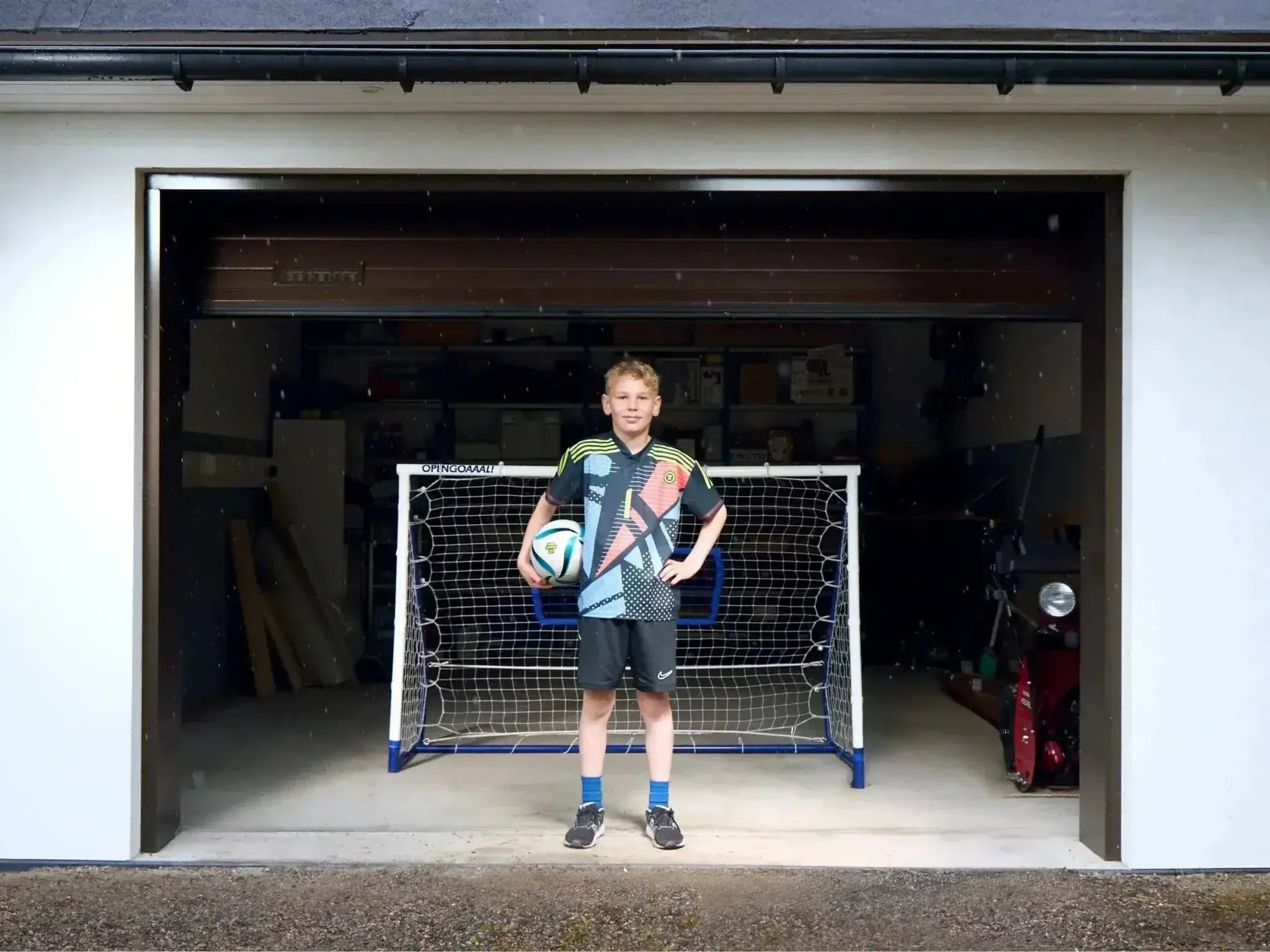
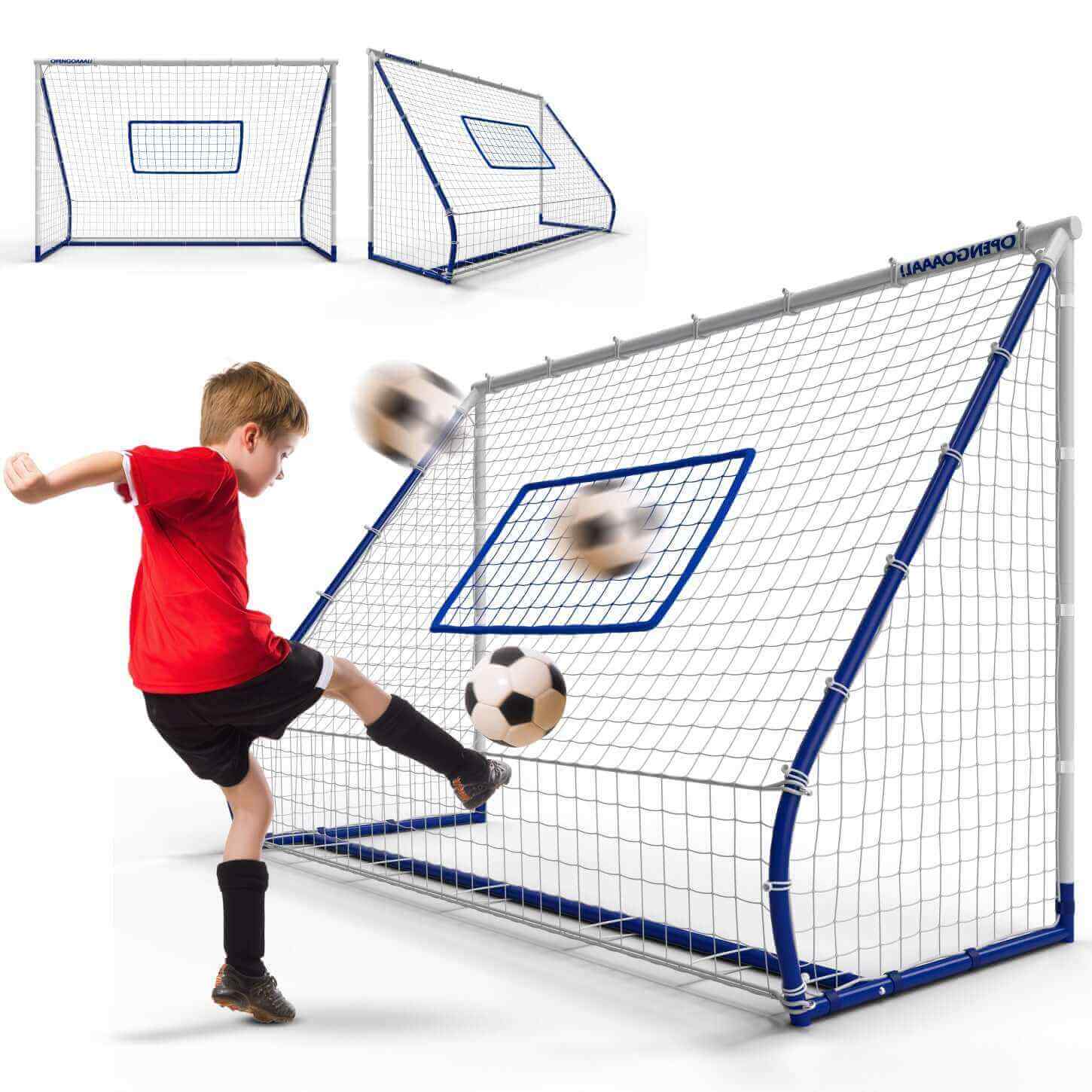
A formation is only as good as the first touch and pass of the players in it, and those come from individual reps. The Open Goaaal® 3-in-1 Soccer Goal Trainer is a goal, rebounder and backstop in one, so the ball comes back and solo passing and shooting practice keeps moving without a partner. Practice the moment the ball changes hands with our transition drills, because that's where a new shape breaks first.
Frequently asked questions
At what age do US kids start playing 11v11?
At U13. U.S. Soccer sets 9v9 as the largest format for U11 to U12 and 11v11 from U13 up.
How many players are on an 11v11 team?
Up to eleven per side on the field, one of them the goalkeeper. Under IFAB Law 3, a match can't start or continue if a team has fewer than seven players.
What is the best formation for U13 soccer?
There isn't one. A 4-4-2 is the easiest to teach. Pick a 4-3-3 or 4-2-3-1 if your players suit it, or a 3-5-2 if they played a back three at 9v9.
What does "number 6" mean in soccer?
Coaching shorthand for the holding midfielder in front of the defense, most often in a 4-3-3, 4-2-3-1 or 4-1-4-1.
Final thoughts
Start your first 11v11 season with a back four, usually a 4-4-2, unless your players clearly suit another shape. Keep it for at least a month, and teach the distance between the lines before anything fancy. Then work through the soccer IQ guide with your team for the decisions that sit inside every formation.