
Sharks and minnows is a dribbling tag game. Every "minnow" has a ball and tries to dribble from one end of a coned box to the other, while one or two "sharks" with no ball try to kick the minnows' balls out. Lose your ball and you join the sharks. Last minnow standing wins.
Plenty of U6 and U8 players already know it from recess, and it works just as well as a ten-minute opener for older groups. Below you'll find the rules, a setup table in yards by group size, how a round actually runs, four variations from the original playbook, and a version for two or three kids in the backyard.
What are the rules of sharks and minnows in soccer?
The rules fit on an index card. Every player except the sharks has a ball. The minnows line up on one end line, the sharks wait in the middle, and on the coach's call the minnows dribble across to the far end line. A shark who kicks a minnow's ball out of the box turns that minnow into a shark. The round ends when nobody is left with a ball.

- Start with two sharks for every eight to ten minnows. One shark alone rarely catches anyone after the first crossing.
- A ball counts as gone only when it leaves the box. A touch from a shark that stays inside is just a scare.
- Minnows must stay in the box. Dribbling out of bounds to escape counts as losing your ball.
- Sharks use their feet only. No pushing, no grabbing shirts, no slide tackles.
The point, from a coaching chair, is close control under pressure. A minnow who keeps the ball within a step of their feet and looks up to spot the sharks gets across. A minnow who boots the ball ten feet ahead and chases it usually doesn't. US Youth Soccer's Skills School manual (2017) lists dribbling as a first skill at U6 and tells players to let their eyes glance up to see the path between touches. That is exactly what this game asks for, without you having to say it twelve times.
How do you set up sharks and minnows?
Mark a rectangle with four corner cones. The minnows start on one short end, the sharks start in the middle, and the box should be long enough that a crossing takes a few seconds of real dribbling. Here are the sizes we'd start with.
| Group | Box size | Sharks to start | Notes |
|---|---|---|---|
| U6, 5 to 8 players | 15 x 20 yards | 1 (coach can be the second) | Walk the first round so everyone gets it |
| U7 to U8, 8 to 12 players | 20 x 25 yards | 2 | Standard version |
| U9 to U12, 10 to 16 players | 25 x 30 yards | 2 or 3 | Add a variation from round two |
| Backyard, 2 to 4 kids | 10 x 15 yards | 1 (often a parent) | See the small-group section below |
These are our starting points, not a rule. If the sharks win in fifteen seconds, make the box wider. If nobody ever gets caught, shrink it or add a shark. The age bands line up with U.S. Soccer's game formats by age, which cap play at 4v4 for U7 and U8, 7v7 for U9 and U10 and 9v9 for U11 and U12, so the box sizes stay close to the space kids that age actually play in on weekends.
Each minnow needs a ball in the right size for their age. If you're not sure which size that is, our soccer ball size by age guide has the chart.
How do you play sharks and minnows?
Line the minnows up on one end, put the sharks in the middle, and let the sharks start the round with a shout. "Fish, fish, come and play" or "shark attack" both work, and kids love being the ones who get to call it.
- On the call, every minnow dribbles toward the far end line at the same time.
- Sharks hunt any ball they can reach and try to poke it out of the box.
- Minnows who make it across stop their ball on the end line with the sole of their foot and wait.
- Any minnow whose ball goes out becomes a shark for the next crossing.
- Once everyone has crossed or been caught, the sharks reset in the middle and the survivors go back the other way.
Keep crossings going until one or two minnows are left, then crown the winners and start a new round with fresh sharks. A round with ten kids takes three or four minutes.
The original version had a small penalty for a lost ball before the player could become a shark: a lap of the box with the ball, a cone slalom, or a shot on goal before rejoining. We still like it for older groups because it keeps caught players touching the ball instead of standing around. For the youngest players, skip it and turn them straight into sharks so nobody sits out.
What variations can you try?
Once the group knows the basic game, change one rule each round. These four come from the original playbook and still hold up.
Increasing sharks
This is how most kids already play it. Every minnow who loses a ball becomes a shark for the rest of the round, so the box gets crowded fast. With 12 players, the last few crossings are two minnows against eight or nine sharks, which gets loud. The last minnow standing picks the first sharks for the next round.

Seaweed
Caught minnows don't become sharks. They put their ball under their arm and stand where they were caught as "seaweed." Seaweed can't move their feet but can reach out a leg to poke balls away from minnows dribbling past. Add a rule for the minnows too: if two minnows' balls bump into each other, both players turn into seaweed. Now they have to watch the sharks and each other, which is close to what a crowded game feels like.
One foot only
Round one, both feet. Round two, left foot only. Round three, right foot only. Any minnow who touches the ball with the wrong foot is caught on the spot, so a shark or a coach acting as referee needs to be watching. It slows the fast kids down and gives the weaker foot a lot of touches in a short time.
Win it and score
Good for a smaller group, under ten players. Put a small goal at each end of the box. A shark who wins a ball has to keep it and score in either goal before the minnow can win it back. If the shark scores, the minnow becomes a shark. If the minnow gets the ball back first, they carry on crossing.
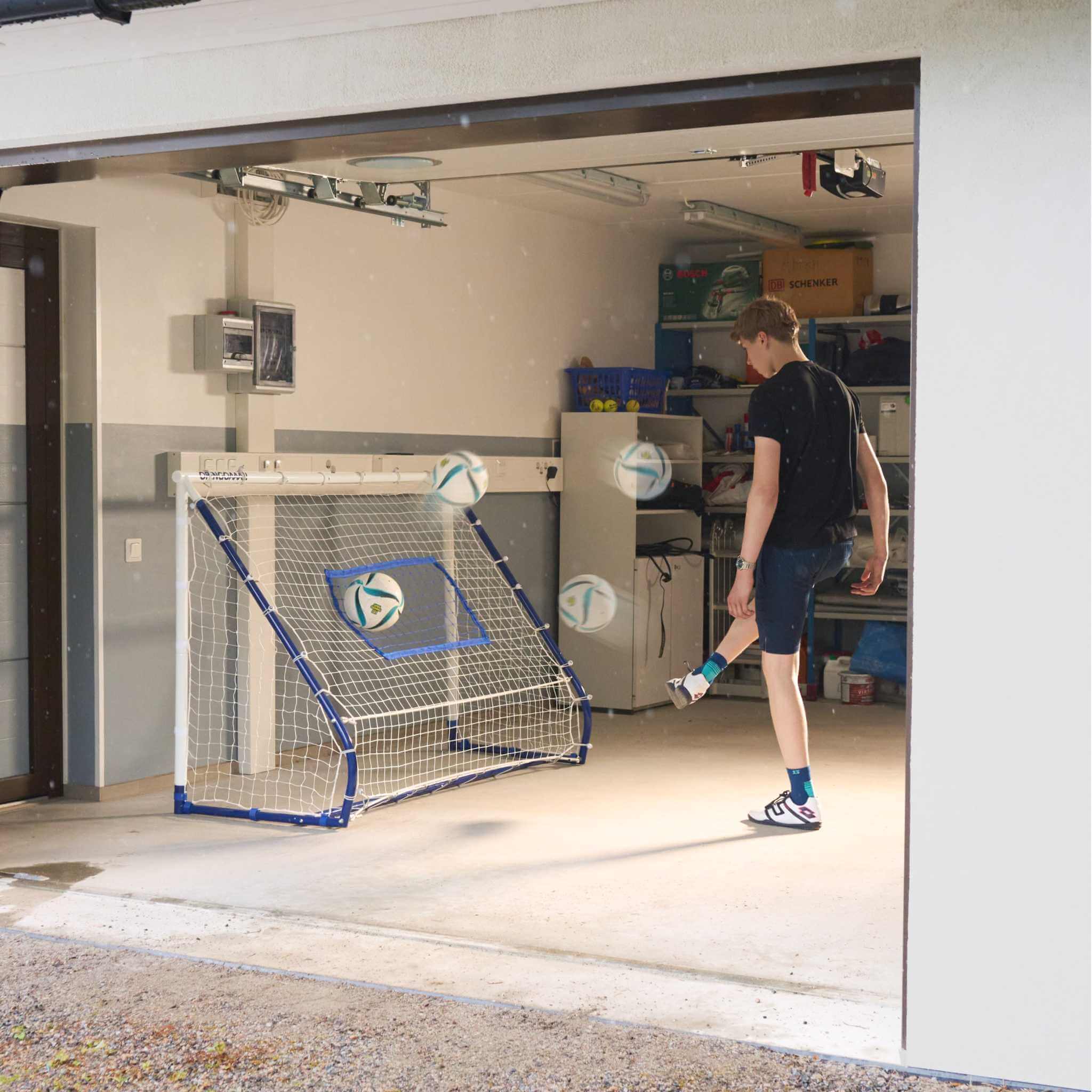
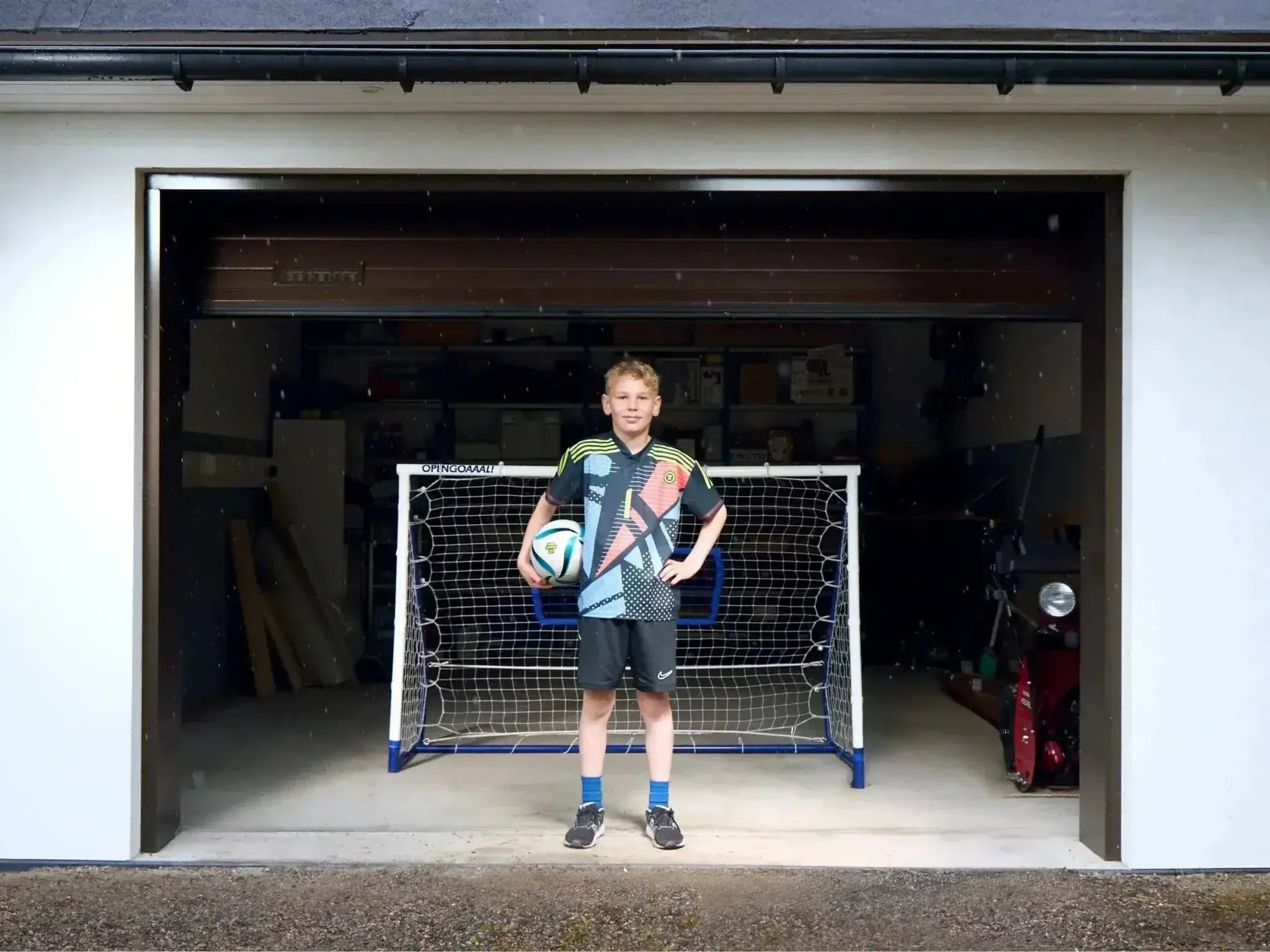
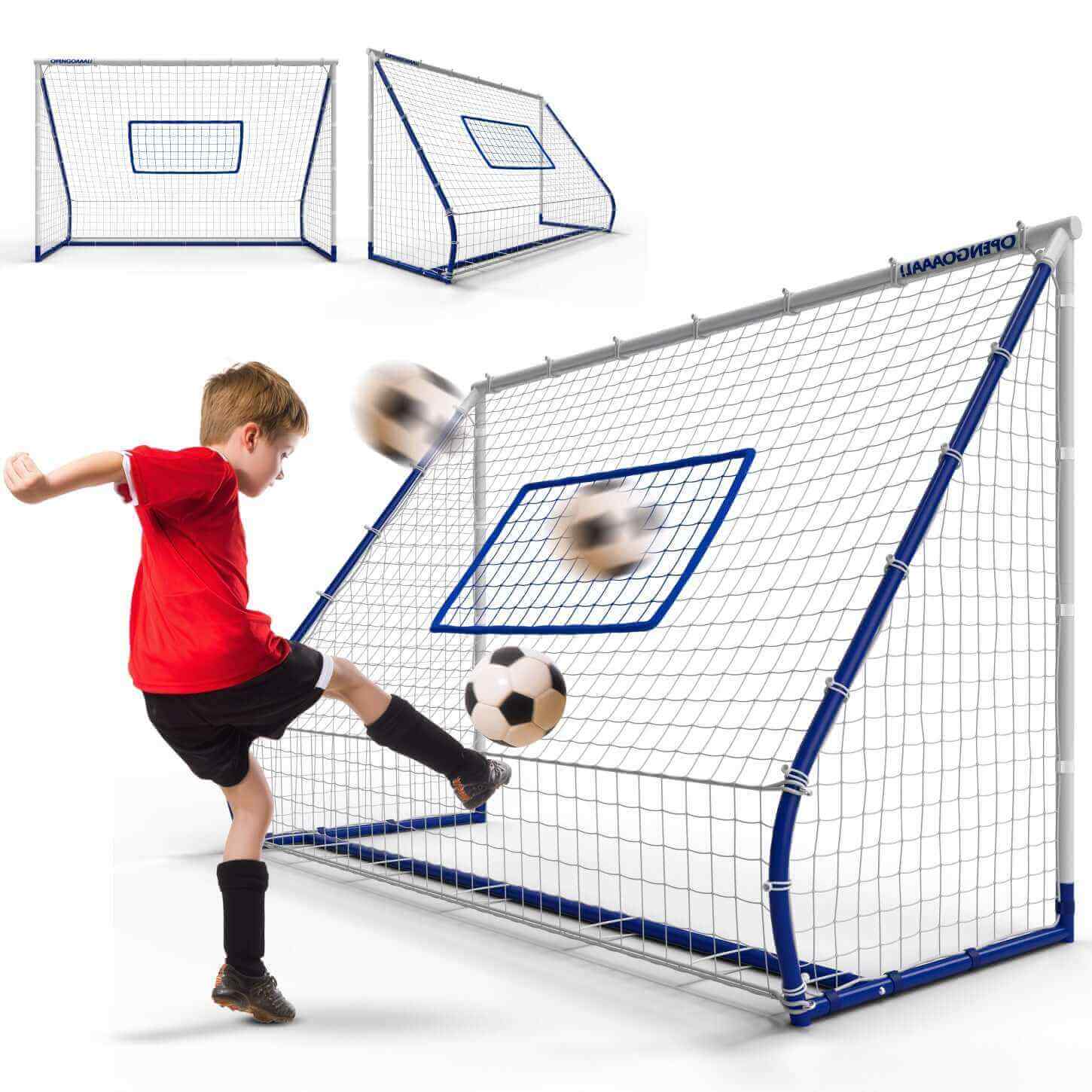
Now a lost ball isn't the end of it. The minnow has a few seconds to chase and defend, and the shark has to turn and finish under pressure. In the backyard, the Open Goaaal® 3-in-1 Soccer Goal Trainer fits this version well as one of the goals. It's a goal, rebounder and backstop in one, so a missed shot comes back into play instead of rolling under the fence and stopping the game.
Can you play sharks and minnows with just two or three kids?
Yes, with one change: the parent is the shark. Use a 10 x 15 yard box, give each child a ball and play "first to five crossings." A kid scores a crossing every time they get to the far end with the ball. If the parent knocks their ball out, the kid starts again from their own end line.
Two siblings can take turns as shark and minnow, three dribbles each, then swap. Play at walking pace for the first round if one child is much younger. For more games that work with a small group, try soccer tic-tac-toe or the list in our fun soccer games for kids.
What should coaches watch for?
The game runs itself once kids know it, which frees you to coach a couple of things from the side.
- Kids standing still. A minnow who stops in the middle with the ball under their foot is the easiest target in the box. Tell them to keep the ball rolling and change direction instead.
- Heads down. Ask "where's the nearest shark?" mid-crossing. If they can't point, they weren't looking.
- Big touches. The ball should be close enough that a shark can't step in between. Small touches, mostly with the inside and outside of the foot.
- Sharks who chase alone. Older sharks figure out quickly that two sharks working together trap a minnow against the sideline. Let them discover it.
Players who want to protect the ball with their body when a shark gets close can borrow from soccer shielding. For more ball-at-feet work afterward, our 6 soccer dribbling drills pick up where this game leaves off.

FAQ
How many players do you need for sharks and minnows?
Ten is comfortable: two sharks and eight minnows. It still works with five or six on a smaller box, and with two or three kids if a parent plays shark.
What age is sharks and minnows good for?
From U6 through U12. Younger players play the basic version; older groups use seaweed, one foot only, or win it and score to keep it hard.
How big should the playing area be?
Around 20 x 25 yards for U7 and U8 with ten players. Go smaller for U6 and backyard games, bigger for U9 and up. Adjust after the first round.
Do the sharks need a ball?
No. Sharks start empty-handed. In the win it and score variation, a shark keeps the ball they win and tries to score with it.
Is sharks and minnows worth a spot in practice?
For young players, it's one of the best ten minutes you can give them. Every child has a ball, every child is dribbling against real pressure, and nobody needs a long explanation before it starts. It fits the opening "play" block of U.S. Soccer's Play-Practice-Play model (Feb. 2018), which starts youth practice with small games where fun comes first. After that, move on to something more structured, like our U6 soccer drills.
If you're running it at home, finish with a few minutes of shooting. A backyard goal with a backstop, like the Open Goaaal 3-in-1, keeps the balls in the yard while the kids decide who's the shark next time.