
These 8 soccer passing drills cover three groups: four for any age, two for U8 players and two for U6. Most need 2 to 4 players, a ball each pair and a few cones, and every one of them has the distances in yards so you can set it up in a few minutes.
The quick-reference table comes first. After that, each drill has a setup, how it runs and what it's for, followed by answers to the questions parents and new coaches ask most about teaching passing.
| Drill | Players | Starting distance | Best for |
|---|---|---|---|
| 1. One-touch passing | 2 | 10 yards, closing to 3 | All ages |
| 2. Pass through traffic | 3 | 10 x 15 yard grid | All ages |
| 3. 1-in, 1-out | 5 or more | 12 yard square | All ages |
| 4. Meet the ball | 3 | 12 yards between servers | All ages |
| 5. Numbers passing | 6 to 8 | 20 x 20 yards | U8 |
| 6. Space wars | 8 or more | 20 x 20 yards | U8 |
| 7. Grid passing | 2 per grid | 6 yards | U6 |
| 8. Guard the castle | 4 | 10 yard square | U6 |
The age labels line up with U.S. Soccer's game formats, where U7 and U8 play 4v4 at most and the format grows to 7v7 at U9 and 9v9 at U11. Small groups in these drills mean more touches each, which matches what those formats are built for. The distances are our own starting points.
Soccer passing drills for all ages

1. One-touch passing
Setup. Two players, one ball, standing 10 yards apart.
How it runs. Pass back and forth with the inside of the foot. After each pass, the passer takes one step forward. When the pair is 3 yards apart, they start stepping back until they're at 10 yards again. Start with two touches (receive, then pass) and switch to one touch once most passes arrive on target. Run it for two minutes, then rest.
What it's for. Getting the weight of the pass right. A 3-yard pass and a 10-yard pass need very different amounts of power, and changing the distance every rep makes players adjust instead of hitting every ball the same.
2. Pass through traffic
Setup. A 10 by 15 yard grid split into three zones: a passer in each end zone and a defender in the middle.
How it runs. The two passers try to get the ball to each other along the ground, through the middle zone. They can move side to side in their own zone to find a gap. The defender stays in the middle and tries to intercept. Swap the defender after an interception or every 45 seconds.
What it's for. This is passing with someone in the way. The passer has to move the ball or themselves to open a lane, and disguise starts to matter. Kids know it as monkey in the middle and usually need no explaining.
3. 1-in, 1-out
Setup. A 12 yard square with a short line of players on each corner and one player in the middle.
How it runs. The first player on cone A passes into the middle player. The middle player receives, turns and passes to the front player on cone B. The player who passed in from A runs into the middle to replace the middle player, who jogs to the back of line B. Then B passes in, and so on around the square. Slow at first. It takes a few rounds before everyone knows where to go.
What it's for. Receiving to turn: the middle player has to open their body to see the next line before the ball arrives. For a three-player version built on the same idea, see our give-and-go drills.
4. Meet the ball
Setup. Two servers 12 yards apart, each with a ball, and one worker in the middle. Mark a small gate of two cones 2 yards in front of each server.
How it runs. The worker checks toward server one, steps through the gate to meet the pass and plays it straight back with one touch. They turn and do the same with server two. Thirty seconds of work, then rotate.
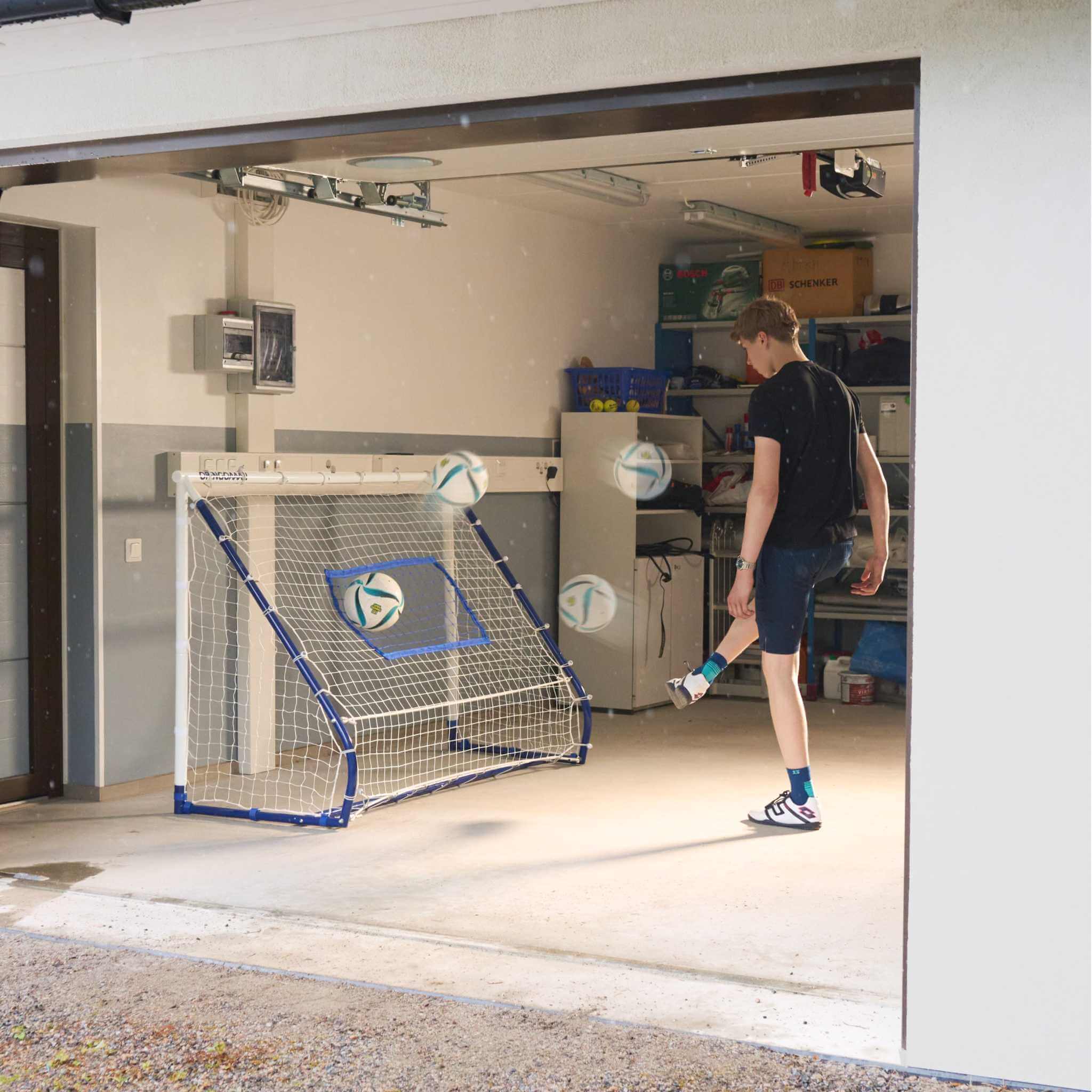
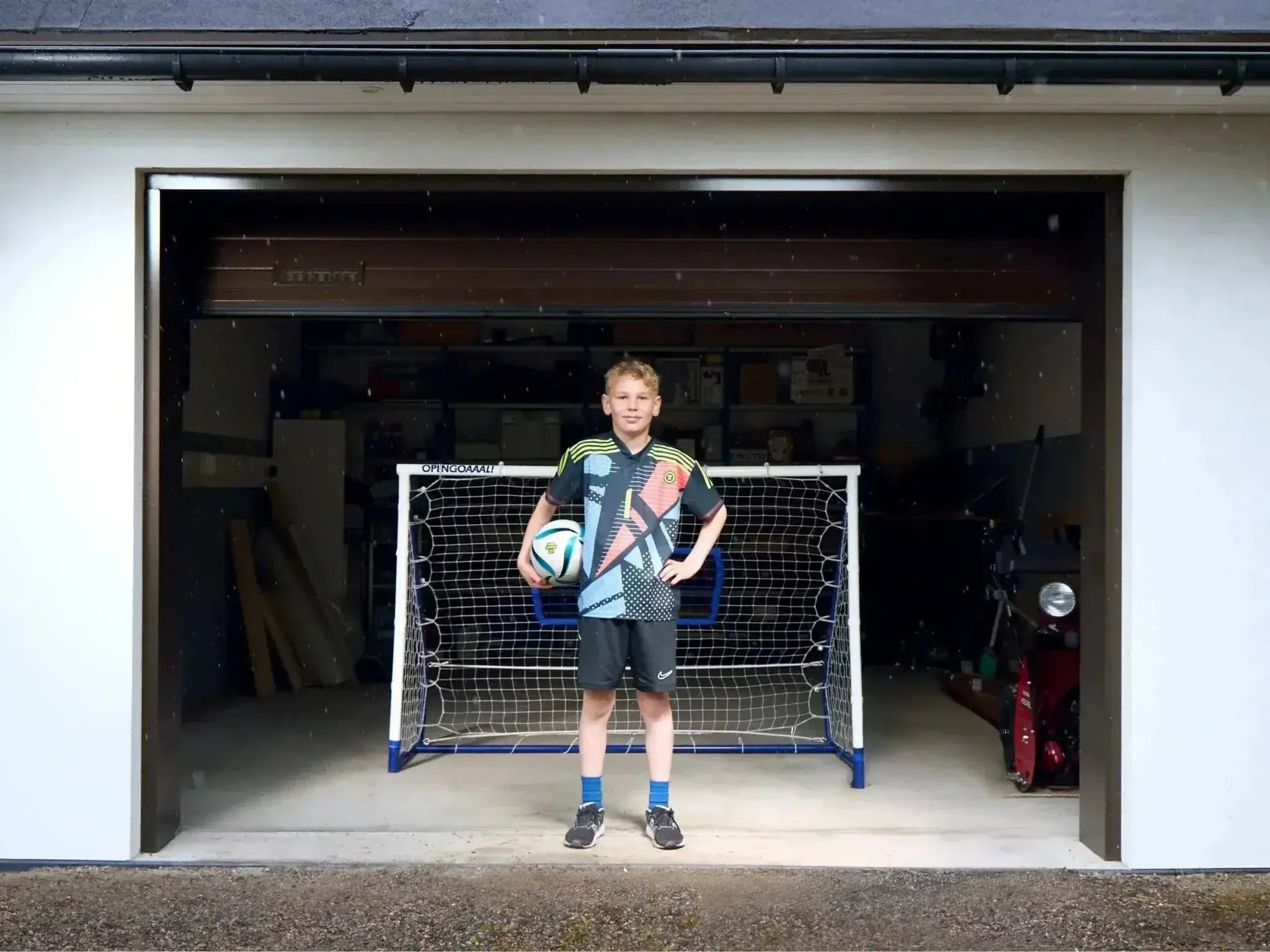
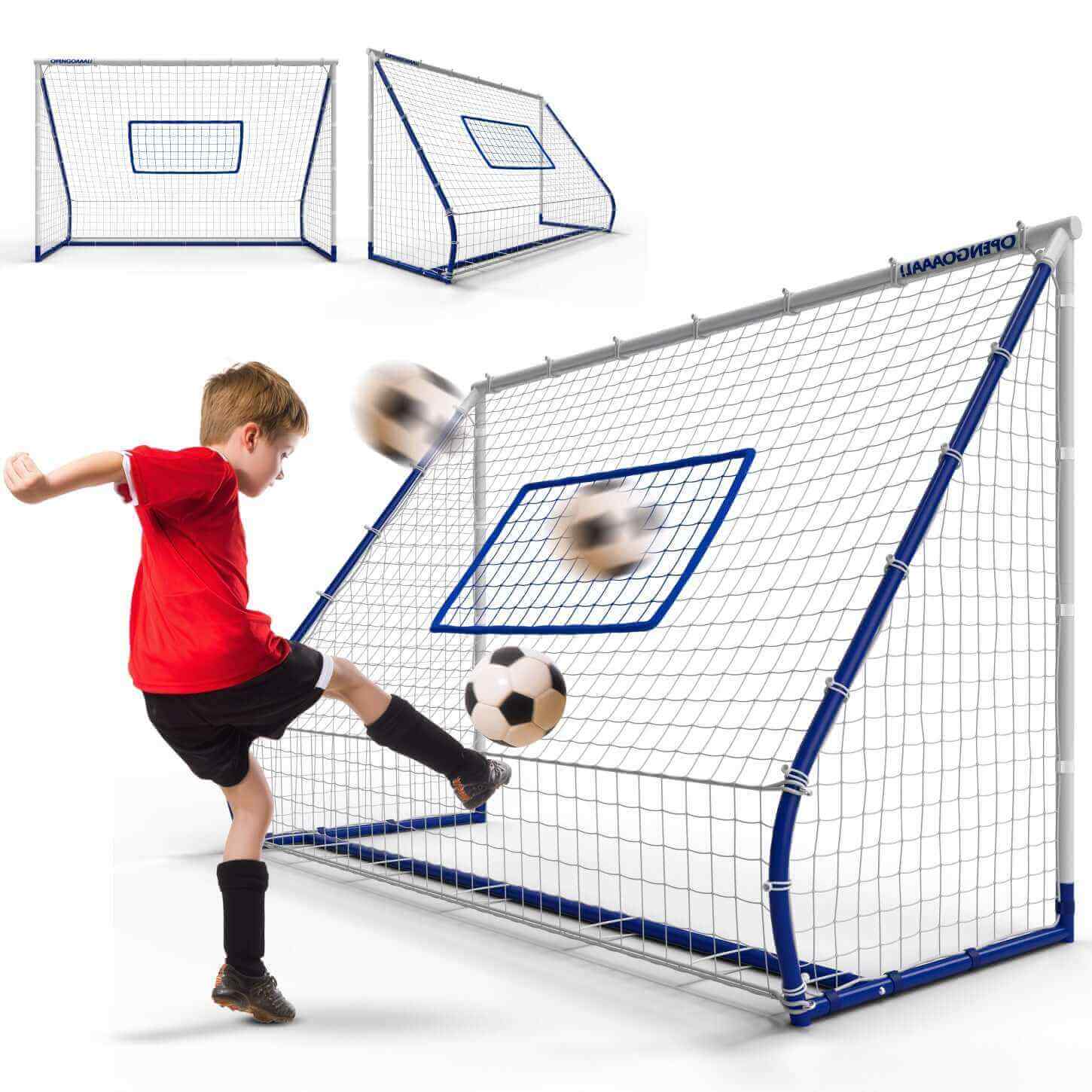
What it's for. Moving toward the ball rather than waiting for it, which closes the gap a defender would use. Passes have to be firm enough to reach the worker and soft enough to control. If you're doing this at home with one parent serving, finish each set with a turn and a shot. The Open Goaaal® 3-in-1 Soccer Goal Trainer is a goal, rebounder and backstop in one, so most missed shots come back and nobody has to chase the ball.
U8 soccer passing drills
5. Numbers passing
Setup. Six to eight players in a 20 by 20 yard area, each given a number. One ball to start.
How it runs. Number 1 passes to 2, 2 to 3 and so on, with the last player passing back to 1. Everyone keeps walking or jogging around the area the whole time. Once it flows, add a second ball starting with the middle number.
What it's for. It gets heads up and mouths open, because nobody can pass to number 4 without first finding number 4. Get the receiver to call their number and teach simple words like "here", "turn" and "man on". Our soccer drills for 8-year-olds has more for this age.
6. Space wars
Setup. A 20 by 20 yard square, every player with a ball, two teams in different-colored pinnies lined up on opposite sides.
How it runs. On the whistle, everyone dribbles into the square. Players try to knock the other team's balls out of the square by passing their own ball into them. Only ball-on-ball contact counts; no kicking someone else's ball. In the old version, a player whose ball is knocked out sits down. We'd rather keep everyone moving, so a player who loses their ball collects it, does ten toe taps outside the square and comes back in.
What it's for. Close control and a short, accurate strike at a moving target. Kids who dribble with the ball far from their feet find out quickly.
U6 soccer passing drills
7. Grid passing
Setup. Two small squares of cones, about 3 yards across, 6 yards apart. One player in each, one ball per pair.
How it runs. Pass the ball into your partner's square. The partner stops it with the sole of the foot inside the square, then passes back. A pass that stops inside the square earns a point. First pair to ten.
What it's for. Passing to a space, not just a person, and stopping the ball. It's the same idea as pass through traffic without the defender, so it's an easy first step for 4- and 5-year-olds. Our U6 soccer drills have more games at this level.
8. Guard the castle
Setup. A 10 yard square with a disc cone in the middle and a ball balanced on top: that's the castle. Three attackers outside the square with a ball, one guard inside.
How it runs. The attackers pass to each other around the outside and try to knock the ball off the castle with a pass. The guard moves to block. When the castle falls, the player who hit it becomes the guard.
What it's for. Moving the ball to whoever has the clear shot. Young players learn quickly that the teammate on the other side often has the better angle.
FAQs
How do you teach a soccer player to pass?
Start with the push pass, using the inside of the foot. US Youth Soccer's coaching manual gives the main points: plant foot beside the ball about 6 inches away with toes pointing at the target, kicking foot turned out, ankle locked, contact near the arch through the middle of the ball, and follow through toward the target (US Youth Soccer Skills School manual). Then repeat it a lot, with both feet. Most of the drills above work with only two people in a backyard.
What are the 4 ways to pass a soccer ball?
There's no official list of four, but the four most coaches start with are the push pass (inside of the foot), the instep pass with the laces, the outside-of-the-foot pass and the chip. The US Youth Soccer manual lists more ground passes, including toe poke, flick, heel and bent passes, plus volley passes. The one-two, often called the fourth "way", is really a combination between two players rather than a technique. Our types of kicks in soccer guide covers each strike.
How can a player practice passing alone?
Against a wall or garage door, 5 to 10 yards away, alternating feet. Receive across the body so the next pass comes off the other foot. Our first touch soccer drills include several solo wall drills.
How long should a passing drill last?
Two to five minutes per drill, with short breaks. When passes start going astray because players are bored, change the drill.
Final thoughts
Pick one drill from the all-ages group and one from your age group for each practice, and change the distance every few minutes. For older players who are ready for passing under pressure in a circle, rondo soccer is the next step.
If you're setting up passing and shooting at home, the goal size matters. The Open Goaaal Junior has an 8 x 4.5 ft goal inside a backstop up to 16 ft wide, and the Standard has a 9 x 5 ft goal inside a backstop 10 ft tall and up to 21 ft wide.