
Transition drills train the seconds right after the ball changes hands: the team that wins it attacks fast, and the team that loses it tries to win it straight back. The four drills below do that with rotating teams, neutral players and zones, sized for 7v7 and 9v9 practices.
What does transition mean in soccer?
It's the switch between attacking and defending. U.S. Soccer's game models split a game into four moments: attacking, attack to defense transition, defending, and defense to attack transition. The same page tells coaches of U10 and younger to focus on the first and third, attacking and defending, and to work on all four from U11 up.
For the U11 to U12 age group, the U11-U12 game model gives each transition a short brief. When we lose the ball: try to win it back immediately and stop the other team playing forward, and if that fails, recover quickly into a defending shape. When we win it: think forward and play forward, attack fast, and support ahead of the ball. Every drill below sets up those two moments over and over.
That doesn't mean younger teams skip these games. A U9 group can play drill 1 happily, as long as the coaching stays on attacking and defending rather than shape and cover.
1. Quick transition game
This one runs with twelve outfield players in three colored teams of four, plus a keeper in each goal. Use a field around 40 by 30 yards with a full goal at each end.

Two teams play 4v4, say blue attacking red. The third team, yellow, waits off the field as neutrals, two beside each goal. When blue scores, blue gets a new ball from the keeper or the side straight away and attacks the other goal. Red, the team that conceded, steps off to become the neutrals, and yellow runs on to defend against blue. If red wins the ball instead, red attacks in the other direction, and blue swaps out. First team to five goals wins.
Neutrals can play one touch to whichever team has the ball. Once the group gets used to it, add a rule that attackers must use a neutral before they can shoot.
What it works on
At youth level the scorers tend to celebrate and the conceding team tends to walk. This game removes that pause, because the next attack is already coming. It's also a simple game for younger players (no positions, no zones), which makes it a good first transition drill.
2. 4v4 +3 transition game
Eleven players: two teams of four and three neutrals in a third color. Mark a grid about 30 by 25 yards. Put a full goal with a keeper on one end line, if you have a keeper spare, and two small cone gates on the other end line.
The neutrals sit on the edges, one on each end line and one in the middle, and play for whichever team has the ball. One team attacks the big goal; the other defends it and, when it wins the ball, counters by passing or dribbling through either of the small gates. The moment possession changes, the roles flip. Run it for six minutes, then rest for one, and swap which team starts on the big goal.
If you want to tie it to positions, group each team by line. Your center backs and center midfielders can defend the big goal while forwards and wide players attack it, and a striker, a center back and a center midfielder can play as the three neutrals.
What it works on
The team that wins the ball has to find the quickest route to a gate before the other team recovers. The team that loses it has a choice to make right away: press the ball, or drop to protect the gates. The neutrals give the team in possession an extra player, so keeping the ball is possible, which is good practice for build-up tempo too.
3. 4 + 4 vs 4 + 4
A fast 4v4 inside a grid around 35 by 25 yards with a goal and keeper at each end, and four more players per team stationed around the outside. That's 16 field players plus two keepers, so it suits a combined practice or a bigger roster.

Inside players are limited to two touches and outside players to one. When a team wins the ball, it has to play it to one of its outside players before it can score. Swap inside and outside players every three or four minutes.
What it works on
With two touches inside, the ball changes hands a lot, and every change is a transition. The outside-player rule gives the team that just lost the ball a split second to react, so it can practice pressing the outside pass instead of just watching it. Players also get plenty of shots and follow-ups on the rebound, with both feet.
4. 8 vs 8 breakout to goal
Use a field around 60 by 40 yards, split into three equal zones across its length, with a goal and a keeper at each end. Two teams of eight play possession in the middle zone only. It fits as one 15-minute block in a practice.

When one team wins the ball from the other, its deepest player breaks out toward the goal that team attacks, and the player who won the ball looks up and plays them in. The runner finishes, and the keeper restarts by playing the ball back into the middle zone. To raise the speed, cap touches in the middle zone; to make it harder, let one defender chase the runner, then add a second attacker and a second defender.
What it works on
The timing between the run and the pass. The runner has to go the moment the ball is won, not after it's been controlled, and the passer has to see the run with their first look. The team that lost the ball gets a job too: put pressure on the ball immediately so the through pass never gets played.
Which transition cues should coaches use?
Short ones that players can hear mid-play. These match the U11-U12 transition principles from U.S. Soccer quoted above.
| Moment | Cue | What you want to see | Drill that tests it most |
|---|---|---|---|
| We just lost it | "Win it back!" | Nearest player presses the ball at once | 3. 4 + 4 vs 4 + 4 |
| We can't win it back | "Recover!" | Players sprint goal-side and get into a shape | 2. 4v4 +3 |
| We just won it | "Forward!" | First look and first pass go forward if they're on | 4. 8 vs 8 breakout |
| Forward is closed | "Keep it!" | Safe pass, then build the attack | 2. 4v4 +3 |
| Goal scored or conceded | "Next ball!" | No celebrating or sulking, both teams reset fast | 1. Quick transition game |
A practice that puts one of these games in the middle fits U.S. Soccer's Play-Practice-Play structure: a game to start, a focused activity, then a game again where the coach mostly watches.
Can players practice transition at home?
Partly. Real transition needs opponents (a sibling counts), but the individual pieces (winning a loose ball, turning, and finishing fast) can be practiced in a backyard. One version: a parent rolls a ball in from the side, the player wins it, turns, and has three touches to get a shot off. Then the parent rolls the next one from the other side.
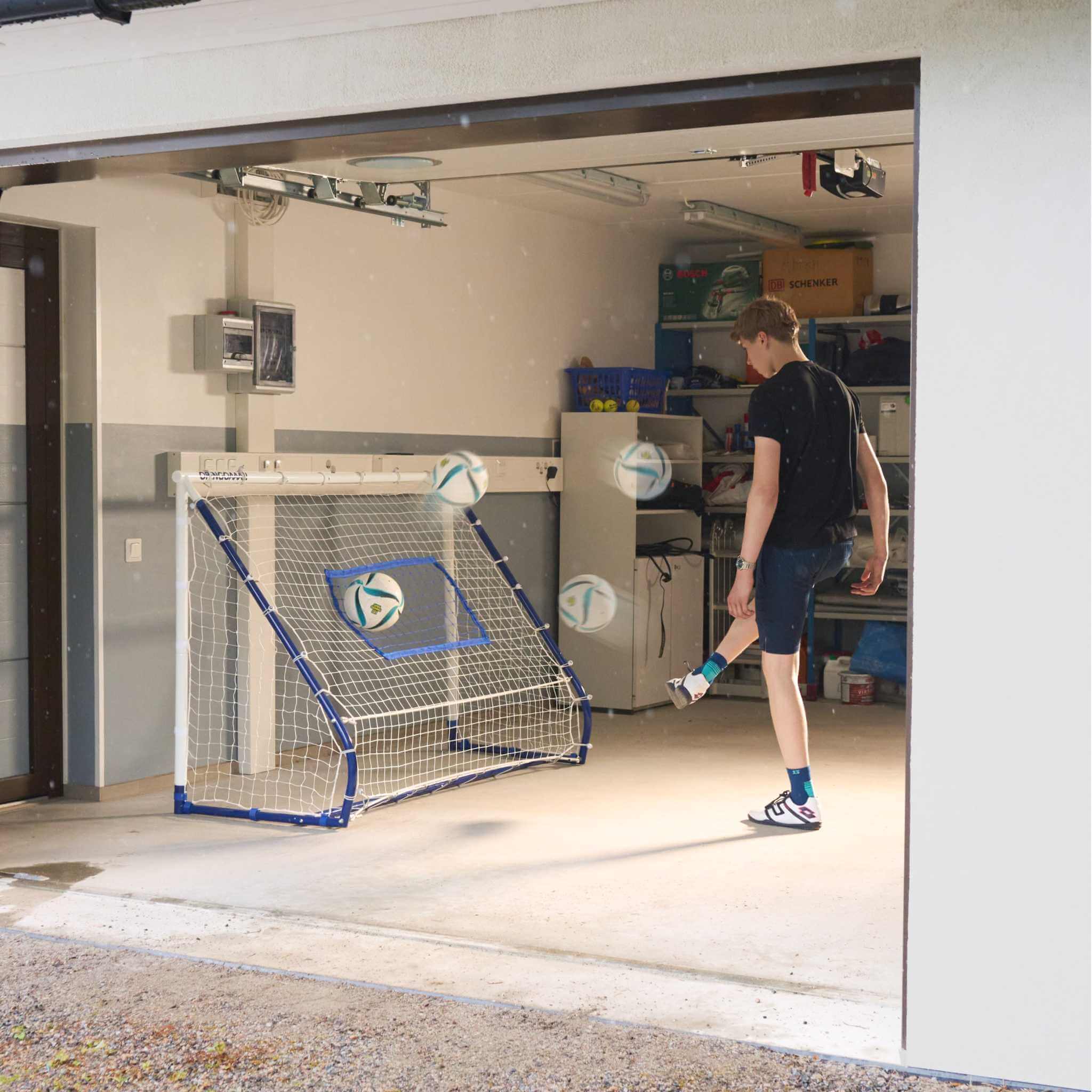
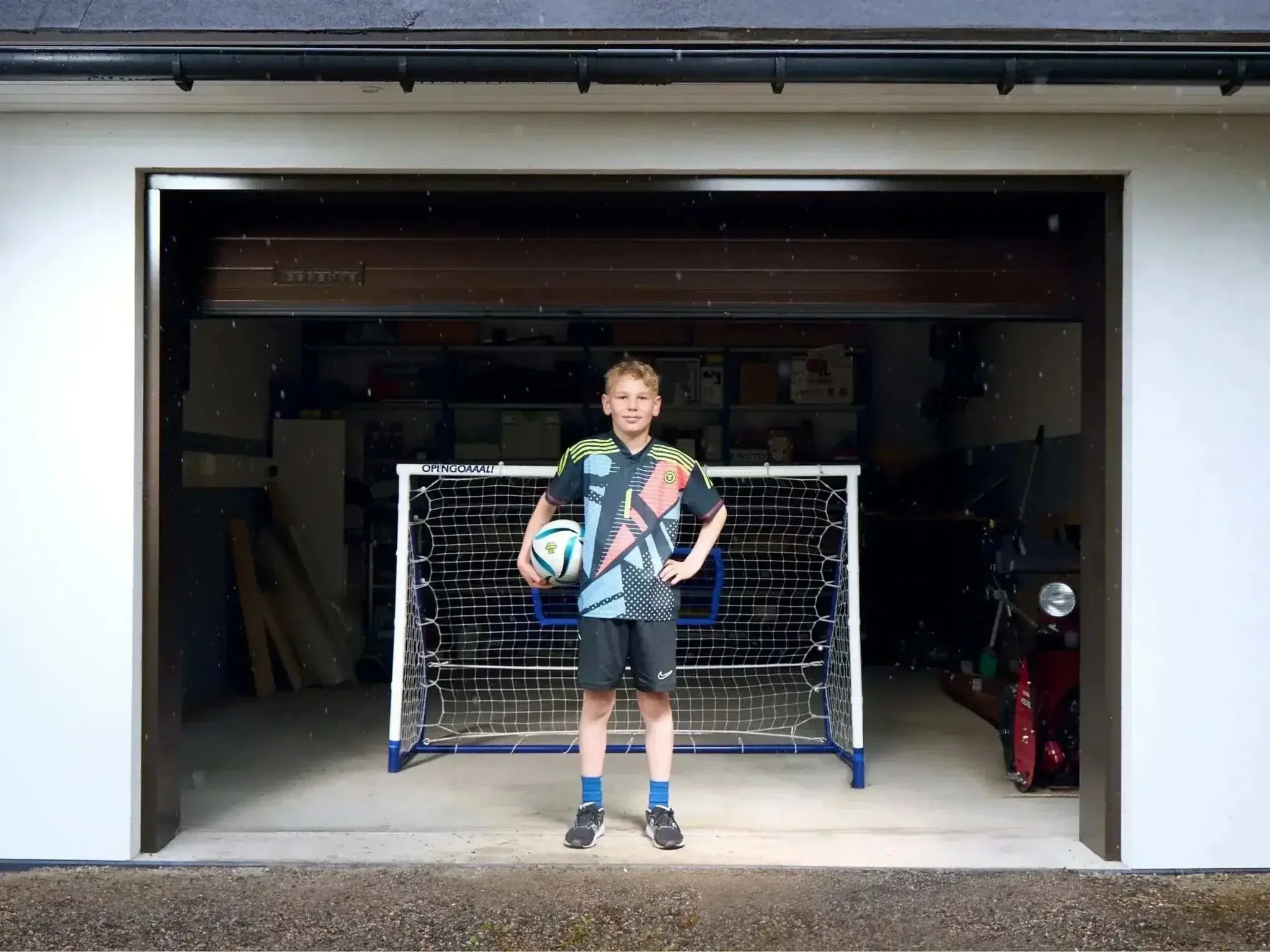
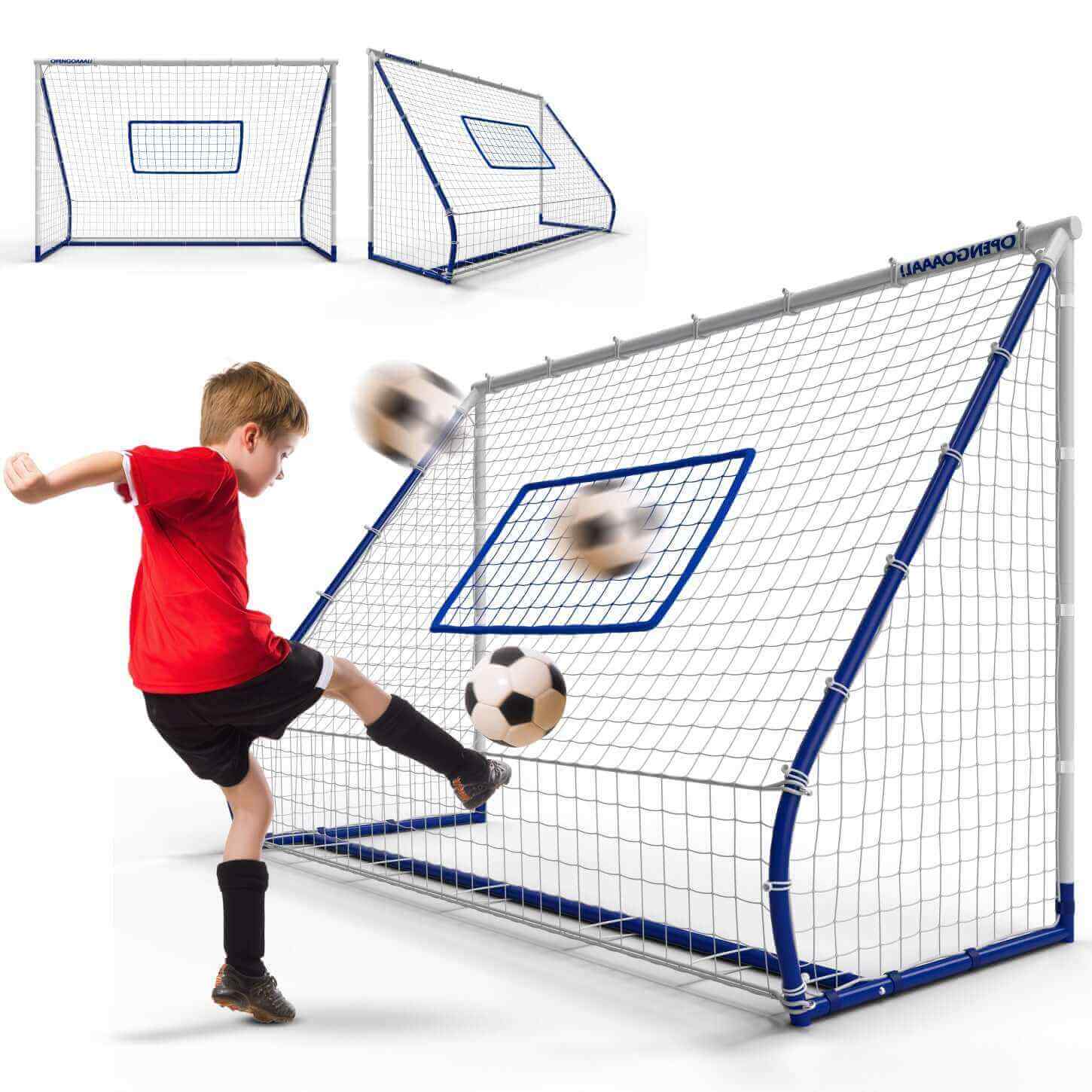
That drill falls apart if every miss sends the player to the fence. The Open Goaaal® 3-in-1 Soccer Goal Trainer is a goal, rebounder and backstop in one, so most missed shots come back and the ball stays in the yard. The Standard's backstop is 10 ft tall and up to 21 ft wide around a 9 x 5 ft goal. It needs natural grass, and the first setup takes two people about 1.5 hours; see the build video. A pair of corner targets make the finish more specific.
Soccer transition drills FAQs
What is a transition drill in soccer?
Any drill built so the ball changes hands often and players have to switch between attacking and defending immediately. Most are small-sided games with a twist, like neutrals, rotating teams or zones.
What age should teams start transition drills?
The games themselves work from about U9. U.S. Soccer's game models suggest coaching the two transition moments specifically from U11, the age U.S. Soccer's game formats move teams up to 9v9.
What is a counterattack?
A fast attack right after winning the ball, before the other team has recovered. Drill 4 is a counterattack drill with the run built in.
How long should a transition drill last?
Short, intense rounds. Six minutes on and one off for drill 2, three or four minutes between rotations in drill 3, and about 15 minutes for the whole of drill 4.
Final thoughts
Pick the drill that matches your numbers and your players' format, use the same few cues every time, and watch the two seconds after each turnover more than the rest of the game. For the moments either side of transition, see our attacking drills and possession drills, and our guide to soccer defense positions covers the shape players recover into. For 9v9 practice plans, try our U12 soccer drills.