
Soccer tic-tac-toe is a relay race onto a 3x3 grid of cones. Two teams sprint or dribble out one at a time, each player drops a pinnie in a square, and the first team to get three in a row wins. It takes about five minutes to set up and works from U6 to high school.
Below is the setup in feet, the rules, what the game is for, coaching tips and the variations we'd use for different ages and group sizes. It's a warm-up game, so the aim is a lot of running, quick thinking and a bit of noise before practice starts properly.
How do you set up soccer tic-tac-toe?
You need 18 cones (16 for the grid, or 9 hoops or flat spots instead, plus 2 for the start), 6 pinnies in two colors, and enough space for a start line and a grid. Here's the order we'd do it in.
- Mark the start. Put two cones about 6 feet apart. Each team lines up behind one.
- Build the board. Lay out a square grid of 4 x 4 cones, so the gaps form 9 boxes. Make each box about 3 to 4 feet across for younger players and up to 6 feet for teens. Hula hoops or flat rubber spots are quicker if you have them.
- Set the distance. Place the near edge of the grid 20 to 40 feet from the start line (see the table below).
- Hand out the pieces. The first three players on each team hold a pinnie, one color per team. Everyone else waits empty-handed.
- Add balls if you're dribbling. One ball per team at the start cone.
| Age group | Start line to grid | Box size | Players per team | Version we'd start with |
|---|---|---|---|---|
| U6 to U8 | 20 to 25 ft | 3 ft (hoops are easiest) | 3 to 5 | Run with a pinnie, no ball |
| U9 to U10 | 25 to 30 ft | 4 ft | 4 to 6 | Dribble out, pass back |
| U11 to U12 | 30 to 35 ft | 5 ft | 4 to 6 | Dribble through a cone slalom |
| U13 and older | 35 to 40 ft | 5 to 6 ft | 5 to 8 | Weak foot only, or two games at once |
The age bands follow U.S. Soccer's game formats by age group (4v4 at most for U7 and U8, 7v7 for U9 and U10, 9v9 for U11 and U12, 11v11 from U13). The distances and box sizes are our own starting points. Shorten them if the line is waiting too long, stretch them if the game is over in 30 seconds.
How do you play the drill?
On your whistle, the first player on each team runs out, puts their pinnie in any empty box, runs back and high-fives the next teammate. That player goes, and so on.
Once all three pinnies are on the board and nobody has three in a row, the game changes. The next player goes out empty-handed, picks up one of their own team's pinnies and moves it to a different empty box. Teams keep moving pieces until one of them lines up three, across, down or diagonally. First team to do it wins the round.
We add two rules to keep it fair.
- A player can only touch their own team's pinnies and can't move one while an opponent is in the grid touching the same box.
- If a team gets three in a row along the edge nearest its own start line, it doesn't count. The line has to use at least one box in the middle or far row. This stops the team that arrives first from walling off the closest row.
For the ball version, each player dribbles out, stops the ball next to the grid, places or moves a pinnie, then dribbles back and passes to the next teammate. If the ball rolls away, they collect it before the next player can go. If a ball is still too much for your youngest group, skip it for now and borrow from these U6 soccer drills.
What is the objective?
Quick decisions while tired. Every player arrives at the grid out of breath and has a second or two to read the board, block the other team and set up their own line. That's the same thing they'll do in a game, looking up and deciding while the ball is moving.

It also fits how U.S. Soccer suggests opening a session. Its Play-Practice-Play model (U.S. Soccer, Feb. 2018) starts youth practice with small, game-like play where the main focus is fun and the coach guides from the side with as little talking as possible. Tic-tac-toe is a natural first "play" block. Kids walk in, get put on a team and are racing within a minute.
And it gets them moving. A team of five on a 30-foot board will each make several sprints in a round, which is a good warm-up on its own before you move into passing or shooting work. If you want a full warm-up sequence to go around it, see our soccer warm-up drills.
What are the best coaching tips?
Keep the lines short. Three to five players per team works best. With eight in a line, kids spend most of the round watching, so run two boards side by side instead.
- Let them figure it out. Resist shouting "put it in the middle!" from the sideline. Let the team talk it through between turns; that's where the thinking happens.
- Change how they travel. Backward running, side shuffles or skipping on the way out, sprint on the way back.
- Add a slalom. Four or five cones between the start and the grid turn it into a ball control drill. Players have to dribble through them both ways.
- Use the weak foot. For older groups, dribbling with the weaker foot only slows the fast kids down and evens out the race.
- Play best of three. Rotate who goes first each round so the same player isn't always placing the opening piece.
After the last round, keep the energy and move straight into finishing. Our soccer training dice work well here: three dice pick where to shoot, how to shoot and a condition such as weak foot or a three-second limit, so every shot is a little different. The winning team from tic-tac-toe rolls first.
What variations work for different group sizes?
Two or three players (or a parent and a kid in the backyard). Play one-on-one. Each player has three pinnies or three colored cones, and the board can be just 10 to 15 feet away. It's a decent first-touch and turning game when you add a ball.
A full team of 14 to 18. Run two or three boards at once and rotate winners against winners. Or play "four in a row" on a 4x4 grid with four pieces each, which takes longer and gives more moves.
Older or more advanced players. Make each trip earn the move: a player has to complete a wall pass with a coach or juggle the ball three times at the grid before they can place a piece. It's harder than it sounds when you're out of breath, and the scores stay close.
For more games in the same spirit, try sharks and minnows or our roundup of fun soccer games for kids.
FAQ
How many cones do you need for soccer tic-tac-toe?
Sixteen cones laid as a 4 x 4 grid make the 9 boxes, plus two for the start line. Nine hula hoops or flat spots do the same job with fewer pieces.
What age is soccer tic-tac-toe good for?
Any age from about U6. Younger players run with a pinnie and no ball; older players dribble, use the weak foot or have to complete a skill at the grid first.
How long should the drill last?
Ten minutes is plenty for a warm-up: three or four rounds with a short break to swap the starting order.
Can you play tic-tac-toe soccer at home?
Yes. Shrink the board, use socks or cones as pieces and play one-on-one with a parent or sibling. A smaller yard just means a shorter run.
Is tic-tac-toe worth a spot in your practice plan?
For the first ten minutes, yes. It's cheap to set up, everyone is involved and players have to think while they're tired, which is exactly what a game asks of them.
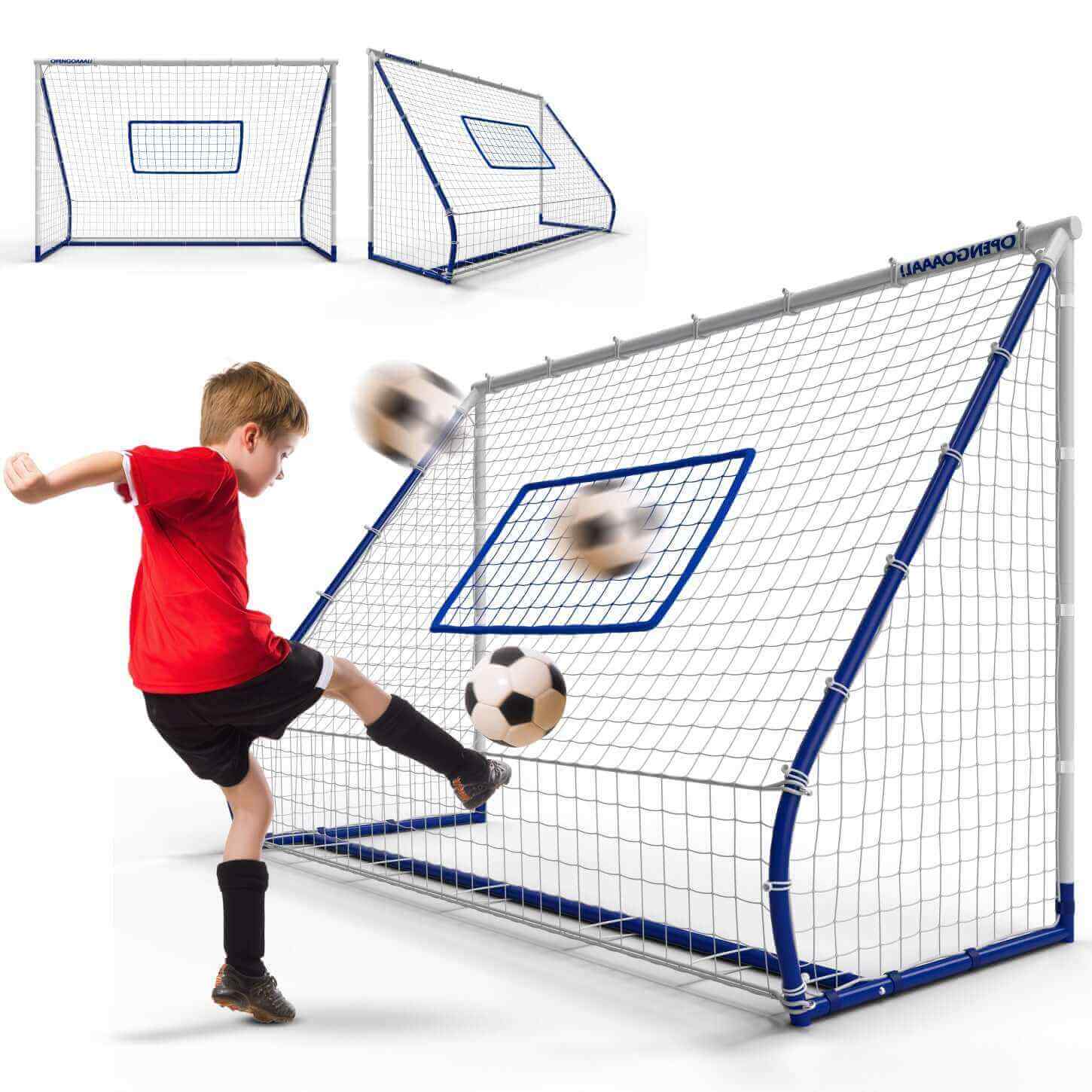
If you're setting it up in the backyard, finish with some shooting. The Open Goaaal® 3-in-1 Soccer Goal Trainer is a goal, rebounder and backstop in one, so missed shots come back instead of ending up in the neighbor's yard. Our soccer drills for 8-year-olds is a good next read for what to run after the warm-up.