
Nine moves cover almost every 1v1 a youth player faces: the Cruyff turn, the inside touch and scissor, the sole control move, the elastico, the stop and go, the chop, the nutmeg, the V-pull and the step-over. Learn two or three with both feet before adding more.
Which one to use depends on where the defender is. One in front of you with space behind them calls for a feint. One tight on you calls for a small, sharp touch. One on your back calls for a turn. Each move below says when it fits, how to do it, and how many reps to put in at home. A table after the list matches moves to game situations.
1. The Cruyff turn
Use it when a defender is shadowing you along the sideline and expects a cross or a pass. Shape up as if to kick, then, instead of striking the ball, drag it behind your standing leg with the inside of your kicking foot and go back the way you came.
The move carries Johan Cruyff's name. FIFA's account of the Netherlands v Sweden match at the 1974 World Cup describes Sweden's Jan Olsson falling for it in a goalless draw in Dortmund. It still works for the same reason it did then: the fake kick has to look real. Take a proper backswing.
For home reps, jog at a cone, sell the cross, cut back and shoot. Fifteen per foot.
2. Inside touch and scissor
This one is two moves joined together. Push the ball a short way forward with the inside of your foot, swing that same foot around the front of the ball in a scissor, then take it away with the outside of the other foot. The defender reads the first touch as you going inside, shifts, and you leave the other way.
It only works fast and without a pause between the parts. Slow it down and it's three separate touches a defender can step into.
Walk through the first 10, then do 10 more at a jog, to each side.
3. The sole control move
Put the bottom of your foot on top of the ball to stop it, then roll it in whichever direction you want to go. Coaches often call the backward version a drag-back. It's usually the first move small kids learn, because the sole gives them control before their balance has caught up, and it stays useful at every age when the space closes up near the box.
Do 20 per foot: stop, drag back, turn and shoot within two touches. Our toe tap guide builds the sole touches underneath it.
4. The elastico
Push the ball out with the outside of your foot, then snap it back across with the inside of the same foot before you put that foot down. Done well it looks like one touch going two directions. Some coaches call it the flip-flap.
This is the hardest move on the list. Teach it after the stop and go, not before, and expect plenty of misses while the ankle learns the motion.
Start standing still, then try it from a slow dribble, 15 per foot.
5. Stop and go
Everything here happens in the pause. Dribble toward the defender, stop the ball dead under your sole as if you're about to pass or cut back, and when they plant their feet to react, push it past them and sprint. It's at its best against a defender running alongside you at an angle, since they can't brake as quickly as you can.
There are versions with a fake cutback or a half pull-back before the burst. Whichever you use, move your hips on the stop. If your body stays square, nobody believes it.
Run it 15 times per foot over 15 yards, with a parent calling "stop" and "go" so the timing isn't always yours.
6. The chop
Plant just past the ball and cut it back behind your standing leg with the inside of your kicking foot. Your run stops instantly and the ball turns almost all the way around. A defender running beside you keeps going.
It's one of the easiest moves for young players because it doesn't need speed to work, just a firm plant. Older players use it to get onto their stronger foot for a shot.
In the backyard, jog at a cone, chop, and shoot with the other foot. Twenty each side.
7. The nutmeg
Play the ball through the defender's legs and collect it behind them. The chance appears when a defender opens their stance to block a pass or reaches in with one leg. Look for the gap rather than forcing it.
Most of the skill is spotting the gap, and a failed nutmeg hands the ball straight back. Our full guide to the soccer nutmeg covers when to try it.
Set two cones as a pair of legs and slip 10 per foot through them before trying it live against a parent.
8. The V-pull
Push the ball toward the defender to draw a tackle, then pull it back with your sole and push it out at an angle with the inside of the other foot. The path of the ball forms a V. The timing matters: pull too early and the defender hasn't committed; too late and they've got a foot on it.
A net or a wall is a good stand-in defender for learning the shape. Pass at it, follow the ball in, and pull away as it comes back.
Fifteen per side is a good set.
9. The step-over
Swing your foot around the front of the ball from inside to outside without touching it, land past the ball so your hips point that way, then take it the other way with the outside of the opposite foot. The step needs to be big. A small circle close to the ball fools nobody.
It's one of the first feints most kids learn and they keep using it, because it works face-on against a defender who has time to set their feet.
Twenty to each side, and finish every one with a shot so the move always leads somewhere.
Which soccer move should you use in which situation?
Read the defender first, then choose. Here's the whole list sorted that way.
| Where the defender is | First move to learn | Backup move |
|---|---|---|
| In front, with space behind them | Step-over | Inside touch and scissor |
| Running at you, square on | Stop and go | Elastico |
| Reaching in or wide-legged | Nutmeg | V-pull |
| Tight, near goal | Sole control move | Chop |
| Beside you or on your back | Cruyff turn | Chop |
Practice each one to both sides. A move done only to the strong side is easy to read once a defender has seen it twice. With a defender pressed against your back, shield first and turn second; our article on shielding in soccer covers the stance.
What age should kids start learning moves?
As soon as they're dribbling. U.S. Soccer's game formats page caps U7 and U8 at 4v4, which means lots of touches and lots of 1v1s in a small space. The sole control move and the chop fit that well. The bigger feints make more sense as teams move to 7v7 at U9 and 9v9 at U11, when there's more room to run at someone. For the footwork under every move, start with our 10 simple footwork drills.
How do you practice soccer moves at home?
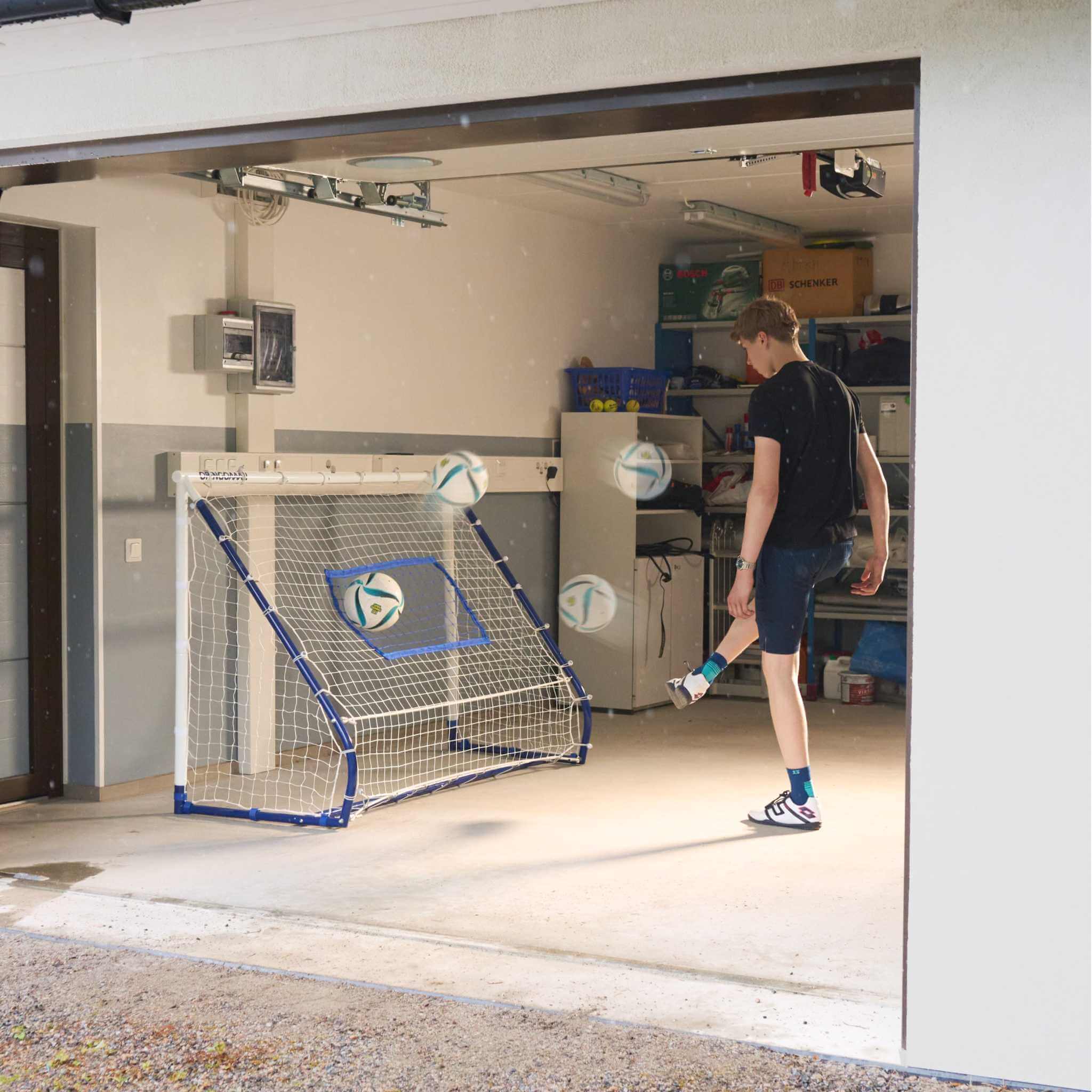
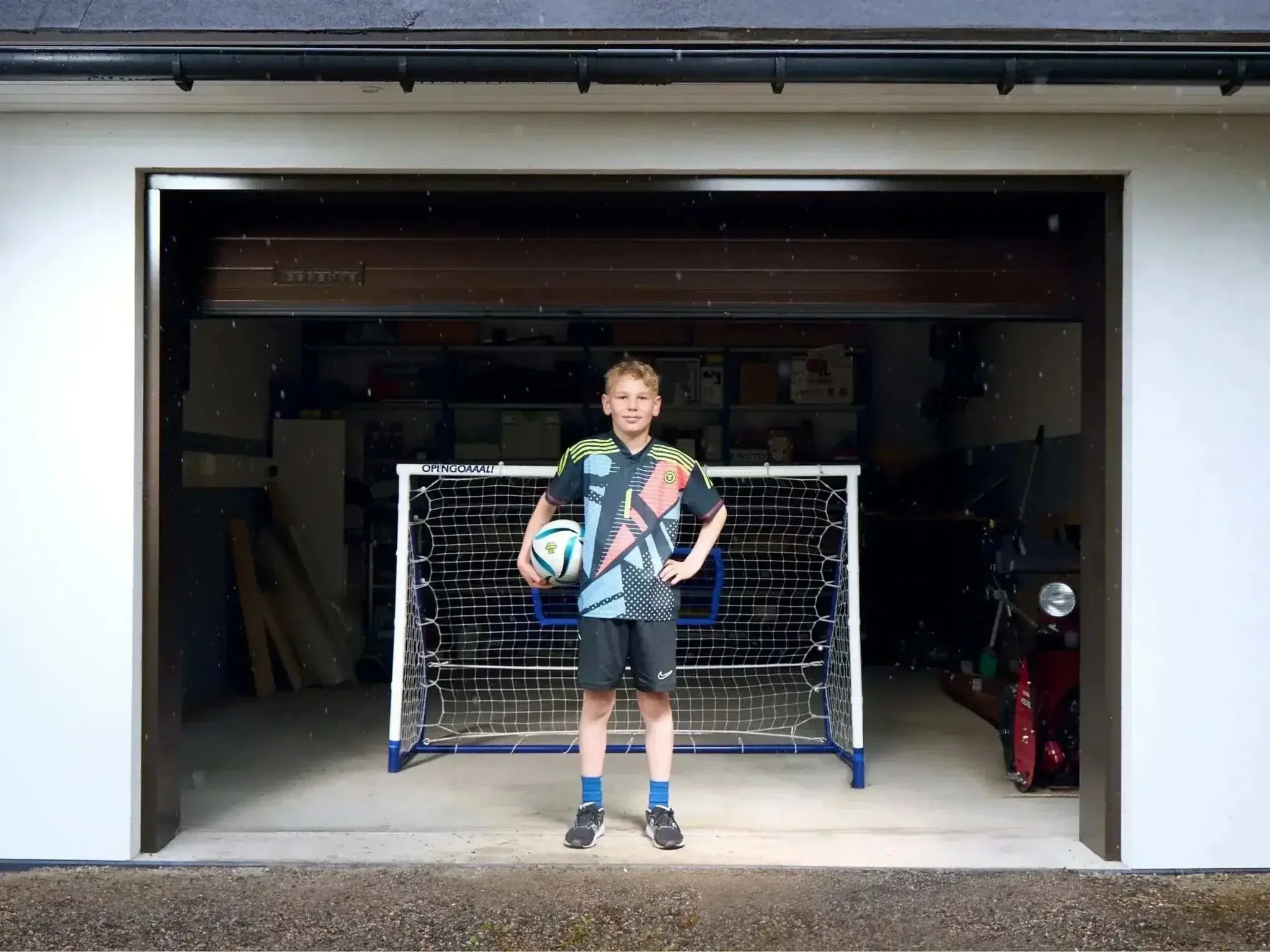
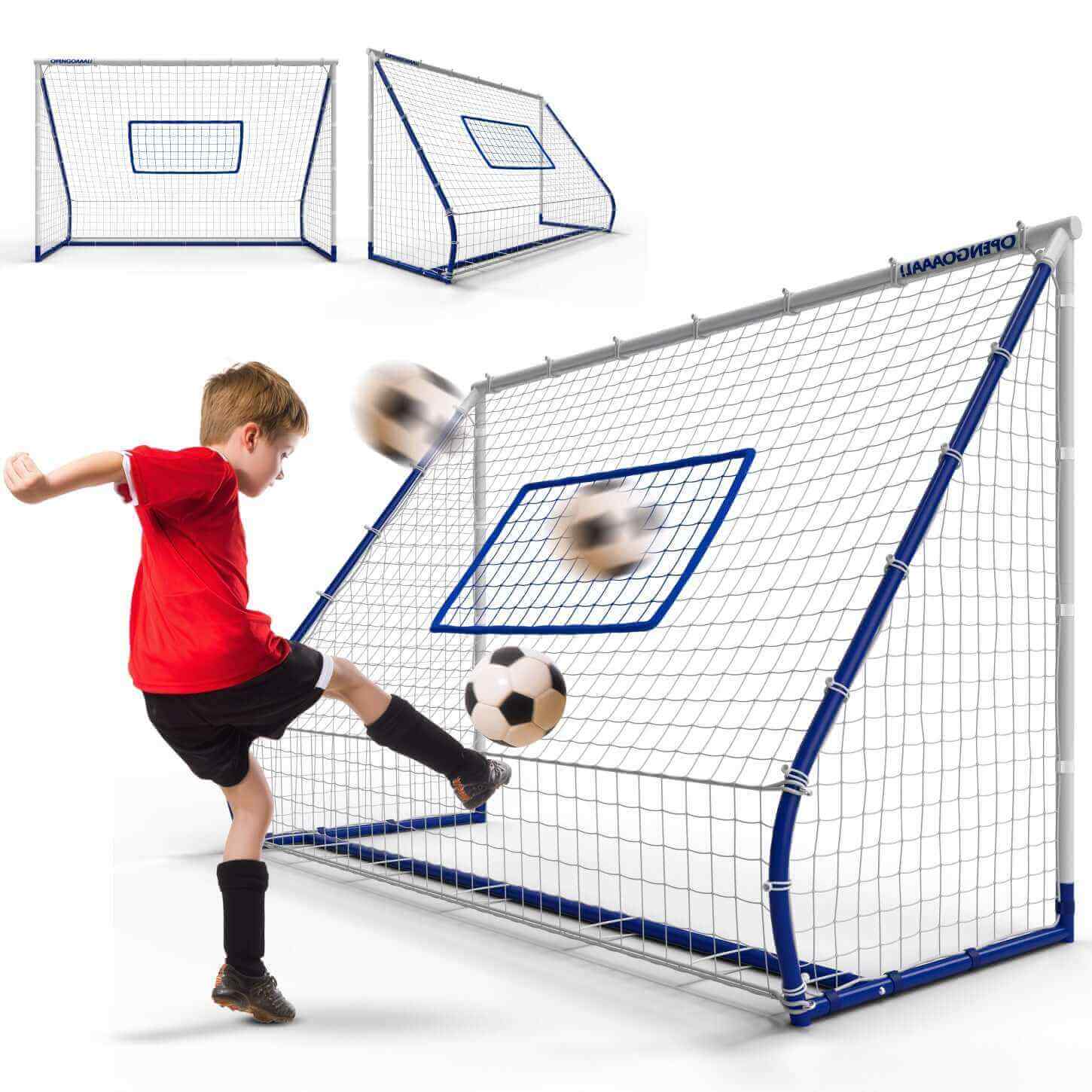
End every rep with a shot. A move practiced in the middle of the lawn trains the trick but not the finish that should follow it. The Open Goaaal® 3-in-1 Soccer Goal Trainer is a goal, rebounder and backstop in one frame, so the ball comes back and 20 step-overs into a shot stay 20 reps instead of 20 reps plus 20 walks to the fence. The Junior has an 8 x 4.5 ft inner goal with a backstop 8 ft tall; the Standard has a 9 x 5 ft goal with a 10 ft backstop. Setup takes two people and about an hour and a half the first time, with build videos for the Junior and for the Standard and Large. Add a corner target if you want the finish to count.
A simple session looks like this: two moves from the table, 15 to 20 reps of each per foot, then five minutes of 1v1 against a parent or sibling using only those two. Our 1v1 soccer drills and dribbling drills have more games to plug in, and the attacking drills put the moves into team play.
Soccer moves FAQs
What is the hardest soccer move?
Of these nine, the elastico. Both touches happen with the same foot before it lands, so it takes a loose, quick ankle and a lot of failed attempts. Most kids are better off learning it after the stop and go and the step-over.
What is the most famous soccer move?
The Cruyff turn has a strong case. It's named after Johan Cruyff, and FIFA still tells the story of him using it against Sweden at the 1974 World Cup.
What is the Ronaldo chop?
A variation of the chop, named after Cristiano Ronaldo. The player knocks the ball across and behind the standing leg with the inside of the foot, often with a small hop, so it shoots sideways while the body is still moving forward, then sprints after it. Learn the basic chop first.
What is the spin move called in soccer?
Usually the Marseille turn or the roulette. The player drags the ball back with one sole, spins, and drags it on with the other sole, turning a full circle away from the defender.
Final thoughts: where to start this week
Pick the situation your child runs into most in games, learn the first-choice move from the table with both feet, and add the backup once the first one holds up in a 1v1. Then move to the next situation. If you're not sure where your child will see those situations, our youth soccer positions guide shows what each spot on the field asks for.