
The six soccer ladder drills worth learning first are lateral high knees, jumping jacks, the single-leg shuffle, speed scissors, hopscotch and the Ickey shuffle. Finish each run with a pass or a shot so the footwork ends with the ball.
An agility ladder is a flat strip of rungs laid on the grass. If you don't have one, chalk or tape works: ten boxes, each about 18 inches square, is plenty for the backyard, and it slots into any backyard soccer training plan. Warm up first with a few minutes of jogging and our soccer warm-up drills, and put a ball and a target a few yards past the end of the ladder before you start.
1. Lateral high knees
Stand side-on at one end of the ladder. Step into the first box with the lead foot, lifting the knee to about hip height, then bring the other foot in the same way. Step both out into the next box and keep moving sideways down the ladder, two feet in every box, knees high and arms pumping.
Go back the other way leading with the other foot, so both sides get the same work. Rest about 30 seconds between lengths.
Ball finish: a partner rolls a ball as you leave the last box. Take one touch to set it and pass it back with the inside of the foot.
2. Jumping jacks
Face down the ladder. Jump with both feet into the first box, then jump forward and land with feet apart, one either side of the next rung. Feet together inside, feet apart outside, all the way down, swinging the arms overhead on the "apart" jump the way you would with ordinary jumping jacks.
Land softly on the balls of the feet. If the landings get loud, slow down.
Ball finish: land out of the last box, step to a waiting ball and shoot at a target with your stronger foot. Next length, use the other foot.
3. Single-leg shuffle
Stand to one side of the ladder. The outside foot stays out of the ladder the whole way while the inside foot taps in and out of each box as you move forward, quick and light. It feels lopsided at first because one foot is doing all the fine work while the other just keeps up.
Run it twice, then switch sides so the other foot does the tapping.
Ball finish: come out of the ladder into a short dribble, three touches with the foot that did the tapping, then pass to a target.
4. Speed scissors
Stand beside the ladder facing along it, one foot in the first box and the other just behind, as if mid-stride. Jump and switch feet in the air so the back foot lands forward in the next box and the front foot lands behind. Keep scissoring down the ladder. The body travels forward in a straight line while the legs switch under it.
Start with small jumps. Once the rhythm is clean, quicken the switch.
Ball finish: out of the last box, receive a toss from a partner on the thigh or chest, control it to the ground and pass it back. Our soccer trapping guide covers the technique.
5. Hopscotch
Anyone who played hopscotch on a sidewalk knows this pattern. From the end of the ladder, jump with both feet into the first box, then jump forward landing with feet outside the next box, one either side. In, out, in, out, without stopping between jumps. Some players land on one foot in the box for a harder version.
Ball finish: land out of the last box and strike a ball placed a yard ahead, aiming low into a corner.
6. Ickey shuffle
This is the hardest pattern of the six, so learn it at walking pace. Start to the left of the ladder. Step the right foot into the first box, then the left foot in beside it, then the right foot out to the right side of the ladder. Now the left foot steps into the next box, the right foot joins it, and the left foot steps out to the left. The rhythm is in, in, out, repeated on alternating sides as you move forward.
Once it's automatic, speed up and stay low with short, quick steps.
Ball finish: come out of the ladder, receive a pass from a partner, turn with the ball and dribble to a cone 5 yards away.
What does a 15-minute ladder circuit look like?
After the warm-up, run the six drills in order with the ball action at the end of every length. With a ladder of ten boxes, it comes out at about 15 minutes.
| Minutes | Drill | Lengths |
|---|---|---|
| 0 to 2 | Lateral high knees | 2 each direction |
| 2 to 4 | Jumping jacks | 3 |
| 4 to 6 | Single-leg shuffle | 2 per side |
| 6 to 8 | Speed scissors | 3 |
| 8 to 10 | Hopscotch | 3 |
| 10 to 13 | Ickey shuffle | 4 |
| 13 to 15 | Free choice: repeat your weakest pattern | As many as fit |
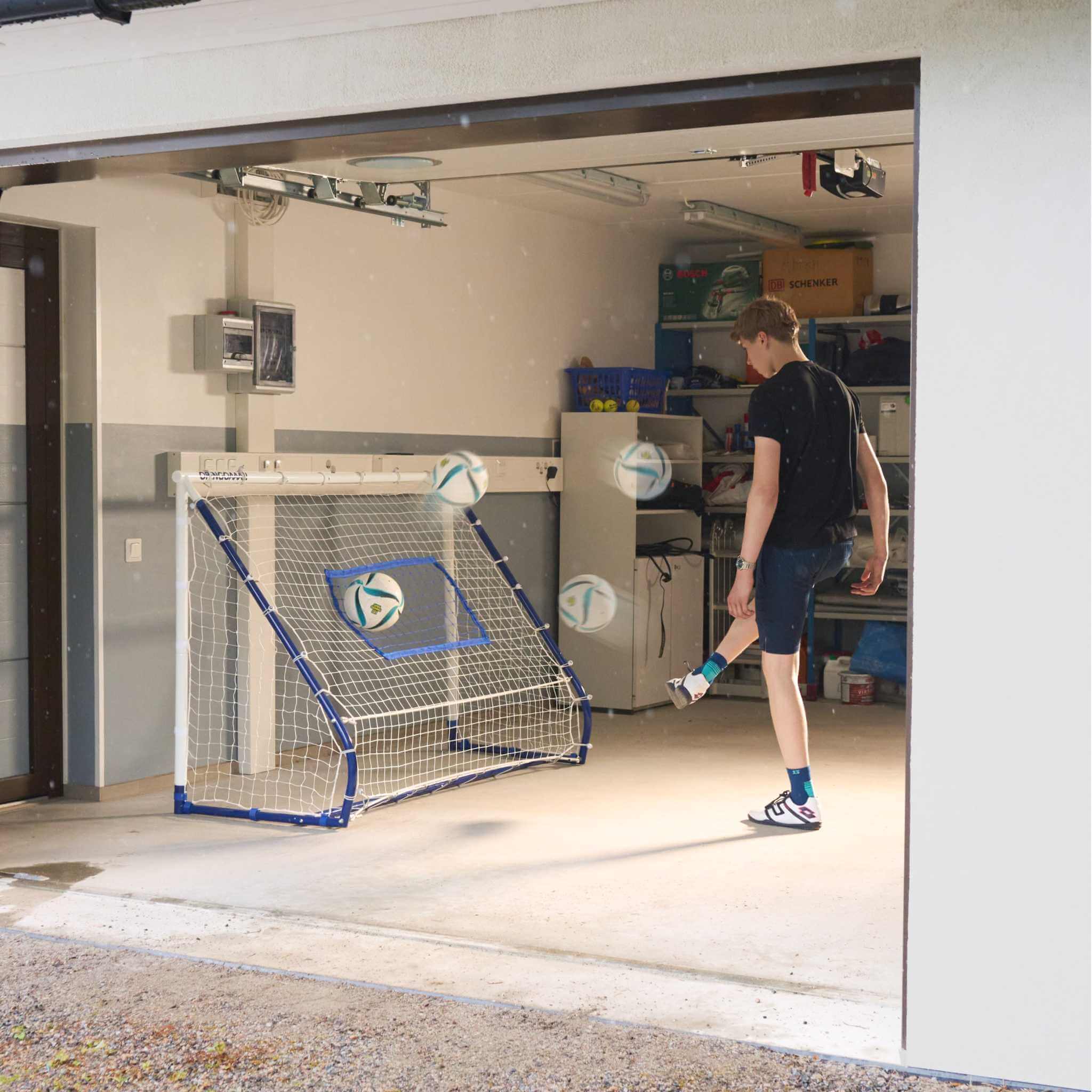
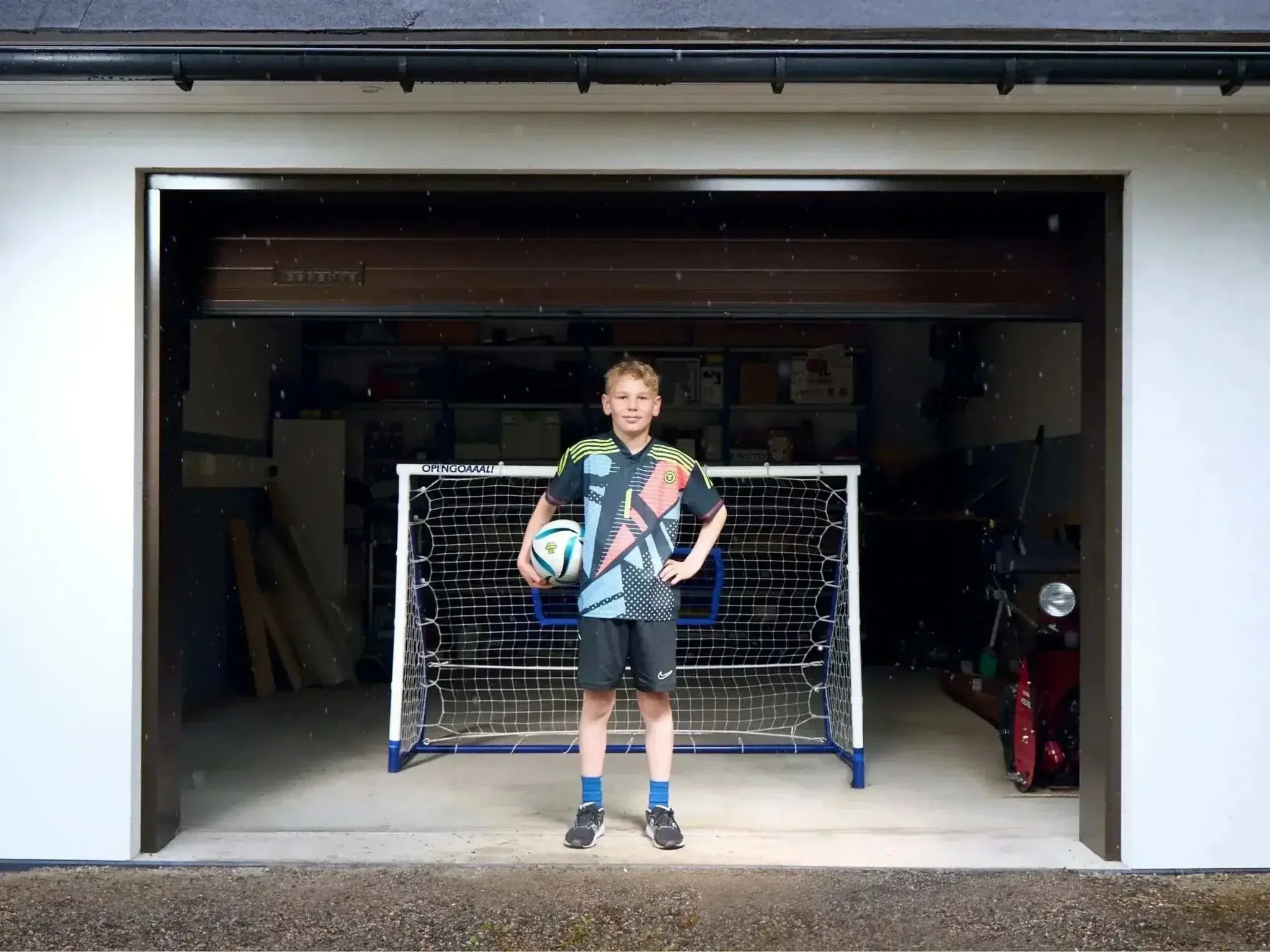
The ball finishes are where a backyard session tends to stall, because a missed shot means a walk to the fence. The Open Goaaal® 3-in-1 Soccer Goal Trainer combines a goal, a rebounder and a backstop, so the ball comes back and the next length starts on time. On the Standard size the inner goal is 9 by 5 feet and the backstop is 10 feet tall and up to 21 feet wide. First setup takes about 1.5 hours with two people, and our build video walks through it. For a smaller target, add our precision shooting targets.
For footwork with the ball the whole time, our 10 simple soccer footwork drills pair well with this circuit, and our agility drills you can do anywhere need no ladder at all.
Soccer ladder drills FAQ
What muscles do you use for soccer ladder drills?
Mostly the legs and hips. Every pattern is made of small hops, skips and quick steps on the balls of the feet, so the lower legs work hardest, and the arms swing to keep balance. The single-leg shuffle and hopscotch put more of the load on one side at a time.
What is the point of soccer speed ladder drills?
They give players a set pattern of foot placements to repeat quickly and accurately, which is hard to get from free play. Adding a pass or shot at the end ties the footwork back to soccer. For kids, the hopping and jumping also count toward activity guidelines: the CDC says children and teens need muscle- and bone-strengthening activity at least 3 days each week, and lists hopping, skipping and jumping as bone-strengthening (CDC, January 2024).
How often should you do soccer ladder drills?
Two or three short sessions a week is plenty, around 10 to 15 minutes each, on top of team practice. The circuit above fits that. Federal guidelines say youth ages 6 to 17 need at least 60 minutes of moderate-to-vigorous activity each day (U.S. Department of Health and Human Services, updated November 2025), so a ladder session is one piece of that, not the whole thing.
Do you need a real agility ladder?
No. Chalk on a driveway, tape on a garage floor or a row of sticks on the grass all work. Keep the boxes about the same size so the rhythm stays even.
This article is general information, not medical advice, diagnosis or treatment. For a persistent or worsening symptom, or any concern about your health, speak to a qualified healthcare professional.
Final thoughts
Lay out ten boxes this week, learn the Ickey shuffle at walking pace, and run the 15-minute circuit twice before the weekend, with a ball waiting at the end of every length. When you want more running in the plan, our soccer conditioning drills build a full preseason around it, and our soccer goals give the ball finishes somewhere to go.