
Five shooting drills cover what kids need, in this order: shooting with no goal, shooting at an empty net, 1-on-1 shooting, rolling-ball shooting and bouncing-ball shooting. Start every child at the first one, move up when they're hitting the ball cleanly, and keep the sessions short and loud.
Each drill below has a setup in feet or yards, what to watch for and how to make it harder. After the drills come five cues for striking the ball, a quick plan by age, and how to keep shooting practice fun.
Which shooting drill should kids start with?
The one that matches the ball they play with and how far they can kick it. US Youth Soccer's playing rules (December 2025) use a size 3 ball through 8U and a size 4 from 10U to 12U, so shoot with that size at home too.
| Age group | Ball | Drills to focus on | Shooting distance |
|---|---|---|---|
| U6 to U8 | Size 3 | 1 and 2, a little of 4 | 5 to 10 yards |
| U9 to U10 | Size 4 | 2, 3 and 4 | 8 to 14 yards |
| U11 to U12 | Size 4 | 3, 4 and 5, plus targets | 12 to 18 yards |
The distances are our own starting points. If a child can't reach the goal on the ground, move them closer. Scoring every time? Move them back or shrink the target.
1. No-goal shooting
Before kids aim, they need to feel a clean strike. Line up five balls on the grass and have the child kick each one as far and as straight as they can toward a fence, a parent or a big open space. No goal, no keeper, nothing to miss.

Watch where the ball goes. Straight and low means they struck through the middle. A ball that spins off sideways usually means they hit it with the toe or the side of the foot. Praise the clean ones out loud. This is the drill for U6 and anyone new to the game; our U6 soccer drills have more ball-mastery games for that age.
2. Empty-net shooting
Add a goal and nothing else. Two cones about 6 feet apart work, or a small backyard goal. Shoot from 5 to 10 yards, five balls per round, and count how many go in.
This is where kids start choosing where to put the ball. Ask them to call "left" or "right" before each shot. Once that's easy, hang a corner target in one side of the goal and award two points for a shot that goes in it.
3. 1-on-1 shooting
Put someone in goal, a parent, a sibling or a teammate, and the drill changes completely. Now the shooter has to look up, see where the keeper is standing and pick the open side.
Start with the keeper on their knees, so the shooter gets some success, then stand up. Older kids can dribble in from 15 yards and shoot before a cone line at 10. Swap roles every five shots so everyone gets a turn in goal. Our attacking drills build on this with defenders.
4. Rolling-ball shooting
In games the ball is rarely sitting still when a shot comes. Have a parent roll the ball toward the shooter from the side or from in front, and shoot it first time or after one touch.
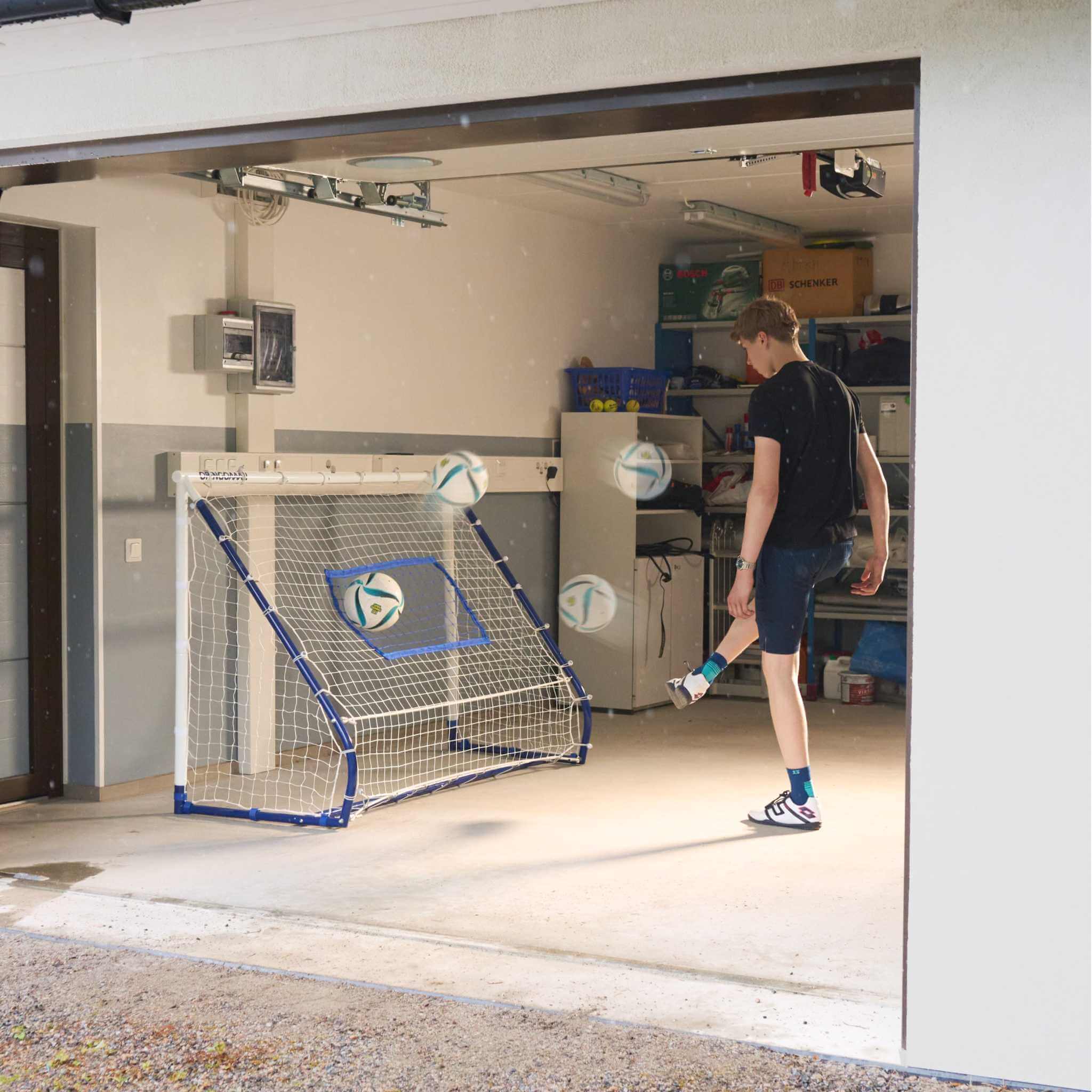
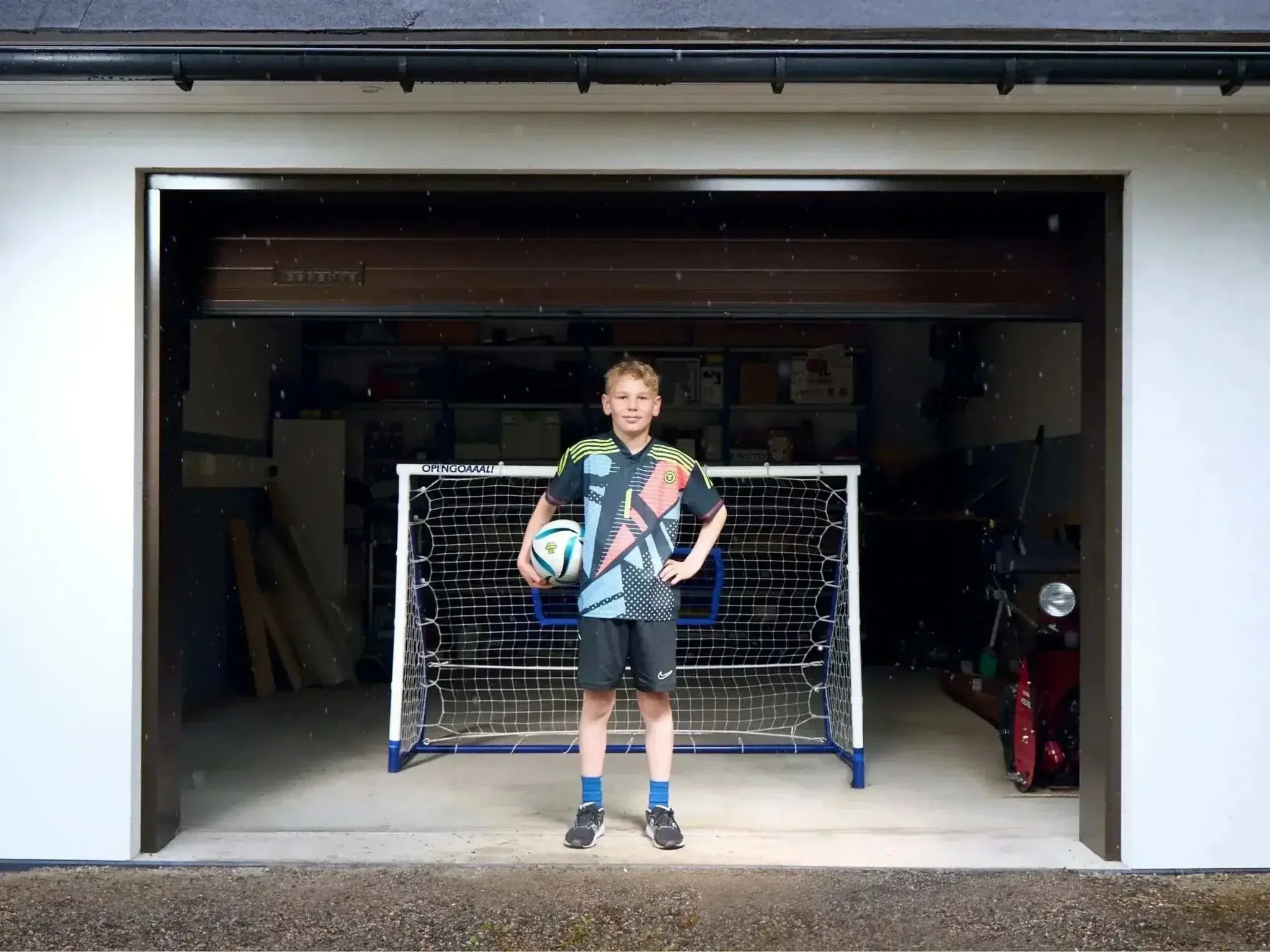
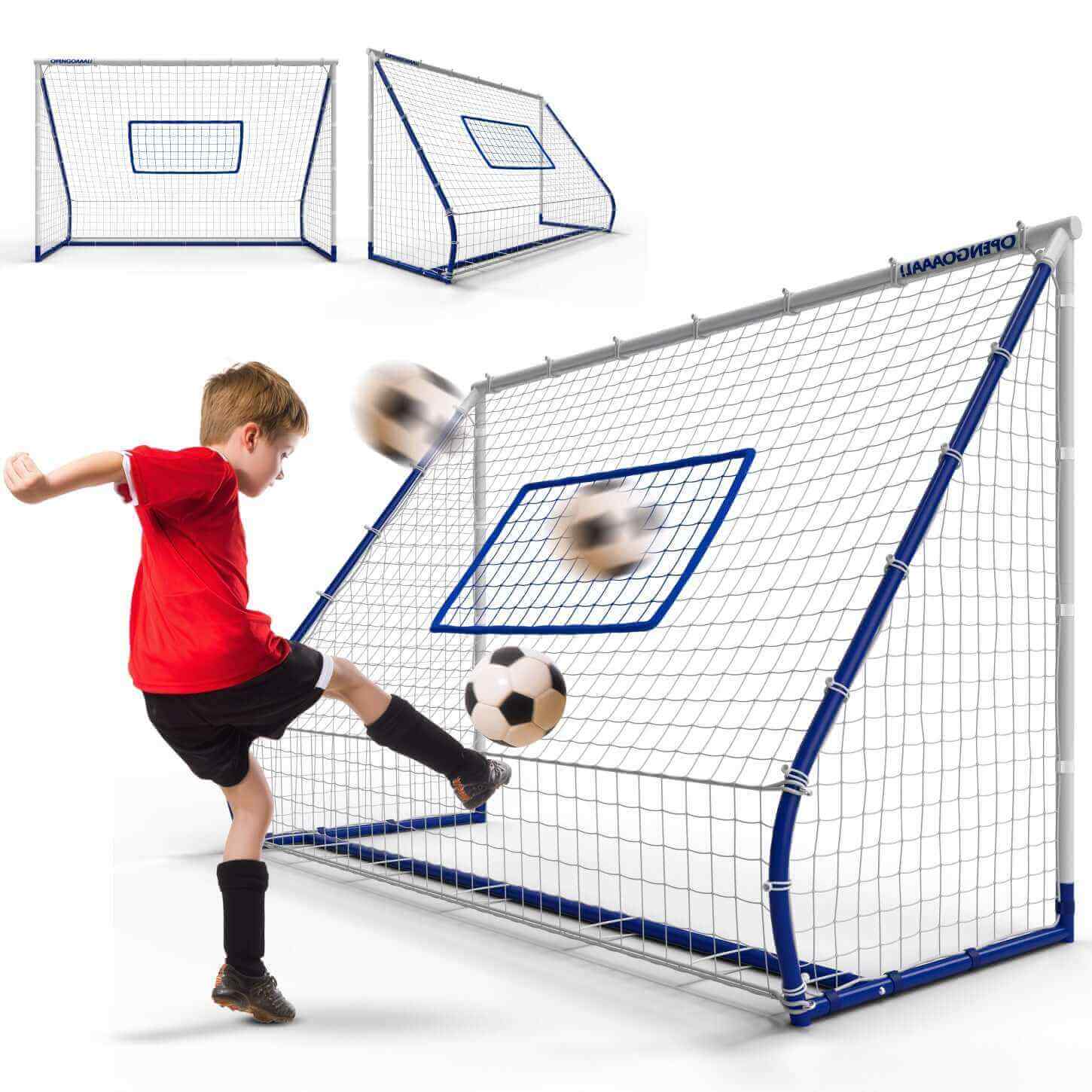
Roll slowly at first and from straight ahead, which is easiest. Then roll from the left, then the right, then a bit faster. The cue is to get the standing foot next to the ball as it arrives rather than reaching for it. A goal that sends the ball back saves the parent from chasing: the Open Goaaal® 3-in-1 Soccer Goal Trainer is a goal, rebounder and backstop in one, so shots on target come back and most misses stop in the net.
5. Bouncing-ball shooting
This is the hardest of the five, so save it for kids who strike a rolling ball cleanly. Toss the ball underhand so it bounces once in front of the shooter, and have them strike it as it comes down from the bounce.
Expect plenty of misses over the top. Coach one thing: knee over the ball at contact keeps it lower. Start with gentle tosses from close range, then try volleys straight out of the hand for U11 and up. Our guide to types of kicks in soccer covers the volley and half-volley.
How do kids strike the ball with power?
Teach a relaxed body and a clean contact before you ask for a harder kick. These are the five cues we'd use with kids, one at a time.
Relax the body
Shoulders down, arms loose, a little bend in the standing knee. The only part that should be firm is the ankle of the kicking foot.
Get a good last stride
The last step into the ball should be a little longer than the others. It gives the kicking leg room to swing back. Plant the standing foot beside the ball, pointing at the target.
Let the knee go first
The knee of the kicking leg comes through before the foot, then the lower leg snaps through. Kids often swing the whole leg stiff, like a pendulum. Watch for the knee leading.
Kick with the laces
Toes pointed down, ankle locked, contact on the laces through the middle of the ball. Toe pokes are fine in a scramble, but they go anywhere.
Look at the strike
Eyes on the ball at contact, head still. Players who look up at the goal as they kick tend to lean back and send it high.
Is accuracy or power more important for kids?
Accuracy, by a long way. A shot placed low in a corner usually gives a keeper more trouble than a hard one straight at them. Targets help, because they make aiming a game. Our precision shooting targets mark out zones inside the goal, so a shot only counts if it hits the zone.
For U11 and up with a few friends around, add a simple finishing game: one player crosses from the side, another runs in and shoots first time. Rotate positions every few balls. It brings in timing, which none of the solo drills can.
How do you keep shooting drills fun?
Keep score, keep it short and let them win. Ten to fifteen minutes of shooting is plenty for young kids. Count goals, play first to five against a parent, or give double points for the weak foot.
Stop while they still want more, and end on a goal, not a miss. If a child is getting frustrated, move them closer or go back a drill. For more game ideas, see our fun soccer games for kids and soccer drills for 8-year-olds.

FAQ
What is a good shooting drill for 6-year-olds?
Empty-net shooting from about 5 yards with a size 3 ball. Count goals out loud and let them call the side before they shoot.
How many shots should kids take in a practice?
Short rounds of five, with a break to collect balls or swap the keeper. Three or four rounds is plenty for younger kids.
Should kids shoot with their weaker foot?
Yes, from the start. Make one round in every three weak-foot only, and move them closer for it.
Can you practice shooting without a goal?
Yes. The no-goal drill needs only a ball and open space, and two cones or water bottles can stand in for posts.
A simple plan to start with
Pick the drills for your child's age from the table, run five balls per round, and move up one drill when they're scoring most of their shots. Keep it to fifteen minutes and finish with a game. For older players ready for more, our U12 soccer drills add pressure and decisions.