
The best shin guards are the ones that meet your league's rule, fit your player's height and stay put under the sock for a whole game. For high school soccer in the US, that means a guard with the NOCSAE seal and the right height range printed on the front.
We haven't lab-tested shin guards, so this isn't a ranking of brands. It's the nine things we'd check before buying a pair for a youth player, from league rules to washing, each with the source behind it. Then a quick buying guide on types, sizing, standards and position, and answers to the questions parents ask most.
What should you check before buying shin guards?
Start with the rules, then fit, then comfort. A guard that's legal and the right size but gets pulled off at halftime because it itches hasn't done its job.

1. Are shin guards required in your league?
In organized soccer, yes. IFAB Law 4, The Players' Equipment lists shinguards as one of five compulsory items, alongside a shirt with sleeves, shorts, socks and footwear. The same law says players are responsible for the size and suitability of their own guards. Rec leagues and pickup games set their own rules (our quick overview of soccer rules covers the basics), so ask your club, but it's rare to find a youth team that lets kids play without them.
2. Does your player need a NOCSAE seal?
If they play high school soccer, yes. The NFHS 2025-26 soccer points of emphasis (June 2025) say each guard must meet NOCSAE standards and carry the NOCSAE seal, permanently marked on the front, showing the approved height range for that model. College soccer requires the NOCSAE standard too, according to the NFHS 2024-25 comparison of NCAA, NFHS and IFAB rules.
NOCSAE's own soccer standards page describes its ND090 standard as setting performance requirements for new shin guards as supplied by manufacturers. If your middle schooler is likely to try out for the high school team in a year or two, buying a sealed pair now saves you doing it twice.
3. Is the height range right for your player?
This is the main sizing check. Shin guards are sized by player height, and on NOCSAE-sealed guards the approved range is printed in the seal itself. Measure your player in socks, then pick the size whose range they sit in, not the one they'll grow into.
Ranges vary by brand, so a "Medium" from one company can fit very differently from another's. The printed height range is the number to trust.
4. Does it cover the shin without digging in?
Put the guard on and have your player bend the knee and point the toes. The top shouldn't press into the knee and the bottom shouldn't hit the top of the foot or the front of the ankle. If either happens, the guard is too long or sitting too low. Too short leaves a big strip of shin uncovered, which is usually a sign they've outgrown it.
5. How does it stay in place?
There are three common ways: velcro straps, a compression sleeve that the guard slides into, or a sock-style guard that's built into a sleeve. Straps adjust for skinny or thick calves, sleeves feel smoother, and both can still slip if the sock is loose. Many players add tape over the sock. If they do, Law 4 says tape on the outside of the sock has to match the color of that part of the sock.
6. Does your player want ankle padding?
Some guards have a stirrup with padded discs over the ankle bones; most slip-ins don't. This one is preference. Younger players often start in ankle-style guards because they go on and stay on easily, while older players tend to find them bulky inside the cleat. Let your player try both on with their cleats before you buy.
7. Will your player actually wear it?
Weight, breathability and feel decide this more than anything on the label. A guard that's too heavy or hot gets tugged at, pushed down or "forgotten" in the car. Perforated shells and thinner backing pads are lighter; thicker foam feels more padded but holds more heat in August. Letting a kid choose between two pairs that both pass checks 1 to 4 goes a long way.
8. Do your socks fit over the guard?
They have to. Law 4 says shinguards must be covered by the socks, and a sock that's too tight will roll the guard down while one that's too loose won't hold it. Team socks usually go over the guard; a common setup is a grip sock underneath and the team sock or a cut sock sleeve on top.
For grip socks, LUX makes soccer grip socks in calf and knee lengths. To be upfront: LUX belongs to eBrands, the same company as Open Goaaal. Our guide to the best soccer socks covers what to look for in any brand.
9. How do you clean shin guards, and when do you replace them?
Follow the care label, but most guards just need a rinse with mild soap and water and a full air-dry, out of the bag, after every game or practice. Fabric sleeves often go in the washing machine; check the label before a shell goes anywhere near one. Don't leave them in a hot car or on a heater.
Replace them when the shell cracks, the straps or sleeve stop holding, or your player grows out of the printed height range. For a growing kid, that last one tends to come first.
The Best Shin Guards: Buying Guide
Once you know the rules and the size, the choice comes down to type and how your player likes them to feel.
What types of shin guards are there?
| Type | How it's held on | Usually suits | Watch out for |
|---|---|---|---|
| Slip-in | Slides into a sleeve or straight into the sock, often with tape | Older players who want the lightest feel | Slipping down if the sock or sleeve is loose |
| Ankle guard (stirrup) | Straps plus a stirrup under the foot, with ankle pads | Young players and beginners who need something easy to put on | Bulk inside the cleat |
| Sock-style | Guard is built into a stretch sleeve you pull on like a sock | Players who hate straps and tape | Fit across calf sizes; check the height range still applies |
How should shin guards fit?
Snug enough that they don't spin when your player runs, and long enough to cover most of the shin without touching the knee or foot. Buy using the height range, test with cleats and socks on, and check again at the start of each season. A guard that fit in August can be short by spring.
What safety standards apply to shin guards?
In the US, the name to look for is NOCSAE. NFHS rules require its seal for high school play, the NCAA requires its standard for college, and IFAB's Law 4 asks for a suitable material and an appropriate size. Officials at high school games don't usually run formal equipment checks, but the NFHS notes that coaches are responsible for making sure players are properly equipped and that referees will raise it with the coach if guards look undersized during warm-ups.
Do different positions need different shin guards?
Mostly it's preference. Attacking players tend to like light slip-ins, while some defenders prefer a little more padding because they're the ones putting a foot into tackles (our guide to the slide tackle explains how that challenge works). Goalkeepers still have to wear shin guards under Law 4, and the same law allows them to wear tracksuit bottoms. If your kid moves around the field (our youth soccer positions guide covers who plays where), pick for comfort first.
FAQs
What type of shin guards are best for kids?
For most young players, a size-correct guard they'll keep on. Ankle-style guards are the easiest for small kids to put on themselves; older players usually move to slip-ins with a sleeve.
How do I know what size shin guard to buy?
Measure your player's height and pick the size whose printed height range includes it. On NOCSAE-sealed guards, the range is part of the seal on the front.
Are all shin guards the same?
No. They differ in shell material, padding, ankle coverage and how they're held on, and only some carry the NOCSAE seal that high school soccer requires.
How do you keep shin guards from falling down?
Use the right size, a sleeve or straps that fit the calf, and socks that are snug over the top. Tape works too, as long as it matches the sock color.
Final Thoughts
Check the rule, check the height range, then let your player choose the pair they find comfortable. That order covers league requirements and fit before anything else gets a vote.
This article is general information, not medical advice, diagnosis or treatment. For a persistent or worsening symptom, or any concern about your health, speak to a qualified healthcare professional.
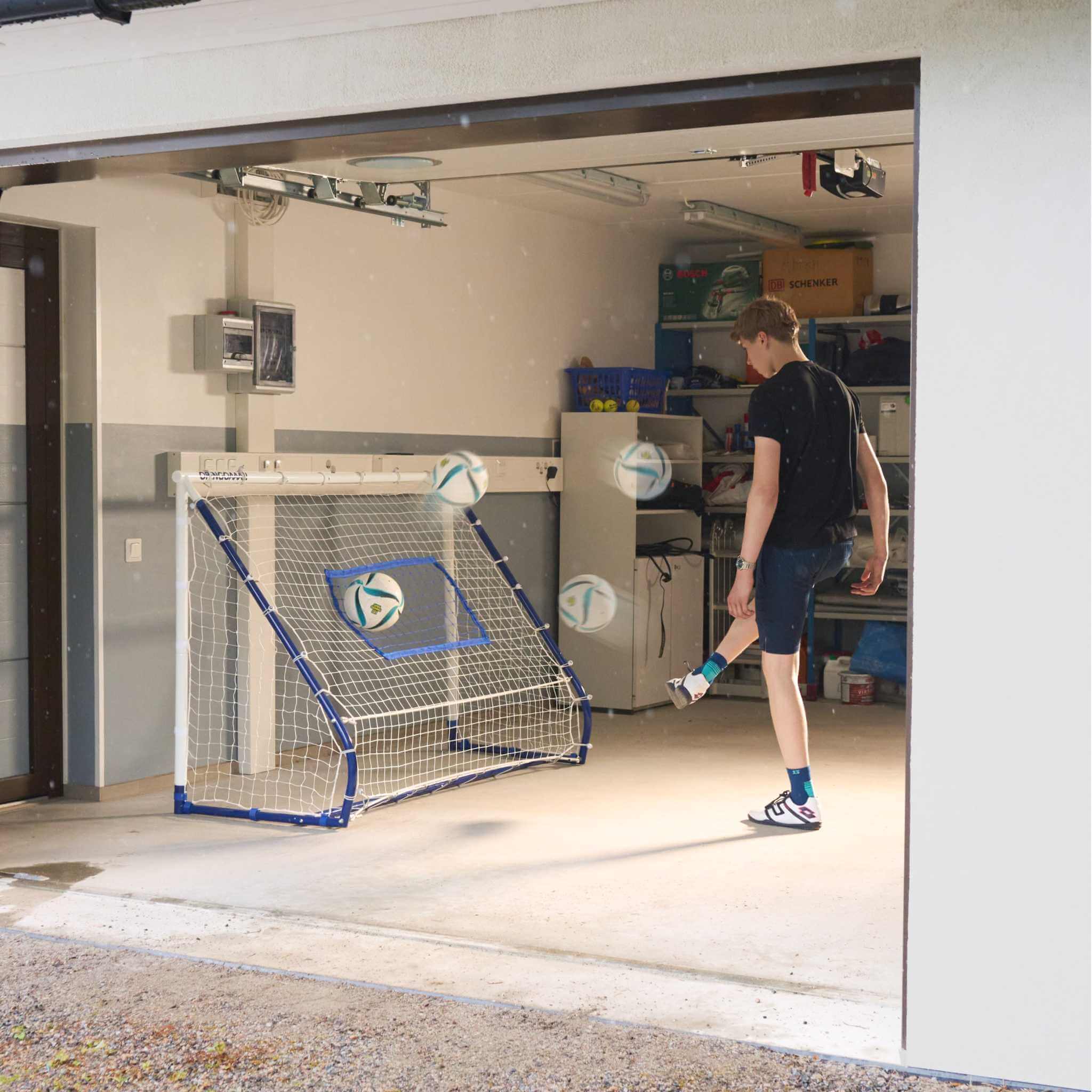
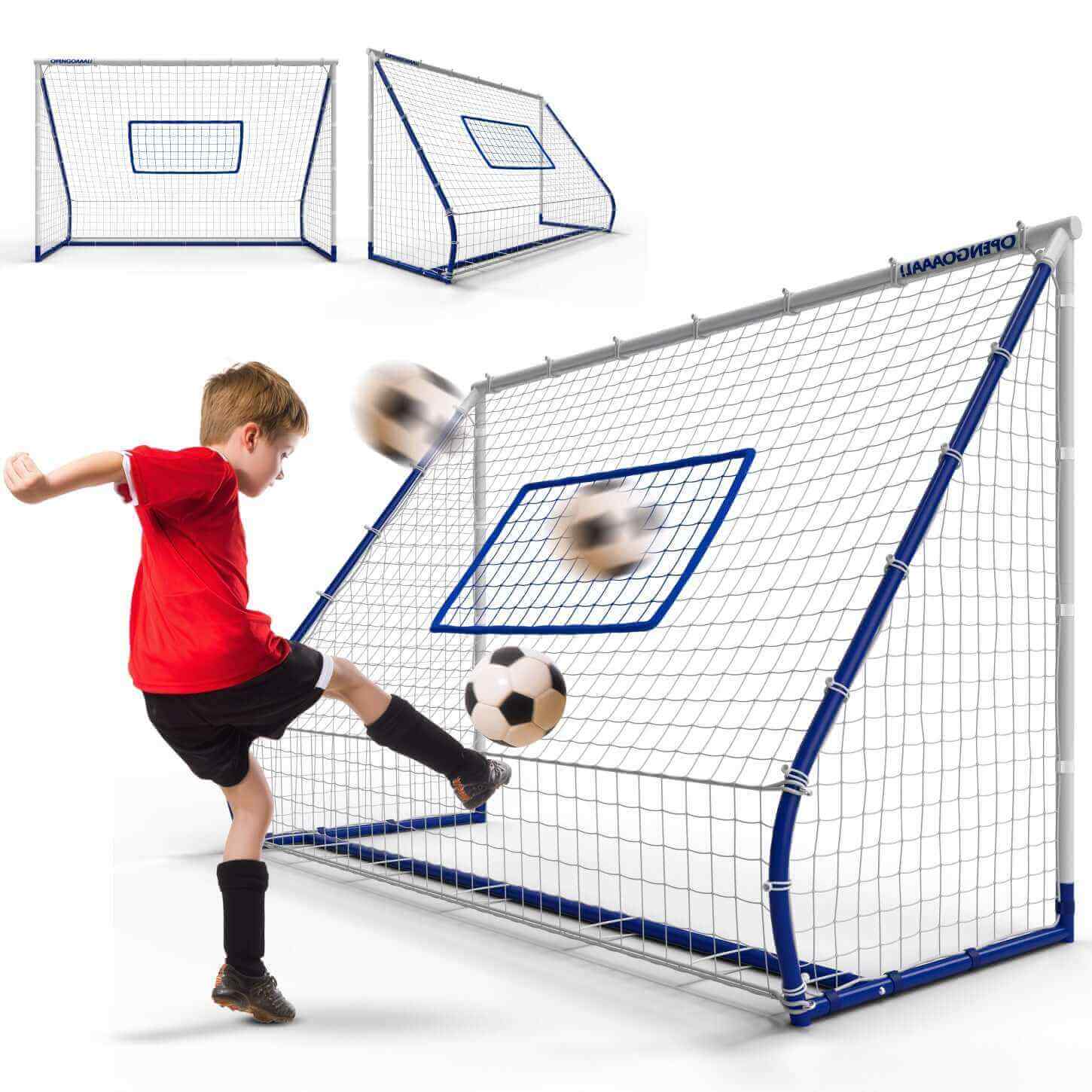
Once the new pair is broken in, the backyard is a good place to get used to them. The Open Goaaal® 3-in-1 Soccer Goal Trainer combines a goal, a rebounder and a backstop, so missed shots come back and the session keeps going. For the rest of the kit list, see our guide to the best soccer training equipment.