
The best soccer training equipment for a youth player is whatever lets them get more touches on a ball at home. In practice that means five types of gear: agility rings, a rebounder with a backstop, a training mannequin, net targets and a specialty ball. Buy them in the order your player needs them, not all at once.
Below is what each type is for, who it suits and what to skip. There's also a quick table by training goal, and the basic kit every player needs before any of it.
What basic gear does every youth player need first?
A ball, cleats, shin guards and socks that cover them. The IFAB Laws of the Game, Law 4 lists a shirt, shorts, socks, shinguards and footwear as compulsory, with the shinguards covered by the socks. US high school soccer goes further: the NFHS 2024-25 rules comparison requires shin guards that meet the NOCSAE standard, with the seal and height range stamped on the outside.
Get the ball in the size your child's league uses (see our soccer ball sizes guide). Our guides to shin guards and soccer socks cover fit. Everything below is extra, and none of it matters if the basics are missing.
Which training equipment fits which goal?
| Training goal | Equipment type | Space needed | Solo or with others |
|---|---|---|---|
| Quick feet and footwork | Agility rings or a ladder, flat cones | A 15 ft strip | Solo |
| More touches, keeping the ball in the yard | Rebounder with a backstop | A lawn wide enough for the frame | Solo or family |
| Dribbling past a body, free kicks | Training mannequin | Room to run at it | Solo |
| Shooting with a purpose | Net or corner targets | Any goal | Solo or competitive |
| Close control, keeper hand work | Specialty or weighted ball | A patio | Solo |
1. Agility rings: are they worth buying?
Yes, if you'll use them three or four times a week. Agility rings are flat plastic hoops, often hexagonal, that lie on the grass and clip together into different patterns. A player hops, shuffles or steps through them in a set order. They do the job of a ladder but you can rearrange them into a zigzag, a box or a single line in a few seconds.

Buy a set of six to twelve. They stack flat and fit in a ball bag. If you'd rather start with a ladder, our soccer ladder drills and agility drills you can do anywhere both work with either.
Skip anything electronic that times runs unless your player is already training most days. A phone stopwatch does the same job.
2. Soccer goal rebounder: what should you look for?
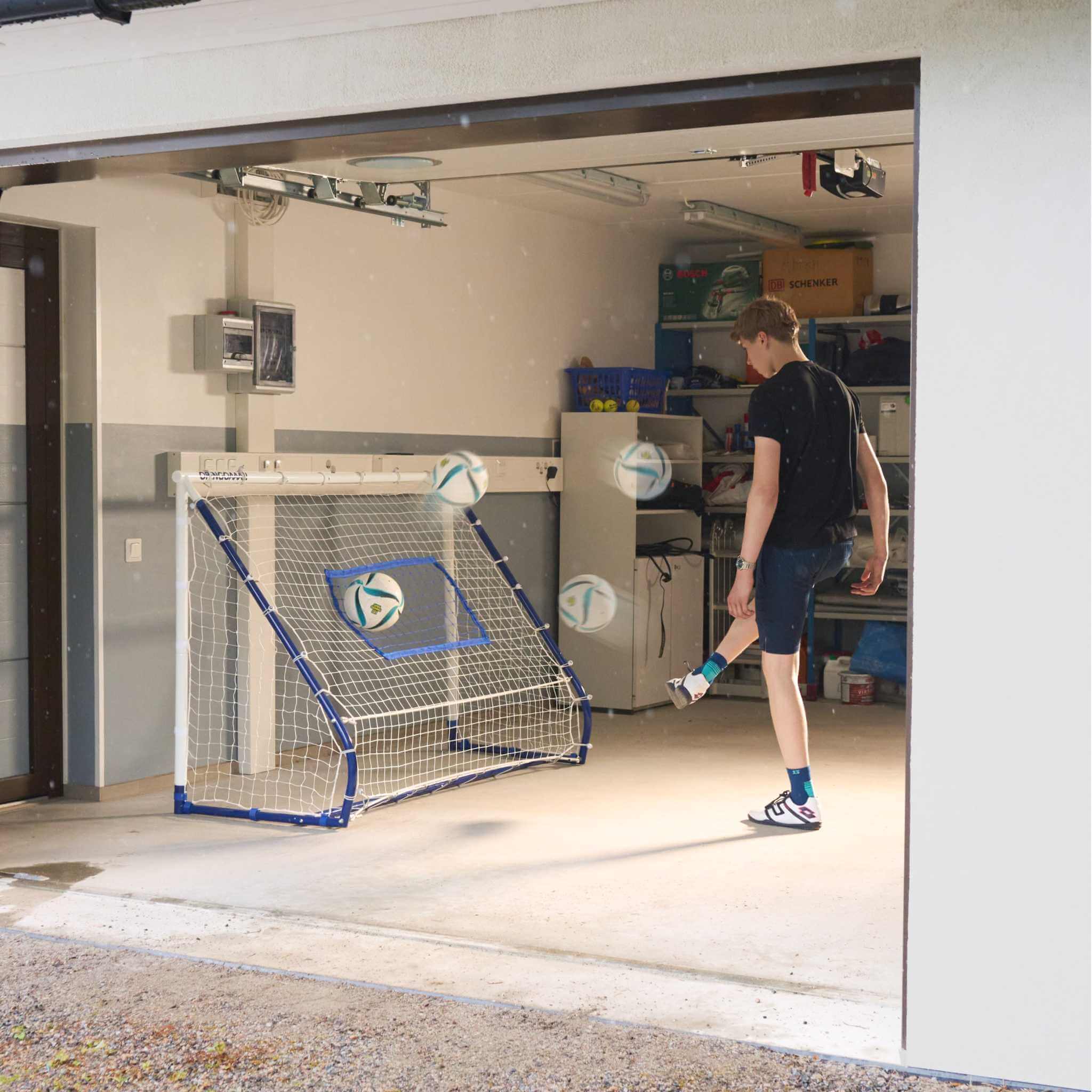
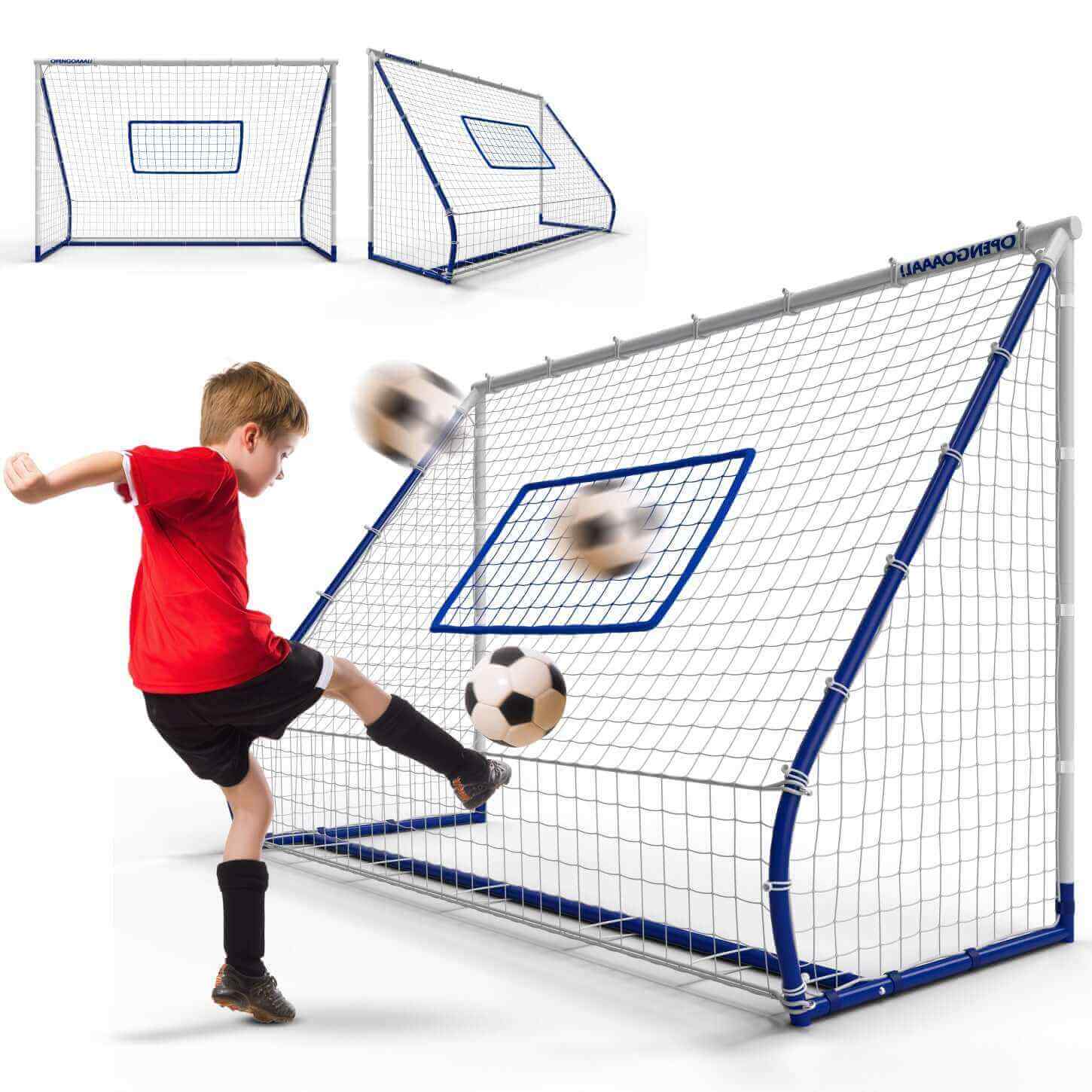
A frame that sends the ball back and a net that stops it leaving. Any rebounder returns the ball so a player can repeat a pass, a first touch or a shot without walking to collect it. On its own, though, a rebounder still lets every miss roll away. Pair it with a backstop, or buy them together.

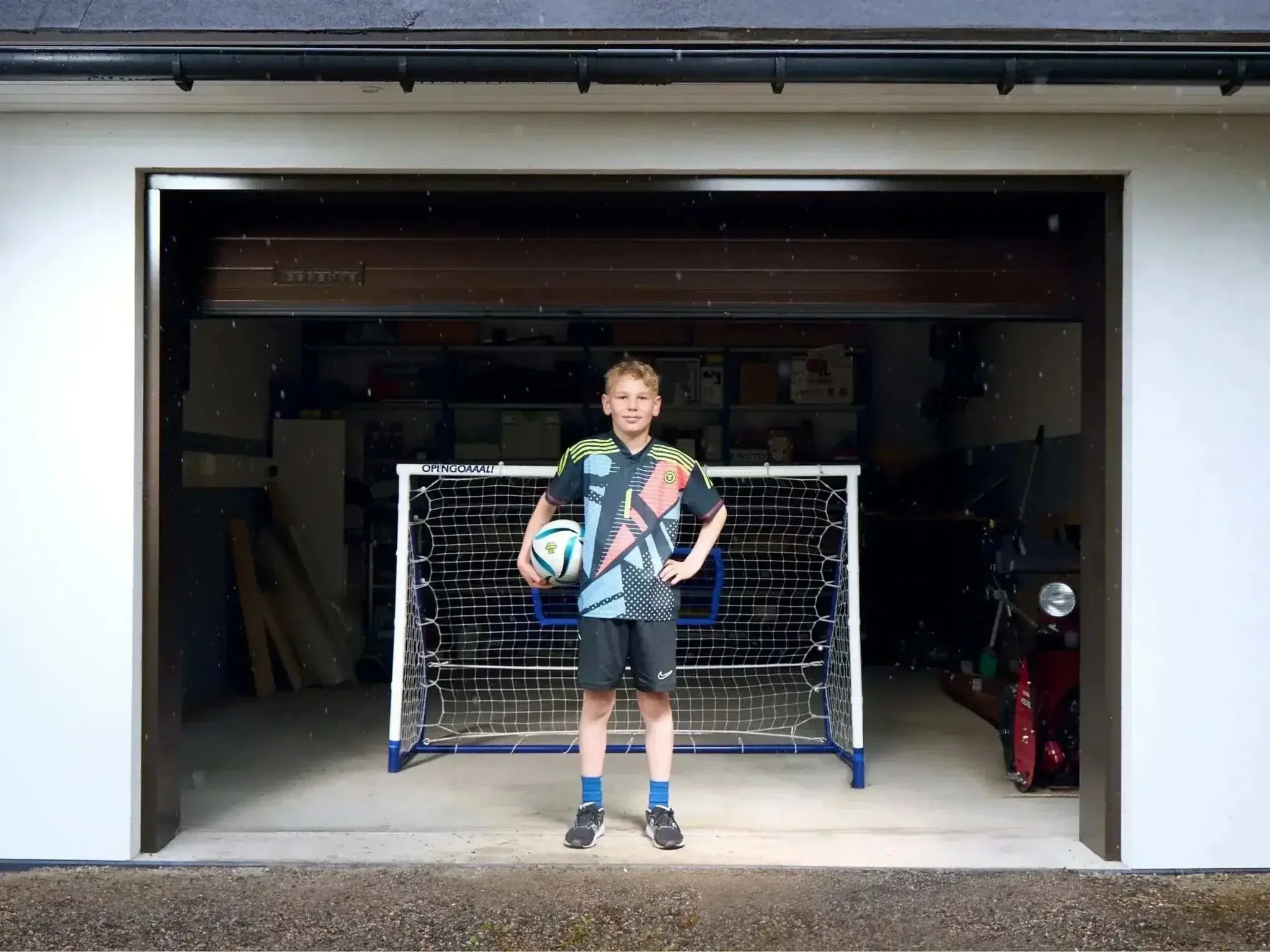
That's the design of the Open Goaaal® 3-in-1 Soccer Goal Trainer: a goal, a rebounder and a backstop on one steel-poled frame. It comes in four sizes, from the Junior (8 x 4.5 ft goal, 8 ft tall backstop) to the Regulation (24 x 8 ft goal). It stands on natural grass, the first setup takes two people about an hour and a half, and it carries a 1-year warranty.
What to check on any rebounder: how it anchors to the ground, how tall the net behind it is, whether parts can be replaced, and whether it fits your lawn. Our roundup of soccer rebounders goes through the types.
3. Soccer mannequin: who needs one?
Players who've outgrown cones. A training mannequin is a life-size, flat cut-out of a defender on a spike or a weighted base. It stands where a cone would, but it's tall and wide, so a player has to get the ball around or over something that looks like a person.

Use one or two as a free-kick wall, or set one at the edge of the box and practice cutting past it and shooting. Kids around U11 and up get the most out of them. For younger players, cones are cheaper and just as useful.
Look for a spiked base that pushes into grass and a frame that won't fold over in a breeze. They're bulky, so check where you'll store one before you buy.
4. Soccer net targets: do they make shooting practice better?
They give every shot a spot to aim at. A target is a smaller net or panel that hangs in the corners or along the inside of a goal, so a shot only counts if it lands in that area. It turns "kick it at the goal" into "pick a corner."

Two kinds are common. Corner targets hang in the top corners, usually on straps. Precision targets mark out zones inside the goal. Our precision shooting targets come as a 2-pack and fit inside most backyard goals. Whichever you buy, check how it attaches and that it fits your goal's frame before the first hard shot hits it.
5. Weighted soccer ball: is it right for kids?
For most kids, it's a later buy. A weighted ball is heavier than a normal ball for its size, and coaches use it for specific footwork and goalkeeper catching work. It's a specialist tool, so ask your player's coach before adding one, and keep shooting practice to a regular ball.

Better first picks for close-control work at home: a small skills ball (size 1 or 2) for toe taps and juggling, or a futsal ball, which bounces less and stays at the feet. Once the basics are covered, a second, training-grade ball in your league size is the most useful extra. Our size 5 soccer ball is the one for players from 13U up, and our best soccer balls guide covers the other sizes.
What training equipment can you skip?
More than you'd think. Speed parachutes, resistance bands for kids, and gadgets that only do one drill tend to end up in the garage. A few cones, a ball and something that keeps the ball in play cover most of what a youth player needs at home.
Look after what you do buy. Pump balls to the pressure printed by the valve, rinse mud off cleats and let them dry away from heat, and bring nets in or tension them before winter. Add-ons for a backyard goal are in our soccer goal accessories range.
Frequently asked questions
What is the best soccer training equipment?
The piece your player will use most. For home practice that's usually a goal with a rebounder and backstop, because it covers shooting, passing and first touch without anyone fetching the ball.
What gear do you need for soccer practice?
Cleats, shin guards, socks that cover them, a ball in your league's size and a water bottle. Keepers add gloves; our goalie drills article covers what they'll do with them.
What is the most important piece of gear in soccer?
The ball, then cleats that fit your surface. A player can practice for hours with a ball and no other gear; our guide to turf soccer shoes helps with the cleat side.
Do kids need a soccer mannequin?
Not at first. Cones do the same job for younger players. Mannequins earn their space once a player is working on free kicks or beating a defender.
Where to start
Get the basics right, then buy one piece of training equipment for the goal that matters most to your player. For most families that's a rebounder with a backstop, followed by targets or rings. Add the rest only once the first piece is getting used every week.