
Shielding in soccer means keeping your body between a defender and the ball while the ball stays within playing distance. Stand side-on, keep the ball on the foot farther from the defender, bend your knees, and use your arm for balance, not to push. It's legal under IFAB Law 12.
Below: what shielding is and when to use it, what the Laws of the Game allow, a step-by-step technique, the coaching points that matter, and a 1v1 drill a parent can run in the backyard as the defender.
What is soccer shielding?
Shielding is protecting the ball with your body. Instead of dribbling away from pressure or passing it off, the player keeps the ball and puts their body in the way so the defender can't reach it. Every position uses it: a center back under pressure near their own goal, a winger trapped on the sideline, a forward with their back to goal waiting for support.

It's the right choice in a handful of game moments:
- No pass is on. Teammates are marked and there's no way past the defender yet.
- The player is in a tight spot. Near the corner flag or the touchline, with a defender closing from behind.
- Running the ball out. Letting a ball roll over the end line for a goal kick, or over the touchline for your own throw-in, while the defender tries to get to it.
- Waiting for help. Holding the ball up in attack until a teammate arrives to give an option.
- Under pressure in your own half. When losing the ball would give the other team a chance, shield until there's a safe pass or the ball can be cleared.
Once the shield buys a second or two, the player can pass, turn, or dribble away. Think of shielding as the pause before the next action. Strikers in particular spend a lot of time holding the ball up this way; our center forward vs striker article covers that role.
Is shielding the ball legal?
Yes, with limits. The IFAB Laws of the Game, Law 12 say a player may shield the ball by taking a position between an opponent and the ball, as long as the ball is within playing distance and the opponent is not held off with the arms or body. The same law says that a player shielding a ball within playing distance may be fairly charged by the opponent, so expect contact.
Three ways a shield becomes a foul:
- The ball isn't within playing distance. Blocking a defender's path when the ball is out of reach of both players is impeding, which Law 12 punishes with an indirect free kick.
- Holding. Grabbing a shirt or wrapping an arm around the defender is a direct free kick offense.
- Pushing. Shoving the defender away carelessly, recklessly or with excessive force is also a direct free kick offense.
Law 12 also notes that all players have a right to their position on the field, and that being in an opponent's way is not the same as moving into it. A player who is already standing over the ball doesn't have to step aside. For the wider rules picture, see our quick overview of soccer rules.
How do you shield a soccer ball, step by step?
Turn side-on, not fully back-to-the-defender. When players first feel pressure, most turn their back square to the defender. That's better than nothing, but a defender can poke a foot through the legs or around either side, and the attacker can't see much of the field. A side-on stance keeps the ball farther away and lets the attacker see the defender and the space.
- See the defender coming. Check over the shoulder before the ball arrives so the shield starts with the first touch, not after the defender has arrived.
- Turn side-on. Hips and shoulders sideways to the defender, the shoulder nearest them slightly forward.
- Get low. Knees bent, weight on the balls of the feet, a wide base. A low, wide stance is hard to move.
- Ball on the far foot. Keep the ball on the foot farthest from the defender, with the sole on top or the inside of the foot touching it.
- Arm out for balance. The arm nearest the defender comes up slightly, bent, to feel where they are. It doesn't push or grab.
- Keep the ball moving. Roll it a little with the sole as the defender shifts. A player who freezes is easy to read.
- Go the other way. When the defender commits to one side, roll the ball the opposite way and turn, pass or dribble out.
How do you use your body to shield?
Lean into the contact rather than away from it. US Youth Soccer's Skills School manual (2017) describes the position: a side position that keeps the ball at the farthest point from the opponent, weight on the leg closest to the opponent with the knee slightly bent, the nearer shoulder leaning in, the center of gravity lowered, and the sole of the far foot on the ball. It also says plainly that the nearer arm is there for balance and must not push.
Two adjustments come up in nearly every shield:
- When the defender pushes into you, drop your hips and lean back into them. Moving the ball slightly away from the side they're pushing on adds distance.
- When you start to lose balance, don't wait to be knocked off the ball. Roll it away with the outside of the far foot and go, or play the simple pass.
Against two defenders, shielding rarely lasts. If a second player arrives, pass, clear, or win a throw-in by playing the ball off a defender and out.
What are the key coaching points for shielding?
Coach the stance first and the contact second. Players who are side-on and low can handle contact; players who are upright and square can't, however strong they are.
- Find your natural shielders. Some players take to it quickly. They're useful as a target in attack and as a calm option under pressure in defense.
- Let them feel the contact. Young players shy away from a defender at first. In drills, let defenders lean in so attackers learn to feel which side the pressure is coming from and move the ball away from it.
- Watch the arms. Arm up for balance is fine. A swinging elbow or a push with the hand is a foul, and young players drift into both as they get tired.
- Keep the head up. A shield that ends with the player staring at the ball wastes the time it bought.
- Add a move out of the shield. Once the stance is solid, teach a way to escape: a roll with the sole, a soccer move like a stepover, or a quick turn.
Shielding connects with two other skills. A good first touch sets it up, so see our guide to soccer trapping, and a confident dribbler can switch from shielding to attacking in one move, which our 6 soccer dribbling drills work on.
What is a good shielding drill to do at home?
The parent-as-defender 1v1. Mark a 10 x 10 yard box. The child starts with the ball in the middle; the parent stands right behind them.
- Round 1, 30 seconds: the parent tries to touch the ball with a foot, walking pace, light contact. The child shields and keeps the ball in the box.
- Round 2, 30 seconds: same, but the child must keep the ball moving with the sole the whole time.
- Round 3: after shielding for five seconds, the child rolls away from the parent and dribbles out of either side of the box to score.
- Round 4: add a goal 15 yards away. Shield, turn and shoot.
Rest a minute between rounds and play three sets. Parents: match your pressure to your child. The aim is for them to win most rounds while still feeling the contact.
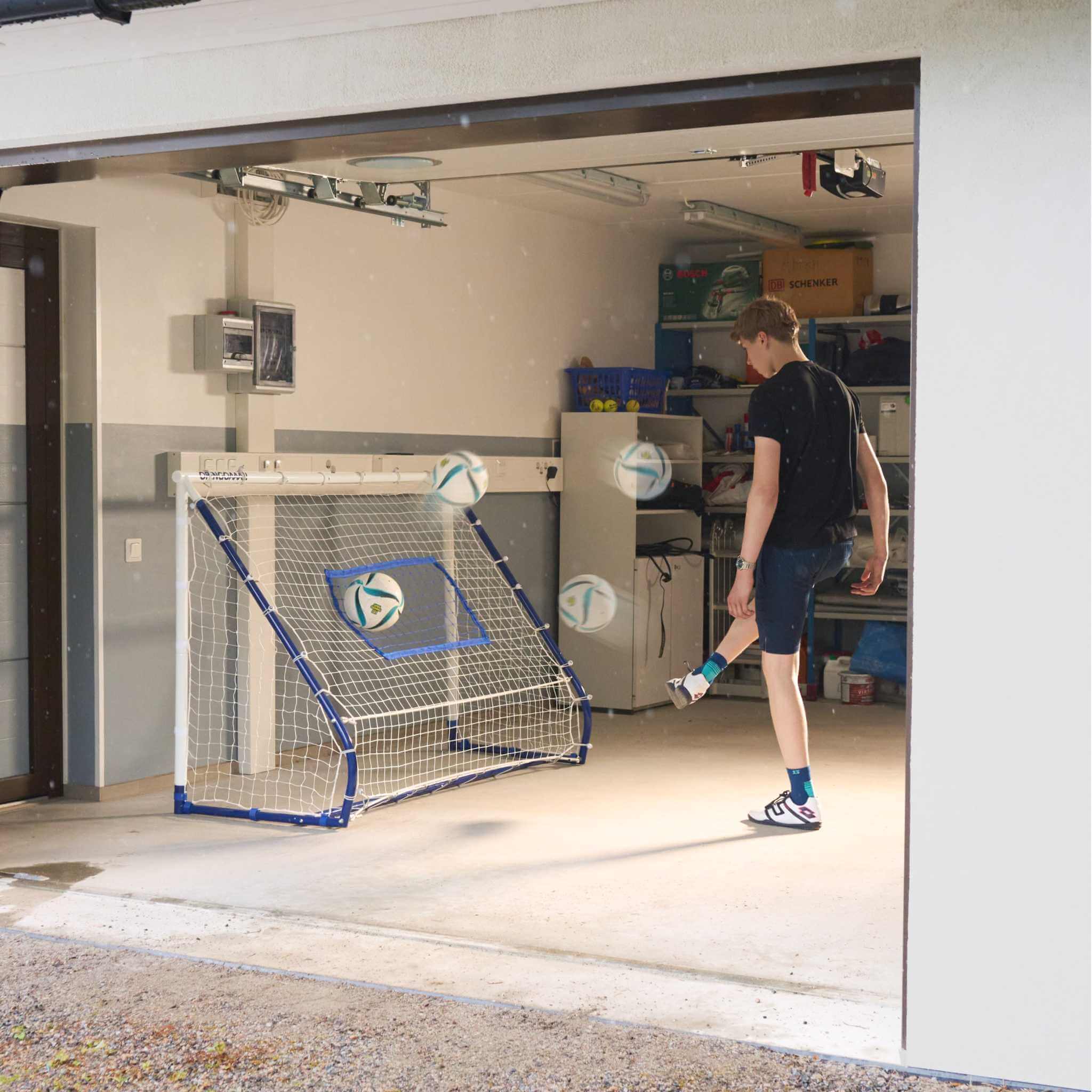
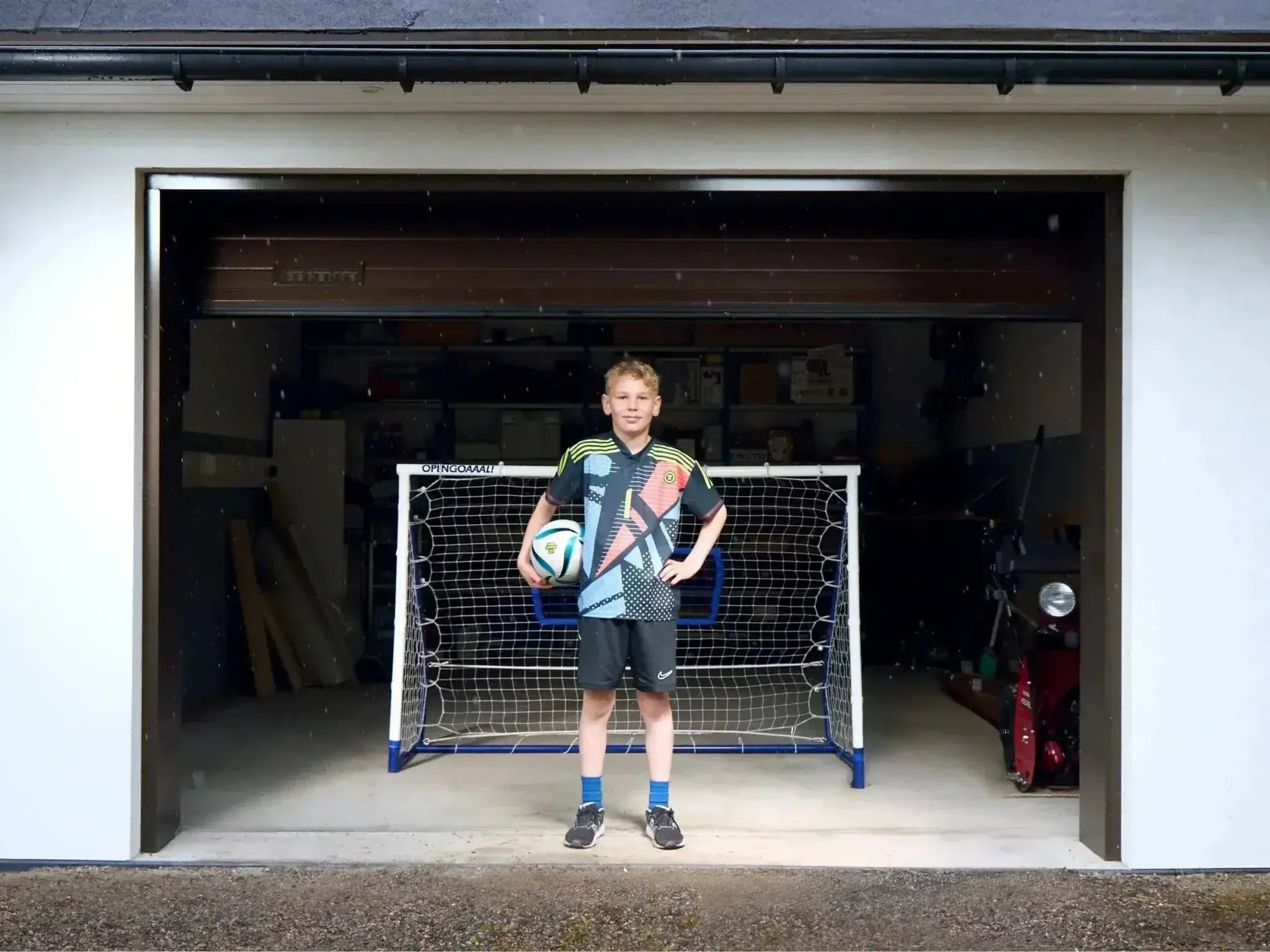
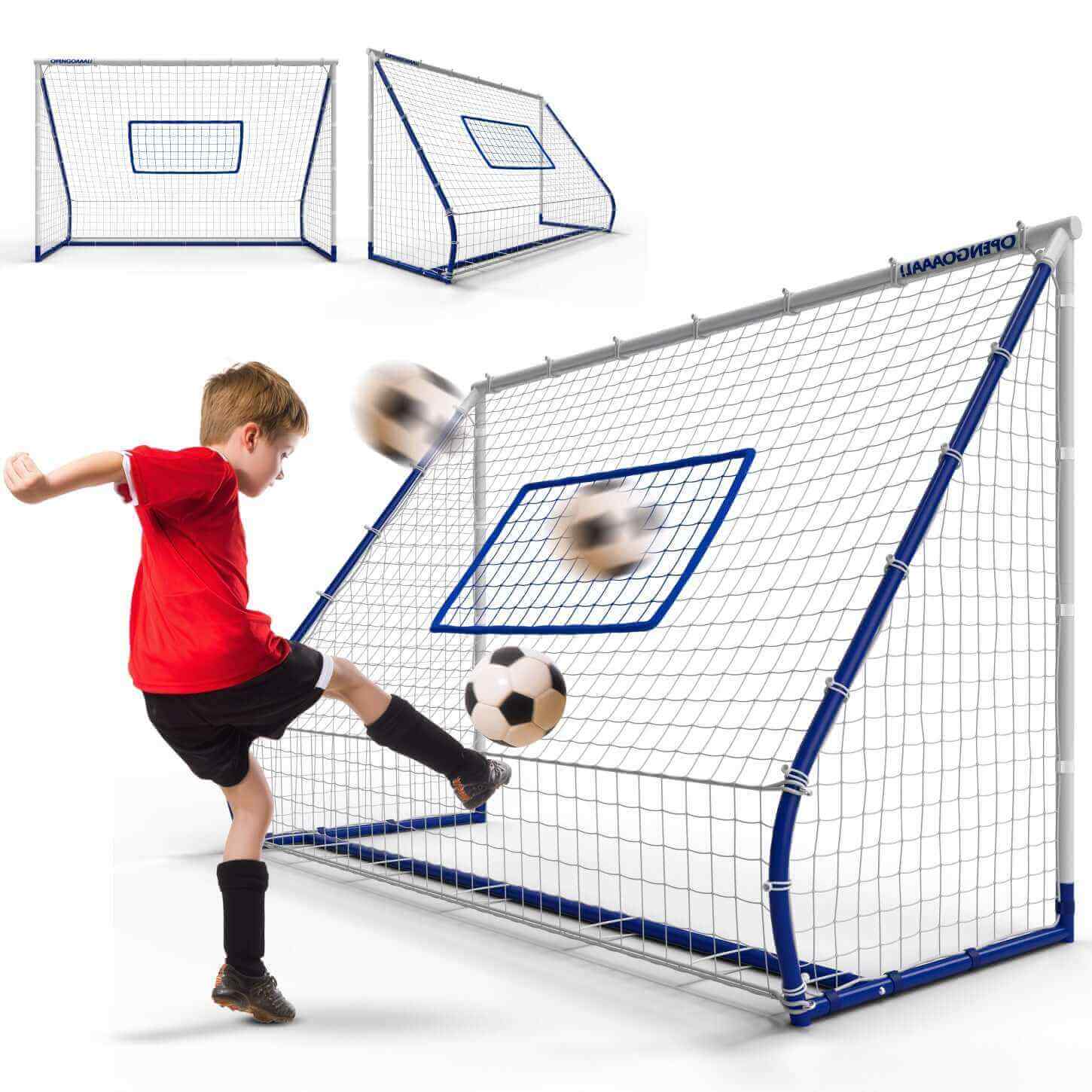
Round 4 works well with the Open Goaaal® 3-in-1 Soccer Goal Trainer as the target. It's a goal, rebounder and backstop in one, so a shot that misses comes back toward the box and the next round starts straight away. For more two-player games, see our 1v1 soccer drills.
FAQ
Is shielding the ball a foul?
No. Law 12 allows it while the ball is within playing distance and the defender isn't held off with the arms or body. Blocking a defender when the ball is out of reach is impeding.
Can you use your arms when shielding?
For balance, yes. Holding or pushing the defender with an arm or hand is a foul.
What age should kids learn to shield?
Basic shielding can start as soon as players dribble with confidence, usually around U8 to U10. Leaning into contact suits older players.
Should you shield with your back to the defender?
Side-on is better. It keeps the ball farther away and lets you see the defender and the field.
What's the takeaway?
Shielding is a stance more than a strength contest. Side-on, low, ball on the far foot, arm up for balance, and always looking for the way out. Smaller players can shield well if their position is right. Practice it in short 1v1 rounds with real contact, and finish each session with a few shots on a backyard soccer goal so every shield ends in something.