
The surest way to keep soccer balls in your backyard is to stop them behind the goal, where most of them leave. A backstop net does that. After that come fences or netting along the boundary, a marked play zone, hedges, and a few house rules about where and when kids shoot.
Here are the five options in the order we'd try them, with heights in feet, what each costs you in time and space, and where each one falls short. Most families end up combining two.
1. Why start with a 3-in-1 goal and backstop?
Because the ball nearly always escapes the same way: a shot misses the goal and keeps going. Put a tall net behind and around the goal and you catch the shots that cause most of the trouble, without fencing the whole yard.
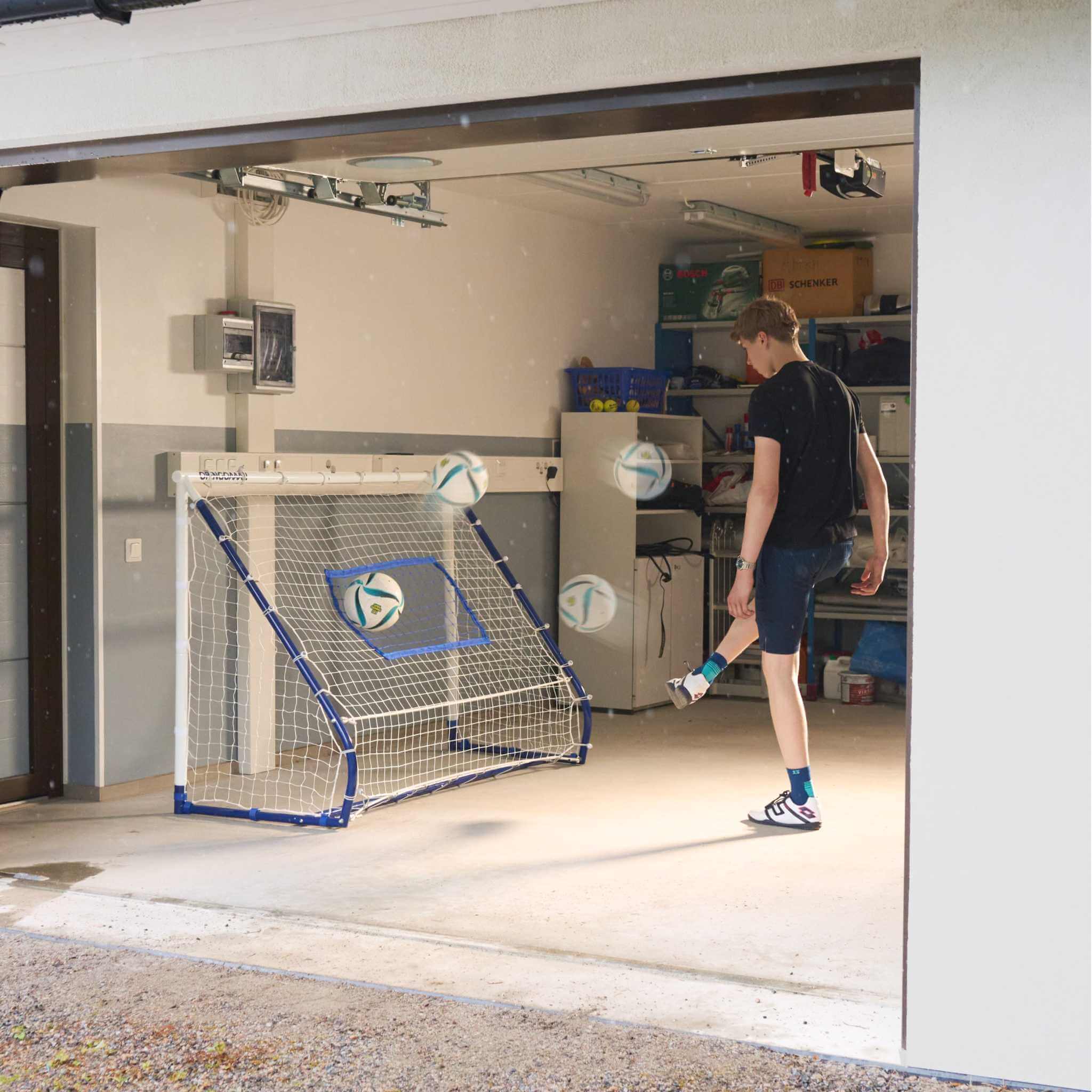
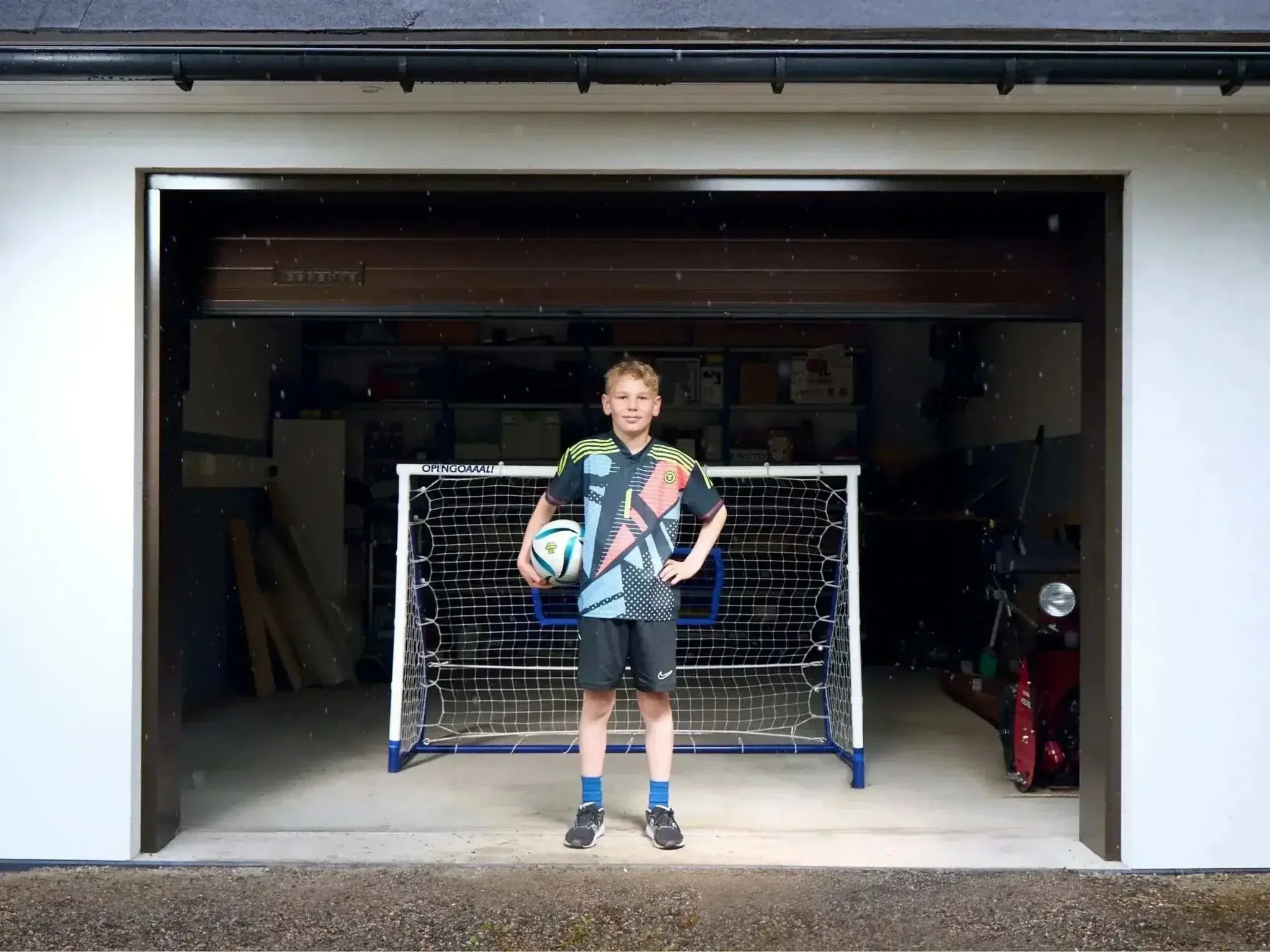
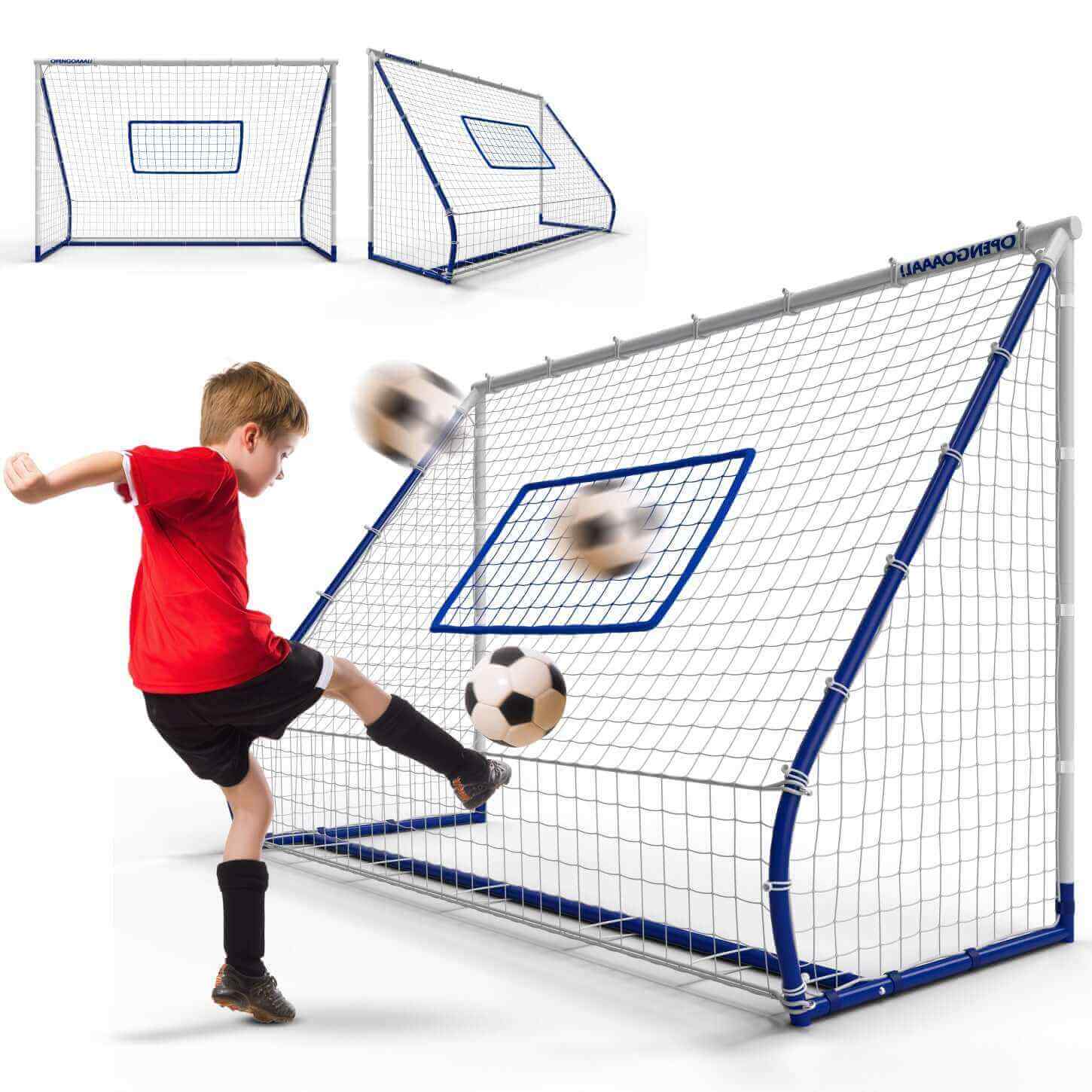
That's the idea behind the Open Goaaal® 3-in-1 Soccer Goal Trainer: a goal, a rebounder and a backstop on one frame. Shots on target hit the rebounder and come back. Most misses hit the backstop and drop into the yard instead of clearing the fence. When parents tell us why they bought one, keeping the ball out of the road or the neighbor's flower beds comes up as often as training does.
What size backstop do you need?
Pick the size by the wall of net you need behind the goal and by your lawn. These are the four sizes and their backstop measurements.
| Size | Inner goal | Backstop height | Backstop width |
|---|---|---|---|
| Junior | 8 x 4.5 ft | 8 ft | up to 16 ft |
| Standard | 9 x 5 ft | 10 ft | up to 21 ft |
| Large | 16 x 7 ft | 10 ft | up to 29 ft |
| Regulation | 24 x 8 ft | 13 ft 3 in | 37 ft |
The Standard and Large can be set up narrower than their full width, which helps in a tight yard. You'll need a grass strip about 50 ft 2 in wide and 8 ft 2 in deep for the Regulation. The Junior is the one for younger kids and smaller lawns.
What should you check before buying a backstop?
Three things: the frame, the ground and the setup. Our poles are steel and the goal carries a 1-year warranty. It's built for natural grass only. On the Junior, Standard and Large there's no digging; spikes push into the lawn and guy ropes hold the frame, while the Regulation uses spiral anchors. Plan on about an hour and a half with two people the first time. You'll want the second person. Watch the build video before you start: Standard and Large build or Junior build.
Small parts wear on any outdoor net that stays up through mowing season. Pegs, ropes and pole sections are sold separately in our spare parts range, so a snapped rope doesn't mean a new goal.
2. Should you build a fence or put up netting?
Build a barrier only along the side where balls actually leave. A full perimeter is a big job, and most yards have one problem edge: the street side, a low fence, or the neighbor with the greenhouse.
Is a ball-stop fence worth it?
It's the permanent option. Wood or vinyl looks finished and blocks low shots well. Metal or chain-link with a mesh top goes higher for less money. Check your city's fence-height rules and any HOA covenants before you buy materials, and talk to the neighbor on that side first. They'll be looking at it too.
Can you use netting instead of a fence?
Yes, and it's often the better fit. Ball-stop netting hung between posts goes up in a weekend, you can see through it, and it can come down in winter. Use UV-resistant netting and posts set firmly in the ground, and leave a little slack so the net absorbs the ball rather than bouncing it back hard. Our guide to soccer nets covers mesh and twine types.
3. How does a designated play area help?
It points the shooting away from the danger. If the goal sits in the corner with the house or a solid fence behind it, a wild shot lands somewhere harmless. Face it toward the street and you'll be knocking on doors.
How do you mark off a soccer zone?
Use flat cones, a chalk line or a strip of mown grass to show where play happens. Kids respect a line they can see. Put the zone's long side parallel to your most open boundary, so shots travel along the yard instead of across it. Our guide to building a backyard soccer field has layouts for different lot shapes.
Do smaller goals and softer balls help?
For young kids, yes. A small goal encourages short, placed shots, and a lighter foam or indoor-style ball doesn't travel far when it does miss. Older players will outgrow both quickly, though, and need a full-weight ball to practice with. At that point a backstop matters more.
4. Can natural boundaries keep soccer balls in the yard?
Over time, yes. A hedge stops rolling balls and most low shots, gives privacy and looks better than a fence. It won't stop a high ball for years.
Which hedges grow fast enough?
Tall evergreen screens are the usual choice. NC State Extension says 'Green Giant' arborvitae can grow 3 to 4 feet a year in good conditions and that young plants can be trimmed into a hedge or screen. The same page warns it gets very big, 12 to 18 feet wide at maturity, so plan the space and keep it trimmed. Your local extension office can tell you what grows well in your area.
Do raised planters work as a ball stop?
Only for ground balls. A row of planters or raised beds about knee height stops a rolling ball and keeps kids from charging through a flower bed. It does nothing for a shot in the air, so pair it with netting if the beds sit behind a goal.
5. What ground rules keep the neighbors happy?
Two rules cover most of it: keep shots low near the boundary, and play at reasonable hours.
How do you set rules for ball height and distance?
Make it a game instead of a lecture. Shots from inside a marked spot only, ground passes near the fence, and anyone who sends a ball over fetches it and knocks on the door if needed. Younger kids can play "no shots above the knee" for a whole session, and it turns into a target game.
Should you limit play to certain times?
Yes, especially if a ball hitting a fence panel makes a thud next door. Skip early mornings and late evenings, and check your town's quiet-hours rules if you're unsure. A quick word with the neighbors about when the kids usually play goes a long way.
Which option fits your yard?
| Option | Stops high shots | Time to set up | Permanent | Best for |
|---|---|---|---|---|
| 3-in-1 goal and backstop | Behind and around the goal | About 1.5 hours, two people | No, can be moved | Most yards, shooting practice |
| Fence | Up to its height | Days, plus permits | Yes | One problem boundary |
| Netting on posts | Up to its height | A weekend | Semi | Long open boundaries |
| Play zone and small goals | No | Minutes | No | Young kids |
| Hedges and planters | Only once grown | Years to grow | Yes | Privacy plus ground balls |
| House rules | Partly | One conversation | No | Every yard |
For most families the combination is a backstop behind the goal, rules about where to shoot, and netting only if one side still leaks balls. Once it's in, our backyard soccer training guide has drills that make the most of it.
FAQ
How does a 3-in-1 soccer goal keep balls in the yard?
The rebounder sends shots on target back toward the player, and the backstop net behind and around the goal catches most misses so they drop into the yard instead of flying over the fence.
How tall should a backyard ball-stop net be?
Tall enough for how hard your kids shoot. Our backstops range from 8 feet on the Junior to 10 feet on the Standard and Large and 13 ft 3 in on the Regulation. Older players lifting the ball need the taller end.
Will a 3-in-1 goal fit a small backyard?
Often, yes. The Junior's backstop is up to 16 feet wide, and the Standard can be set up narrower than its full 21 feet. All sizes need natural grass to anchor in.
What are alternatives to building a fence?
Ball-stop netting on posts, a backstop behind the goal, a fast-growing hedge, or simply moving the goal so it faces a solid boundary. Netting is the quickest of those to put up and take down.
How do I protect garden beds from stray balls?
Keep the goal facing away from them, add a low planter edge or net along the bed, and make the beds out of bounds. A backstop behind the goal catches the shots that would otherwise land in them.
Are there eco-friendly ways to stop balls leaving the yard?
A hedge is the greenest option, as long as you have the space and patience for it to grow. Repairing a net with spare parts instead of replacing the whole thing also cuts waste.
The short version
Catch the ball where it leaves, which is behind the goal, then fix any edge that still leaks with netting or a hedge, and agree a couple of rules with the kids. If you're choosing a goal for the job, compare options in our best backyard soccer goals guide, or read what a soccer rebounder is first.