
A sweeper in soccer is a central defender who plays behind the rest of the back line, with no attacker to mark, and cleans up any ball or runner that gets through. The Italian name is libero, "free one." A stopper is the marking defender in front of them.
The role is best known from the 1960s and 1970s and is rare in the pro game today, but it hasn't gone away. You'll still see it in youth soccer at 7v7 and 9v9, and its ideas live on in how modern center backs and goalkeepers play. Here's where it came from, what a good sweeper does, and how it differs from the stopper.
What is a sweeper in soccer?
The sweeper is the spare defender. In front of them, the other defenders mark specific attackers. The sweeper marks nobody. Their job is to read the play, cover the space behind the markers and pick up whatever gets past them, whether that's a through ball, a dribbler who beats a defender or a loose ball in the box.
The position also changes the offside line. Under the offside law, an attacker is offside if they're nearer the goal line than both the ball and the second-last opponent (usually the last outfield defender). A sweeper sitting five yards deeper than the rest of the line plays every attacker onside until they pass the sweeper. That's the trade-off: cover in exchange for giving away the offside trap.
Good sweepers were often the team's best passer from the back as well. Having nobody to mark gave them time on the ball when their team won it.
Where did the role of the sweeper come from?
The sweeper is tied most closely to Italian defensive soccer in the 1960s. Inter Milan coach Helenio Herrera, as UEFA's history of the 1962-67 Inter side (May 2015) describes it, moved a midfielder back to act as sweeper behind man-marking defenders, and Armando Picchi became a world-class libero in that role. The same team freed Giacinto Facchetti to attack from left back, so it wasn't purely defensive.
Germany's Franz Beckenbauer then turned the libero into an attacking weapon. FIFA's tribute after his death (January 2024) credits him with defining the sweeper or libero role, switching between defense and attack, and he captained West Germany to the 1974 World Cup title. Beckenbauer would carry the ball out of defense and start attacks himself, which is the version most coaches mean when they say "libero."
You'll rarely see a named sweeper in a pro lineup today. The closest relative is the sweeper-keeper. FIFA said in June 2021 that Manuel Neuer "embodies the sweeper-keeper like no other player," pointing to his 2014 World Cup game against Algeria, when he kept intercepting passes and ran all the way to the halfway line.
What makes a good sweeper?
Three traits matter more than speed or size. Each of them is something a coach can see in a youth player long before that player is the biggest or fastest on the team.
Strong communication
The sweeper sees the whole field in front of them, so they're the one who should be talking. That means telling the markers who to pick up, when to drop, when to squeeze and when a runner is coming from behind. A quiet sweeper is a wasted position. At youth level, the easiest test is whether the other defenders know where to be without looking at the coach.
Reading the game
A sweeper wins most balls by being in the right place early, not by tackling. They watch the passer's body shape and start moving before the through ball is played. They spot the attacker drifting off the shoulder of a marker. When it works, it looks like the ball keeps arriving at them by luck.
Discipline
The hardest part of the job is staying put. Every time a sweeper steps up to tackle or chase, the space they were covering is open. They have to let play come to them, commit only when they're sure, and resist joining the attack unless the team has cover. A sweeper who goes to ground with a slide tackle and misses leaves nobody behind them but the goalkeeper.
What is a stopper in soccer?
The stopper is the central defender in front of the sweeper whose job is to mark the opponent's main striker tightly and win the first ball. Where the sweeper reads and covers, the stopper confronts: contesting headers, getting tight on the striker's back and stopping them from turning.

You'll hear "stopper" used two ways in the U.S. In older systems it means that marking center back. Some youth coaches also use it loosely for a holding midfielder who sits in front of the defense. Either way, the stopper is the aggressive one and the sweeper is the safety net.
Stopper vs sweeper: what's the difference?
| Sweeper (libero) | Stopper | |
|---|---|---|
| Position | Deepest outfield player, behind the back line | Center of defense, in front of the sweeper |
| Marking | Marks nobody; covers space | Marks the main striker tightly |
| Main job | Read play, cover runners, clear danger | Win the first ball, stop the striker turning |
| Key traits | Communication, reading the game, discipline, passing | Strength, timing in the tackle, heading (where allowed) |
| Offside effect | Usually holds the offside line deep | Steps up with the play |
| Modern relative | Ball-playing center back, sweeper-keeper | Marking center back, holding midfielder |
Fullbacks and wing-backs complete the picture, and they're covered in soccer defense positions.
Do U.S. youth teams still use a sweeper?
Some do, especially at the smaller formats. U.S. Soccer's game formats cap U9 and U10 at 7v7 and U11 and U12 at 9v9, with 11v11 from U13. At 7v7, a back line of two or three with one player slightly deeper is a common way to give young defenders cover while they learn to mark.
There's a good argument for not leaning on it too long, though. A sweeper can hide marking mistakes in front of them, and when players move up to 11v11 most teams defend with a flat four. If you use a sweeper at 7v7 or 9v9, rotate who plays there so every defender learns both jobs. Our guide to youth soccer positions covers how to rotate players, and soccer formations for 11v11 shows where the back line ends up.
Sweeper soccer FAQ
Do teams still use sweepers?
Rarely as a named position in pro soccer. Most teams defend with a flat back four or a back three that moves together. The idea survives in center backs who drop off to cover and in goalkeepers who sweep behind a high line. At youth level, some teams still use one.
How do you beat a sweeper in soccer?
Pull them out of position. Attack wide, draw the sweeper across to cover, then switch play quickly to the other side. Two attackers running at the sweeper from different angles also force a decision. And because a deep sweeper plays attackers onside, runs in behind the markers are open until the sweeper steps up.
Is a stopper in front of the sweeper?
Yes. The stopper plays in front, marking the striker, and the sweeper sits behind as cover.
Who are the most famous sweepers in history?
Franz Beckenbauer is the name most people give, and Armando Picchi was the libero of Inter's 1960s side. In goal, Manuel Neuer is the best-known sweeper-keeper of the modern era.
Is a sweeper the same as a libero?
Mostly. Coaches often use "libero" for a sweeper who also steps into midfield to start attacks, in the style Beckenbauer made famous, and "sweeper" for the more purely defensive version.
Final thoughts on the sweeper
The sweeper is the free defender behind the line: unmarked, reading the play and cleaning up. The stopper marks the striker in front. Few pro teams use the pairing now, but it's still a sensible shape for young defenders at 7v7 and 9v9, as long as everyone gets a turn in both roles. Next, see how the other end of the field works in our guide to the center forward vs striker.
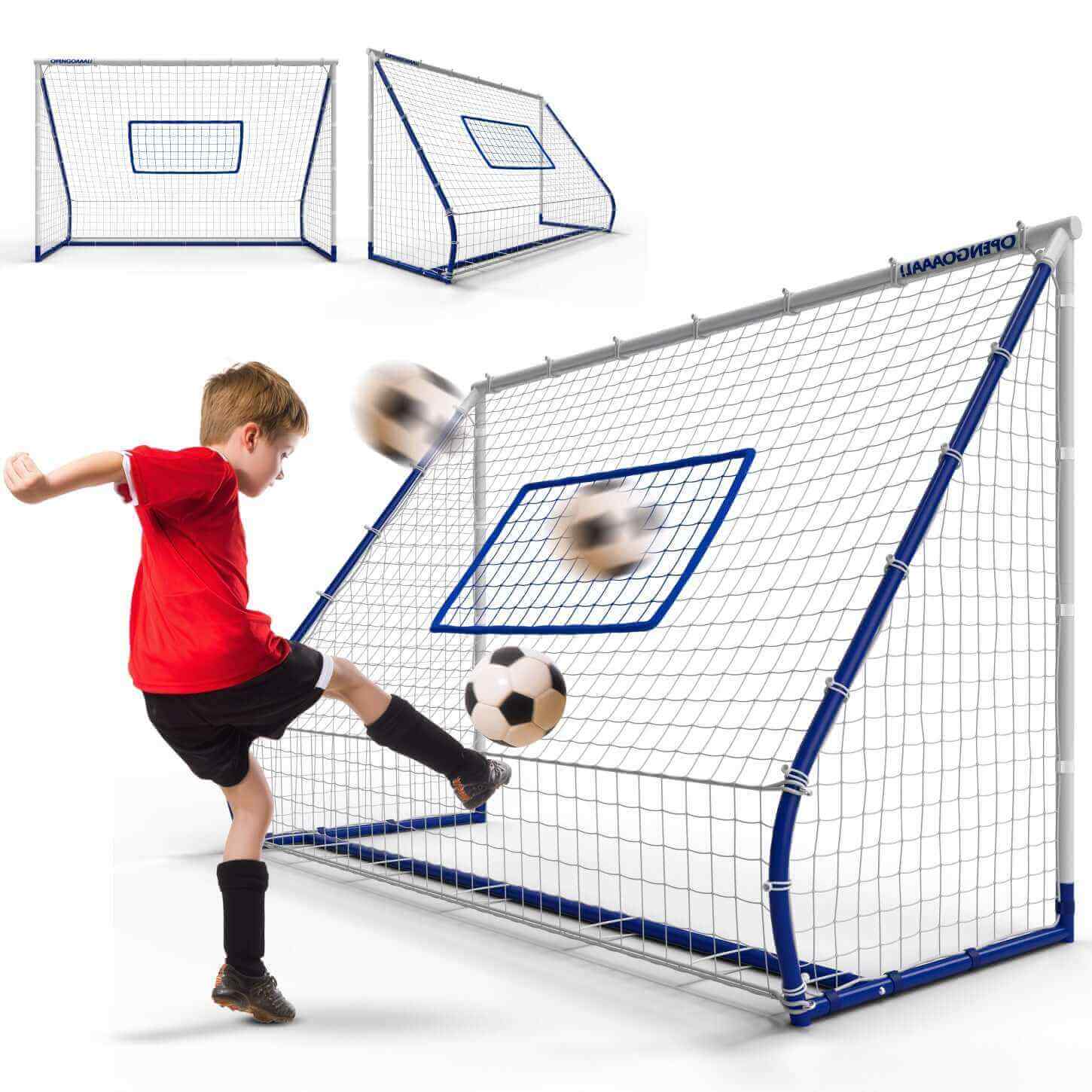
If your defender wants extra touches at home, the Open Goaaal® 3-in-1 Soccer Goal Trainer pairs a goal with a rebounder and backstop, so passes and clearances come back without a trip into the neighbor's yard.