
To create a backyard soccer field, measure your open grass, pick a layout that fits it, put the goal where a missed shot can't reach the street or a window, then mark the lines and anchor the goal. In most US yards that means a shooting lane or a small field rather than a full youth pitch.
The numbers explain why. The smallest official field in US youth soccer, the 4v4 field for the youngest age groups, is 25 to 35 yards long and 15 to 25 yards wide under the 4v4 standards published by Eastern Pennsylvania Youth Soccer, a US Youth Soccer state association. At its minimum that's 75 by 45 feet, or 3,375 square feet of open grass. The median lot for a new single-family home sold in 2025 was 8,543 square feet, house included, per NAHB's July 2026 analysis of Census data. Plan for the yard you have.
What should you consider before making a backyard soccer field?
Five things decide what you can build: how much flat grass you have, whether you need lights, how you'll keep the ball in the yard, who looks after the grass, and what your HOA or town allows. Work through them in that order, because the first one limits the rest.
Size and layout
Measure the longest straight run of flat grass and the width at its narrowest point, then match it to a layout. We built this table for typical US yards. It's a planning guide, not a rulebook.
| Open grass you have | Layout that works | Good for |
|---|---|---|
| Less than about 30 ft deep | Shooting lane: goal against the back fence, a marked spot to shoot from | Solo shooting, passing against a rebounder, first touch |
| About 30 to 60 ft deep | Half field: one goal, side lines, a small box in front of the goal | 1v1, a parent in goal, small games with a sibling |
| 75 x 45 ft or more | A 4v4 field at the minimum official size, small goal at each end | Neighborhood games for younger kids |
Check the width as well. A goal needs its full frame width plus a few feet on each side so a player can shoot from an angle without clipping the fence.
Lighting
Skip it unless the field is a long-term project. Floodlights mean wiring, and anything wired outdoors is a job for a licensed electrician and possibly a permit. If you do add lights, aim them down onto the grass and away from the neighbors' windows.
Fencing
Fence the goal end first, because that's where most balls leave. Customers tell us this is why they set up a goal at home in the first place: they were tired of fetching balls from the road and the neighbor's yard.
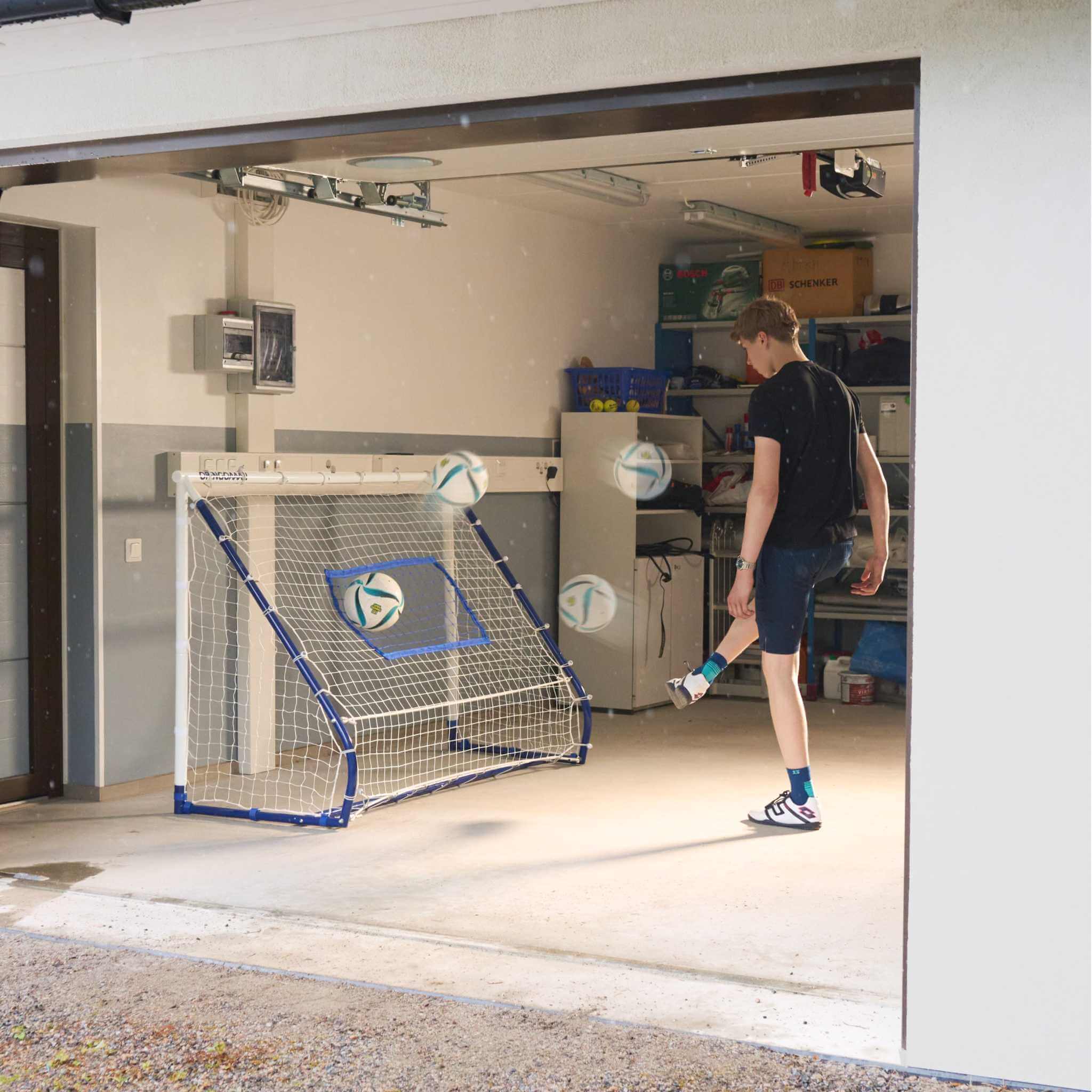
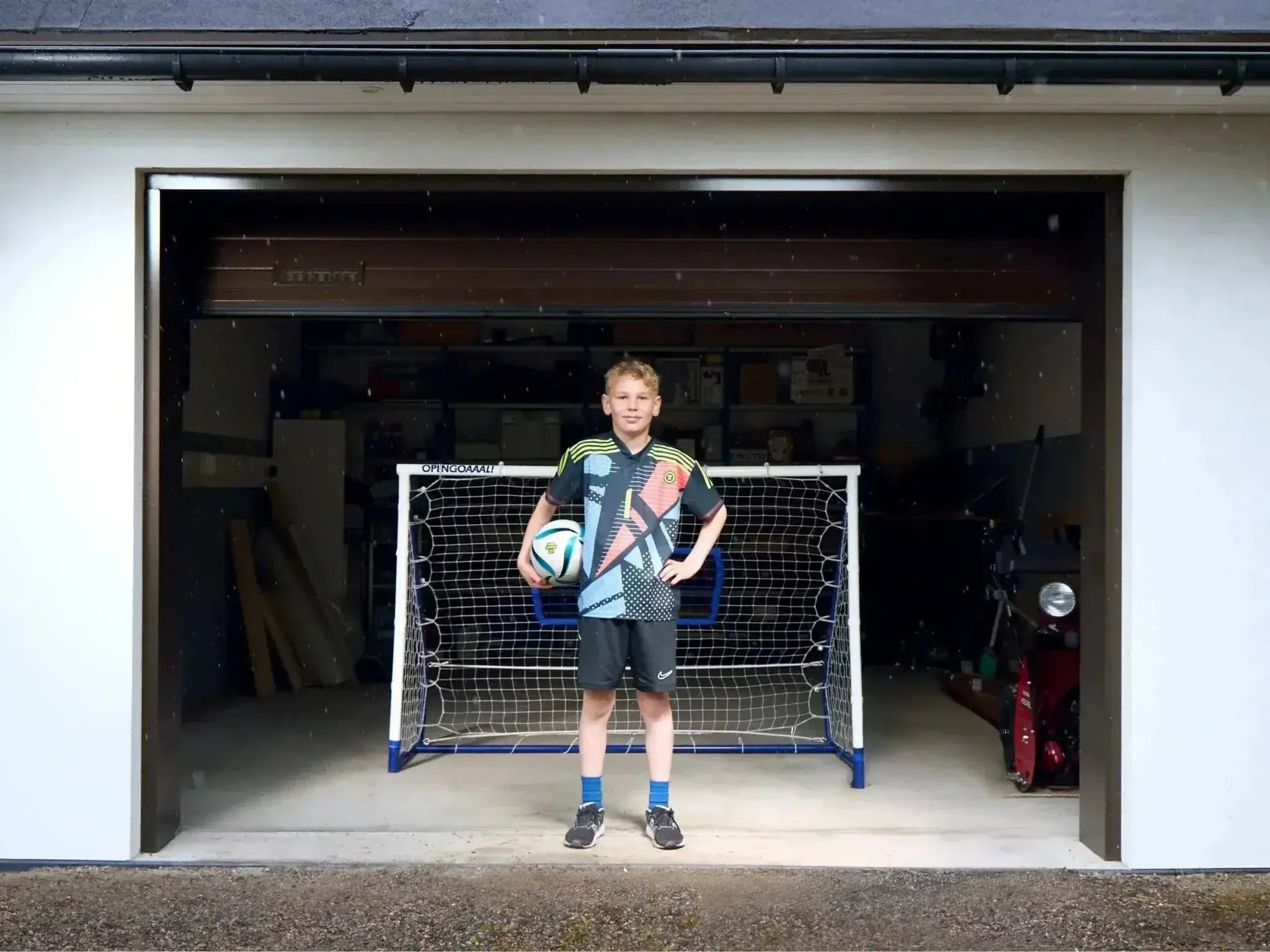
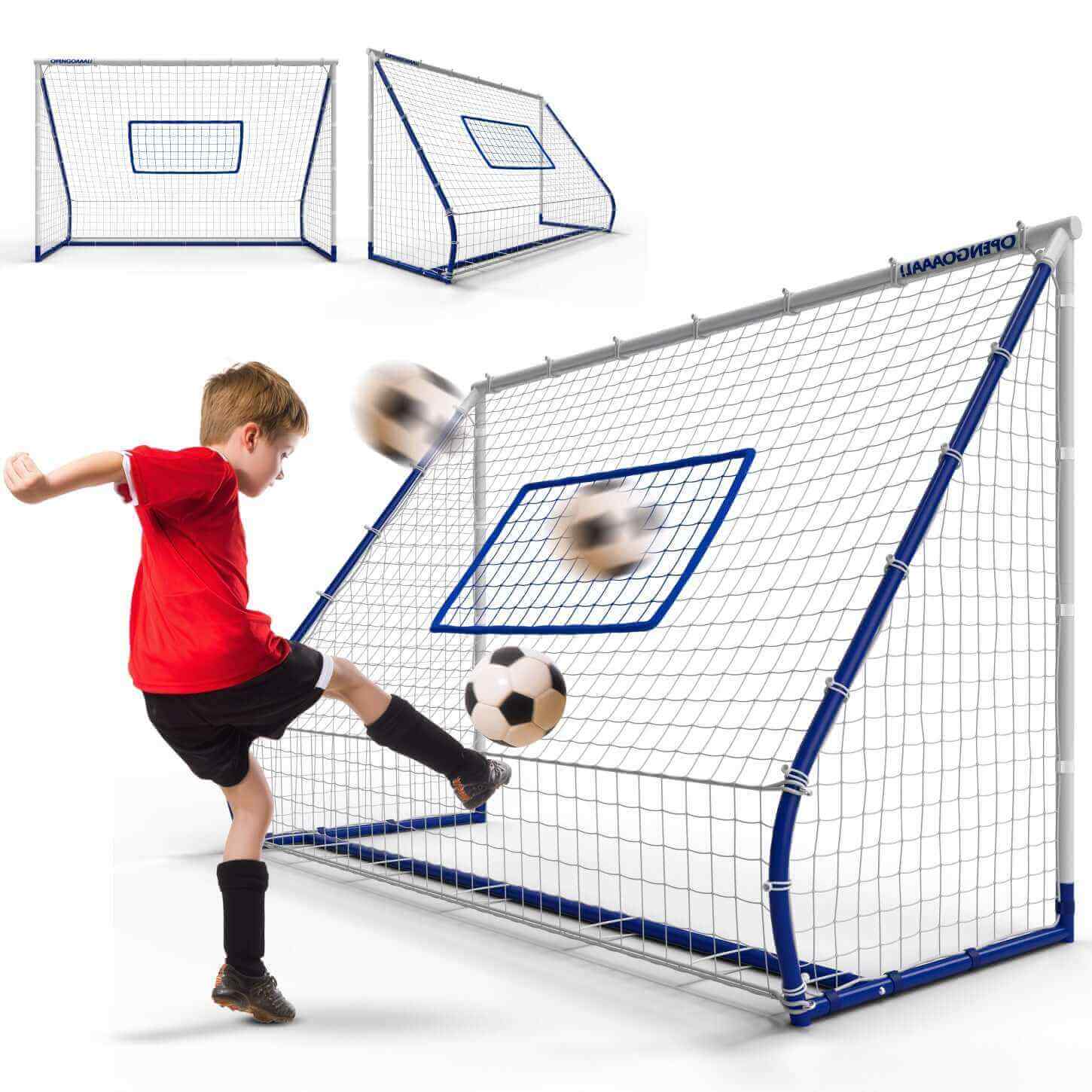
A plain goal still lets wide shots and high shots fly past. The Open Goaaal® 3-in-1 Soccer Goal Trainer puts a goal, a rebounder and a backstop in one frame, so the backstop stops most misses and the rebounder sends them back to the player. Use the backstop size to plan the space:
| Size | Inner goal (W x H) | Backstop |
|---|---|---|
| Junior | 8 x 4.5 ft | 8 ft tall, up to 16 ft wide |
| Standard | 9 x 5 ft | 10 ft tall, up to 21 ft wide |
| Large | 16 x 7 ft | 10 ft tall, up to 29 ft wide |
| Regulation | 24 x 8 ft | 13 ft 3 in tall, 37 ft wide (needs grass 50 ft 2 in wide and 8 ft 2 in deep) |
The Standard and Large can be set narrower than their full width, which helps in a yard with a tree or a shed near one corner. Tighter spaces can start with the Junior. If balls still escape along one side, try a low barrier on that side before you fence the whole lot.
Maintaining the field
Mow the playing area a little shorter than the rest of the lawn so the ball rolls true, and keep the grass under the goal trimmed so the frame sits flat. Walk the area before kids play and deal with holes, sprinkler heads, sticks and stones.
Expect the patch in front of the goal to wear thin. Owners mention it, mostly with a shrug. Shift the goal a few feet sideways every few weeks so one strip isn't taking every shot, and reseed the worn spot in spring or fall.
Permits and zoning
A goal, cones and paint usually need no one's approval. Lighting, permanent fencing, regrading and anything that changes drainage are different: check with your town or county building office and read your HOA rules before you hire anyone.
Should a home soccer field have artificial turf or natural grass?
Natural grass, if you want a 3-in-1 goal on it. Every Open Goaaal size is made for natural grass only. The Junior, Standard and Large need no digging: the pole spikes push into the lawn and guy ropes hold the frame. The Regulation uses spiral anchors.
Turf changes how any movable goal is held down. The U.S. Consumer Product Safety Commission's guidelines for movable soccer goals point to sandbags or counterweights on hard surfaces such as artificial turf, where stakes can't go in. If you're laying turf for the rest of the field, keep a strip of real grass at the goal end.
What equipment do you need?
Less than you think. A ball in the size your child plays with on game day (our soccer ball size by age chart sorts it by age group), a set of cones or flat markers, line paint or rope, and a goal that's anchored properly. Targets that hang in the top corners, like our corner target, give a solo session a point to aim at.
For the goal, get a second adult. The first setup of the 3-in-1 takes about an hour and a half with two people, and owners who enjoyed the build still say it needs two. Lay out the parts first and keep the build video open: there's one for the Standard and Large and one for the Junior.
Anchor it every time. The CPSC guidelines say movable goals should always be anchored, use them only on level ground, never let anyone climb on the net or frame, and remind owners that net pegs hold the net, not the goal. They also ask for a check of the structure and hardware before every use and for damaged or missing parts to be replaced right away. The steel poles, pegs and ropes on any outdoor goal wear over time, and our spare parts collection sells single pieces so you fix one part instead of the whole goal (every size also has a 1-year warranty).
Once it's set up, our backyard soccer training plan and five ways to use a rebounder give you something to do on it.
What does a backyard soccer field cost?
Anywhere from the price of a goal and a can of paint to a full landscaping project. We're not quoting figures because local labor and materials vary too much to be useful. Markers, paint and a goal sit at the small end. Fencing, lighting, regrading and new turf are contractor jobs, and each one is worth three local quotes before you commit.
Home soccer field FAQs
How do you line a soccer field from scratch?
Measure with a tape and set the four corners first, using pegs and string to keep the lines straight. Paint or mark the side lines and end lines, then a halfway line on a two-goal field. Add a box in front of each goal even on a small field, so your player has a clear spot to shoot from. Our soccer field layout guide explains what each line is for, and the goal sizes by age guide has the official youth field sizes if you want to copy the proportions.
Are soccer fields supposed to be flat?
Where the goal stands, yes. The CPSC says movable goals should only be used on level fields, so put the goal on the flattest part of the yard. A gentle slope elsewhere won't stop a game.
Do I need to anchor a backyard soccer goal?
Yes. The CPSC says movable goals should always be anchored. Net pegs alone don't hold the frame.
Can one person set up a 3-in-1 goal?
Plan for two. The first setup takes about 1.5 hours with two people.
This article is general information, not medical advice, diagnosis or treatment. For a persistent or worsening symptom, or any concern about your health, speak to a qualified healthcare professional.
Final thoughts
Measure first, choose the layout that fits, put the goal where misses can't do damage, then mark the lines and anchor the goal. Spend on lights, fencing or turf only after the basics are getting used. If you're still choosing a goal, our backyard goal buying guide compares the options, and for more ways to stop balls leaving the yard, read keeping soccer balls in your backyard.