If you're shopping for lacrosse training equipment for your backyard, you've probably hit a fork in the road: do you buy a dedicated lacrosse rebounder, or a full lacrosse goal with a backstop? They look similar. They serve overlapping purposes. But they're built for different things — and buying the wrong one means you'll either outgrow it fast or spend more later to get what you actually needed.
This guide breaks down exactly what each product does, who each one is for, and when a lacrosse goal with an integrated backstop — like Open Goaaal — is the smarter long-term investment for backyard training.
Quick Comparison at a Glance
| Feature | Lacrosse Rebounder | Lacrosse Goal with Backstop (Open Goaaal) |
|---|---|---|
| What it simulates | Passing wall / catch training | Real game situation: shoot, score, retrieve |
| Ball containment | Returns ball to you directly | Backstop catches all misses, returns to player |
| Shooting practice | Limited (no actual goal target) | Full-size regulation goal with marked pipes |
| Price range | $100–$250 | $449 (goal + backstop integrated) |
| Permanent setup | Usually portable/foldable | Ground-anchored, weather-resistant steel |
| Age range | Any age for stick skills | Youth through adult (one size) |
| Best for | Passing, catching, wall ball reps | Shooting accuracy, game-realistic practice |
| Parental supervision needed | Not usually | Independent practice — backstop catches everything |
What Is a Lacrosse Rebounder?
A lacrosse rebounder — sometimes called a bounce back, pitchback, or wall rebounder — is a freestanding net or hard wall panel designed to return the ball directly to the thrower. You throw at it, it comes back, you catch it. Repeat a hundred times.
Popular options include the STX Bounce Back Target, Rukket 4x7 Rebounder, Wolf Athletics Mini Wall, and the Laxworx Hard Wall Rebounder. Most are priced between $100 and $250 and are designed for portability — fold-flat designs, lightweight frames, easy storage.
What rebounders are great for:
- Wall ball reps — the foundation of lacrosse stick skills
- Catching practice and hand-eye coordination
- Solo passing drills without a partner
- Warm-up and cool-down routines
- Small spaces (can fit on a driveway or patio)
What rebounders can't do:
- Simulate shooting on a real goal
- Train accuracy at the pipes and corners
- Catch wild shots that miss the rebounder surface entirely
- Replicate game-speed shooting situations
A rebounder is a stick skills tool. It makes you a better handler and catcher. But it doesn't make you a better shooter — because there's nothing to shoot at.
What Is a Lacrosse Goal with Backstop?
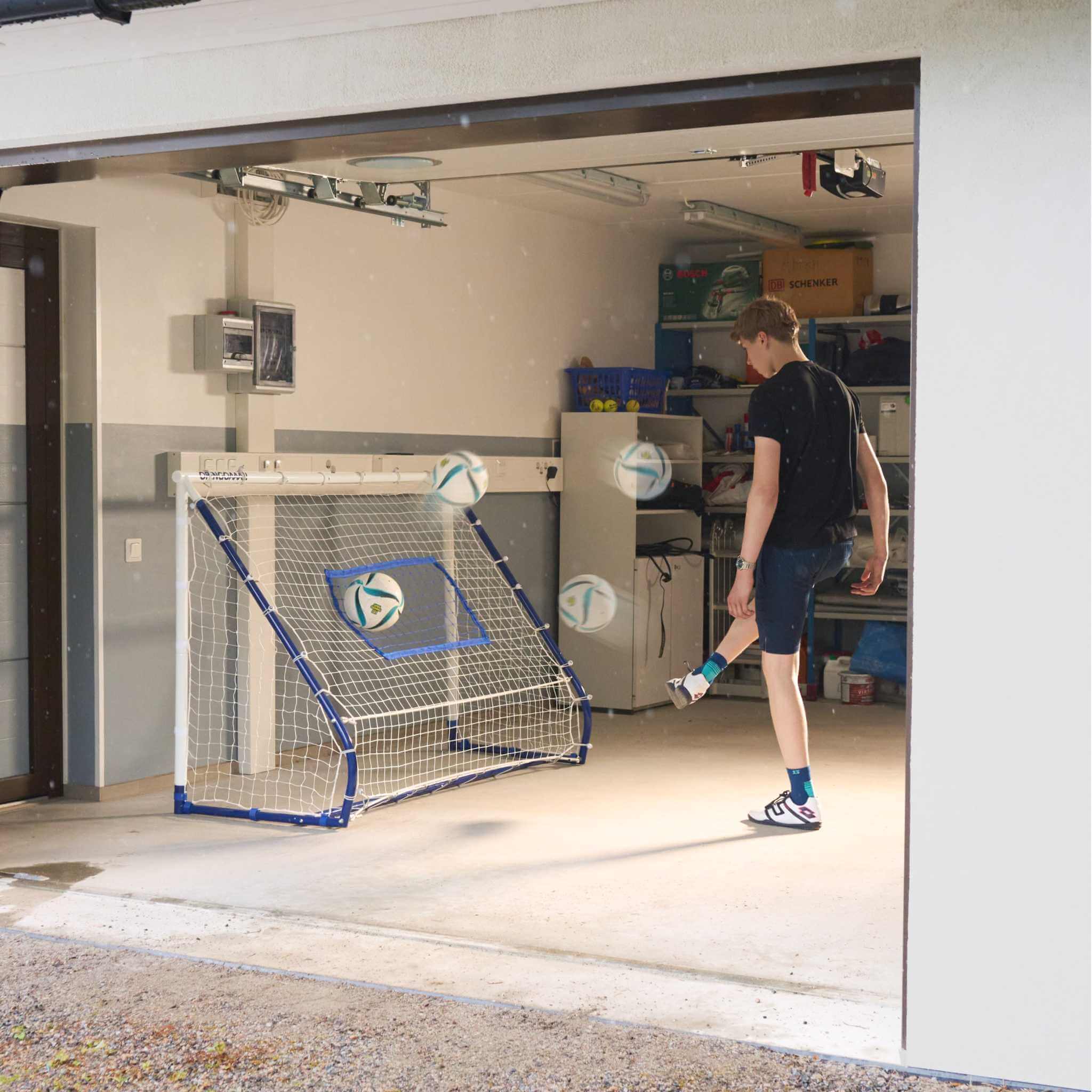
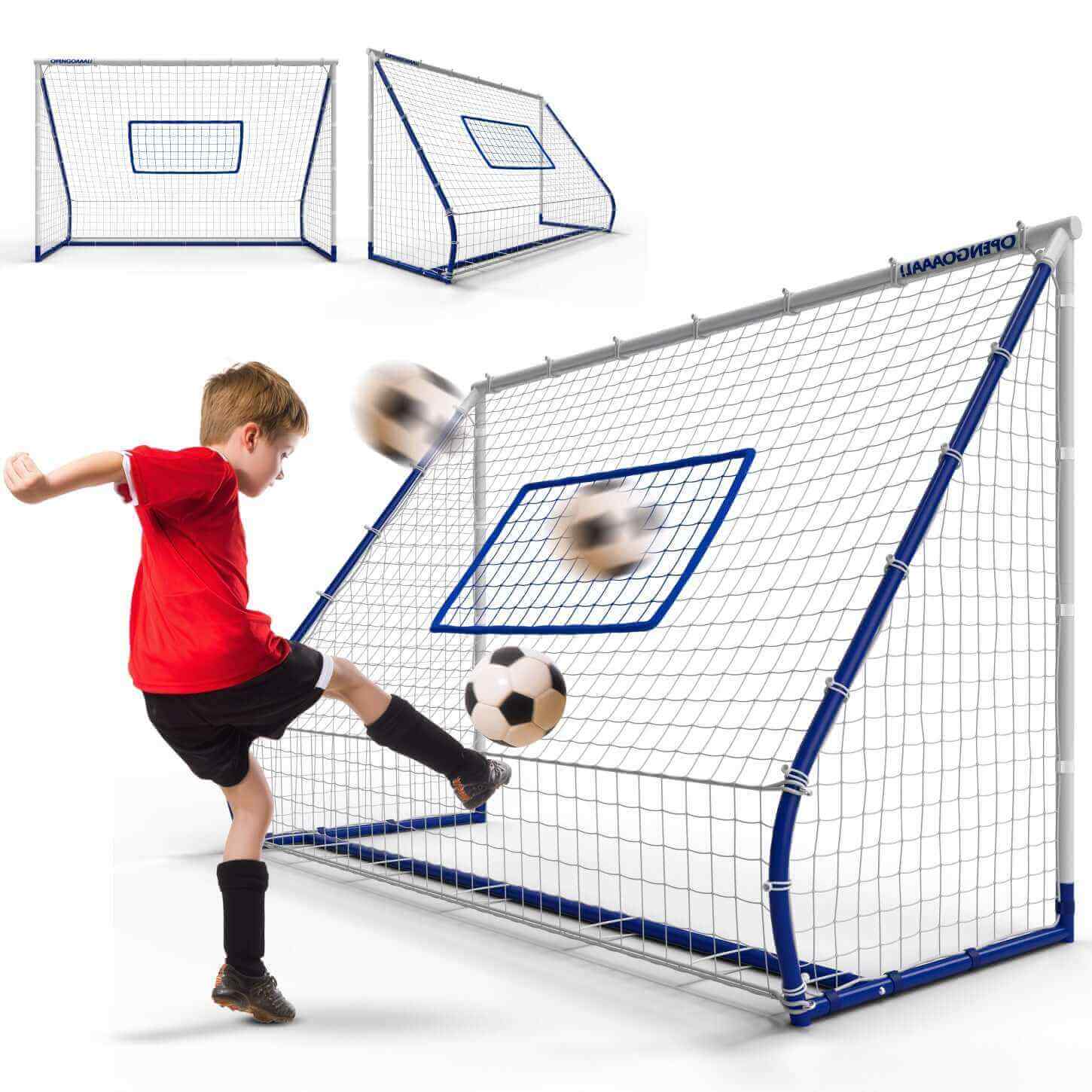
A lacrosse goal with a backstop — like the Open Goaaal Lacrosse Goal — combines a regulation-size lacrosse goal with an integrated backstop net that wraps around the goal and extends several feet on each side. Every shot that misses the goal — wide, high, off the pipe — gets caught by the backstop and returns to the player.
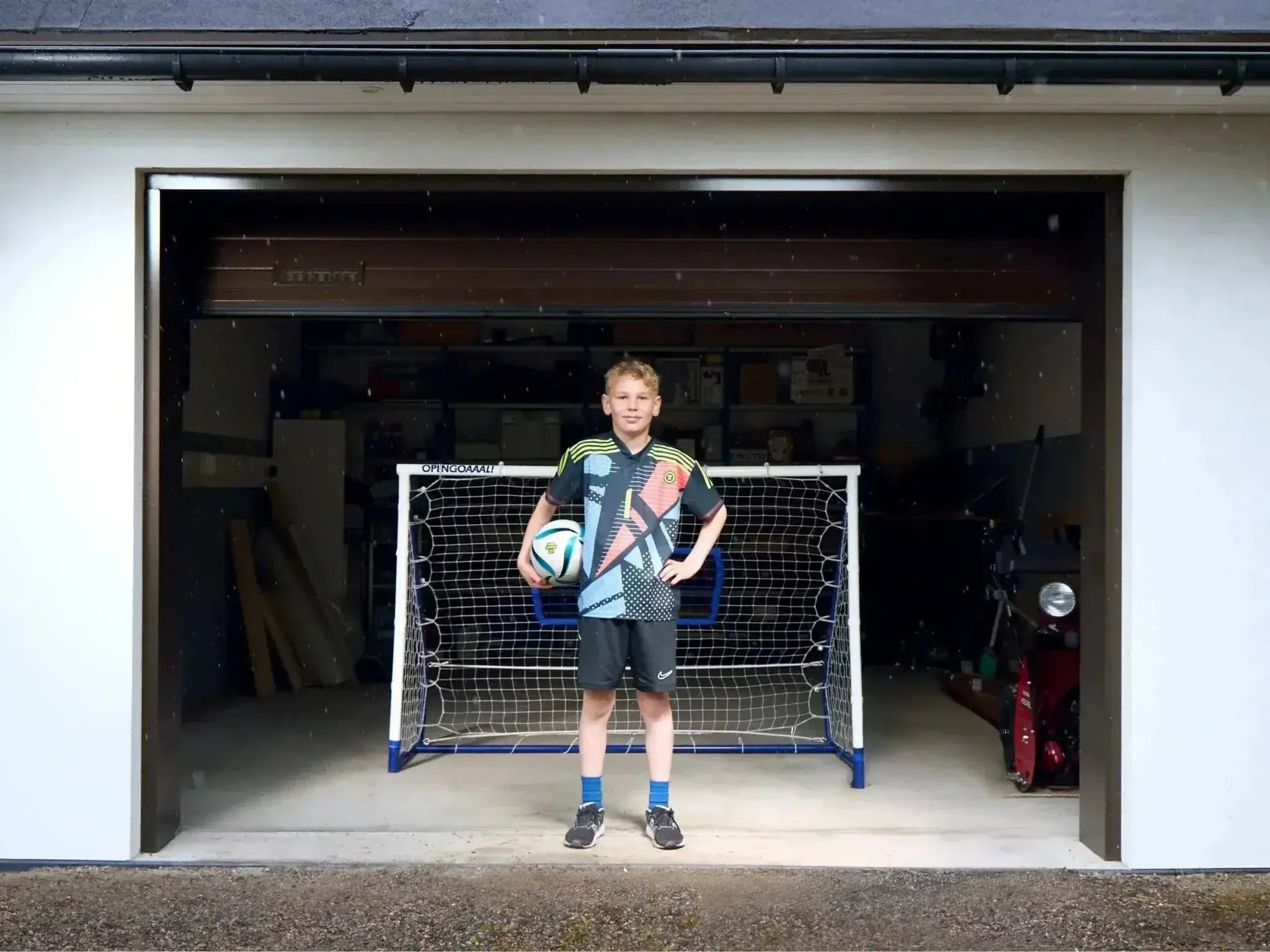
Open Goaaal's lacrosse goal uses heavy-duty steel poles, anchored into the ground for permanent outdoor installation. The backstop system is engineered to withstand 80+ mph shots. It comes in one size — regulation — with the backstop pre-integrated into the design, not bolted on as an afterthought.
What a goal with backstop is great for:
- Shooting accuracy — training corners, low shots, dodges
- Realistic game-scenario practice (shoot to score, not shoot to catch)
- Independent practice — kids can train solo for hours without anyone retrieving balls
- Property protection — no balls flying into fences, windows, or neighbors' yards
- Permanent backyard setup families use for years
Where it differs from a pure rebounder:
- The backstop isn't a high-velocity pitchback — it returns the ball, but not at rebounder speed
- Close-range wall ball reps are better served by a dedicated rebounder
- Higher price point reflects the permanent, multi-component construction
Head-to-Head: The Key Differences
Shooting vs. Stick Skills
This is the core distinction. A rebounder trains your hands — your catch, your release, your reaction time. A goal with backstop trains your shot — your aim, your power, your placement under pressure.
Elite lacrosse players need both. But for most youth players, the gap in their game is shooting accuracy, not wall ball reps. Kids can do wall ball against any solid surface. What they can't replicate without a proper goal is the experience of shooting at a target and immediately knowing where the shot went — pipe, corner, save, or score.
Open Goaaal's lacrosse goal has the regulation goal frame with marked corners for target practice. Players can spend hours working on specific shot placement — high corner left, low bounce right — in ways that a rebounder simply can't provide.
Ball Containment
Both products solve the "balls flying everywhere" problem, but differently. A rebounder returns the ball directly to you — fast, accurate, predictable. A backstop catches everything and lets it drop or roll back into the playing area. The rebounder is more efficient for drill repetition. The backstop is better for protecting property and keeping practice flowing without interruption.
If your biggest problem is balls going over the fence or breaking things, the backstop wins. If your biggest need is 200 wall ball reps in 20 minutes, the rebounder wins.
Price and Permanence
Lacrosse rebounders run $100–$250. Most are portable, foldable, and designed to be moved. Open Goaaal's lacrosse goal is $449 — steel-frame, ground-anchored, and designed to stay in your yard for years. It's a different category of product at a different price point.
The value comparison depends on how you're using it. If you want a training tool you can take to the park or put away in winter, a rebounder makes sense. If you're building a permanent backyard lacrosse setup that kids will use from youth through high school, Open Goaaal is better value long-term.
Age and Skill Level
Rebounders work for any age — a 6-year-old starting out benefits from a rebounder just as much as a high school varsity player. Open Goaaal's lacrosse goal is regulation size and made for players aged 6 and up. The youngest beginners may find the goal large at first, and it suits players who are actively working on their shot.
Who Should Buy a Lacrosse Rebounder?
- Players who want to develop stick skills — catching, passing, quick release
- Families with small outdoor spaces (driveways, patios)
- Younger players (6–9) building fundamentals before moving to shooting practice
- Anyone who wants a portable, storable training tool
- Players supplementing an existing backyard setup with passing drills
- Budget-conscious families ($100–$250 range)
Who Should Buy a Lacrosse Goal with Backstop?
- Players who are serious about improving shooting accuracy and goal placement
- Families who want a permanent, weather-resistant backyard lacrosse setup
- Parents tired of balls flying into the neighbor's yard — backstop catches everything
- Kids who want to practice independently without someone standing behind the goal retrieving balls
- Players aged 6+ working on real game-scenario training
- Multi-sport families — Open Goaaal's goal and backstop framework is the same platform used for their soccer system, so it fits naturally in a backyard sports setup
Can You Use Both?
Yes — and for serious players, combining them is the ideal setup. Use the rebounder for wall ball warm-up and stick skills. Use the Open Goaaal goal for shooting practice and accuracy work. They complement each other because they train different skills.
A typical training session with both: 10 minutes of wall ball reps on the rebounder to warm up hands and feet, then 20–30 minutes of shooting drills on the goal — dodges, set shots, bounce shots, off-pipe accuracy work.
Frequently Asked Questions
Is a lacrosse rebounder the same as a lacrosse goal?
No. A lacrosse rebounder is a pitchback net designed to return passes and shots to the thrower — it trains stick skills and catching. A lacrosse goal is a regulation-size target frame you shoot at. Open Goaaal combines a regulation lacrosse goal with an integrated backstop, so missed shots are caught and returned rather than flying into the yard.
What is the best lacrosse rebounder for backyards?
For dedicated wall ball reps, popular options include the Rukket 4x7 Lacrosse Rebounder, STX Bounce Back Target, and Wolf Athletics Mini Wall. For a full shooting setup with ball containment, the Open Goaaal Lacrosse Goal ($449) is the only product on the market that integrates a regulation goal with a backstop — making it a different category than a pure rebounder.
How much does the Open Goaaal lacrosse goal cost?
The Open Goaaal Lacrosse Goal is priced at $449. It includes the regulation-size lacrosse goal frame and integrated backstop system, heavy-duty steel construction, ground anchors, and free shipping. It's designed for permanent outdoor installation and built to withstand 80+ mph shots.
Can Open Goaaal be used as a lacrosse rebounder?
Yes, with context. The backstop on Open Goaaal returns missed shots and can be used for some close-range passing drills. However, it's not optimized for high-velocity wall ball reps the way a dedicated pitchback rebounder is. Open Goaaal's strength is shooting practice — goal accuracy, pipe work, and game-realistic training. For pure wall ball reps, a dedicated rebounder is more efficient.
What size lacrosse goal does Open Goaaal use?
Open Goaaal's lacrosse goal uses regulation dimensions — the standard 6' x 6' lacrosse goal size used in youth and adult play. The backstop extends several feet on each side to catch wide shots.
Is the Open Goaaal lacrosse goal worth it?
For families who want a permanent backyard shooting setup with ball containment, yes. It's the only product in its category — a regulation lacrosse goal with an integrated backstop — so the comparison isn't really to other lacrosse goals or rebounders. The $449 price reflects the permanent steel construction, integrated backstop system, and long-term durability. Players who use it regularly for shooting practice see real improvement in accuracy and shot placement.
Can you use Open Goaaal for both soccer and lacrosse?
Open Goaaal makes separate versions for soccer and lacrosse — the goal dimensions and netting are different for each sport. However, the same backstop engineering that makes the soccer version effective transfers directly to the lacrosse version. If your family plays both sports, check out the Open Goaaal Lacrosse collection for the lacrosse-specific setup.
What age is the Open Goaaal lacrosse goal best for?
The Open Goaaal lacrosse goal is made for players aged 6 and up, and it suits kids who are actively working on shooting. The regulation goal size is appropriate for youth competitive play. Players under 6 may find a smaller rebounder easier to start with, then move up to the Open Goaaal as their shot develops.
The Bottom Line
Lacrosse rebounders and lacrosse goals with backstops serve different training purposes. A rebounder is a stick skills tool — great for wall ball reps, catching drills, and hand-eye coordination. A goal with backstop is a shooting platform — built for accuracy training, real game scenarios, and long-term backyard use.
Most serious players benefit from both. But if you can only invest in one piece of permanent backyard equipment, and your player is 8 or older with a developing shot, the Open Goaaal Lacrosse Goal delivers what no standalone rebounder can: a real goal to aim at, a backstop to catch everything, and the ability to practice independently for hours without chasing balls.
Ready to build your backyard lacrosse setup? Shop the Open Goaaal Lacrosse collection and see the full goal and backstop system. Already play soccer too? See how Open Goaaal's soccer system works on the same platform.