
Soccer lingo is the shorthand players, coaches and commentators use for the rules, the field, positions, tactics and the moments everyone shouts about. Below are the 45 or so terms a new player hears most in the first season, grouped the way coaches and commentators use them.
Rule terms follow the current IFAB Laws of the Game, the international rulebook. We've also added a table of American words next to the ones you'll hear on international broadcasts, because a U10 player watching the Premier League on a Saturday morning hears both.
What are the basic soccer terms every player should know?
Start with the six that come up in every game, because the referee's whistle and the coach's shouting both revolve around them.
- Goal. Scored when the whole ball crosses the goal line between the posts and under the crossbar. Half over the line doesn't count (IFAB Law 10).
- Assist. The last pass or touch that sets up a goal. It's a stat, not a rule, so leagues and stat sites sometimes count them a little differently.
- Offside. A player is in an offside position when they're in the opponents' half and closer to the opponents' goal line than both the ball and the second-last defender. Being there isn't an offense on its own; it only gets called if the player gets involved in play, and there's no offside straight from a goal kick, throw-in or corner (IFAB Law 11).
- Corner kick. Given to the attacking team when the ball goes over the goal line and a defender touched it last. You can score straight from one (IFAB Law 17).
- Free kick. The restart after a foul. A direct free kick can go straight in. An indirect one has to touch another player first, and the referee holds an arm up to show it's indirect (IFAB Law 13).
- Throw-in. The restart when the ball crosses the sideline. Whoever throws it faces the field, keeps part of each foot on or behind the line, and throws with both hands from behind and over the head. You can't score directly from one (IFAB Law 15).
For the rest of the rulebook in plain English, see our quick overview of the rules of soccer.
What are the parts of a soccer field called?
The lines and boxes have official names, and coaches use them to tell you where to stand. Dimensions are the full-size ones from IFAB Law 1; youth fields are smaller.
- Touchline. One of the two long boundary lines. Most American coaches just say sideline.
- Goal line. One of the two short boundary lines, the ones the goals sit on. The part outside the goal is often called the end line.
- Penalty area (penalty box, the 18). The big box, 18 yards out from each post and 18 yards deep. A defender's direct free kick foul inside it means a penalty kick.
- Goal area (six-yard box). The small box, 6 yards from each post and 6 yards deep. Goal kicks are taken from anywhere inside it (IFAB Law 16).
- Penalty mark (the spot). 12 yards from the middle of the goal line.
- Midfield. The middle third of the field, where most of the passing happens.
- Center circle. A 10-yard circle around the center mark, where kickoffs happen.
- Corner flag. The flagpost in each corner, at least 5 feet tall, next to the corner arc where corner kicks are taken.
Our soccer field layout guide shows the youth field sizes, and what the penalty box is for goes deeper on the big box.
What do the soccer position names mean?
Position names describe where a player starts and what they're asked to do. Different coaches use slightly different labels, but these are the common ones.
- Goalkeeper (keeper, goalie). The one player allowed to handle the ball, and only inside their own penalty area.
- Defender (back). Plays closest to their own goal.
- Fullback. A defender on the right or left side. Wingback is a fullback who spends a lot of time attacking.
- Center back. One of the defenders in the middle.
- Sweeper. A defender who plays behind the other defenders and covers whatever gets through. See our guide to the sweeper position.
- Midfielder. Links defense and attack. A holding (or defensive) midfielder sits in front of the back line and breaks up attacks. An attacking midfielder plays just behind the forwards and sets them up.
- Forward. Plays nearest the other team's goal. A striker is a forward whose main job is scoring; a winger is a forward or midfielder who works along the sideline.
- Playmaker. Not really a position. It's the player, usually a midfielder, the team looks for to create chances.
For what each spot looks like in 4v4, 7v7 and 9v9, read our guide to youth soccer positions.
What do coaches mean by tactical terms?
Tactics words describe how a whole team behaves with and without the ball. You'll hear these from high school coaches and on every pro broadcast.
- High press. Chasing the other team as soon as they get the ball, close to their own goal, to win it back fast.
- Low block. The opposite: the team drops deep in its own half and protects the space in front of goal.
- Counterattack (counter). Winning the ball and going forward fast before the other team can get back.
- Build-up play. Moving the ball out from the back with short passes instead of kicking it long.
- Zonal marking. Each defender covers an area.
- Man marking (man-to-man). Each defender is responsible for one opponent.
- False 9. A center forward who drops back toward midfield, pulling defenders with them and leaving space for teammates to run into.
- Sweeper keeper. A goalkeeper who plays far off the line, clears balls behind the defense and joins the passing.
What soccer slang will you hear from players?
Slang is the informal stuff. You won't find it in the rulebook, but you'll hear it on every field and in every highlights video.
- Nutmeg (meg). Playing the ball between an opponent's legs. Our nutmeg guide covers where the word comes from.
- Banger. A goal hit really hard, usually from distance.
- Hat trick. Three goals by one player in one game. Two is a brace; see what a hat trick is.
- Parking the bus. Defending with almost everyone behind the ball, like a bus parked across the goal.
- Top bins (upper 90). The top corners of the goal. "Upper 90" is the American version, after the 90-degree angle where post meets bar.
- 50/50. A loose ball both players have an even shot at winning.
- Golazo. Spanish for a great goal, borrowed by commentators everywhere.
- Ping. A long, hard, accurate pass.
- Sitter. A chance so easy it should be a goal. Usually said after someone misses one.
Which soccer terms should beginners learn first?
On top of the basics, new players hear these five in their first few practices.
- Cross. A pass from out wide into the area in front of goal.
- Marking. Staying close to an opponent so they can't receive the ball or shoot easily.
- Shot on target. A shot that would go in if nobody stopped it, so it's either a goal or a save.
- Header. Playing the ball with your head.
- Breakaway. An attacker running at goal with no defender between them and the keeper.
American soccer also has its own words, and they sit alongside the British and international ones. Here's a quick translation table.
| You'll hear in the US | You'll hear on international broadcasts | What it means |
|---|---|---|
| Field | Pitch | The playing surface |
| Cleats | Boots | Studded shoes; see how soccer cleats differ |
| Uniform, jersey | Kit, shirt | What the team wears |
| Zero, shutout | Nil, clean sheet | No goals; a game where the keeper conceded none |
| PK | Penalty | Kick from the penalty mark, 12 yards out |
| Game, schedule | Match, fixtures | The games on the calendar |
| Sideline | Touchline | The long boundary line |
| Rec soccer | Grassroots | Local, low-cost play, usually with equal playing time |
| Travel or club soccer | Academy, select | Tryout-based teams that play other clubs, often farther from home |
| MLS, NWSL | League, top flight | The top US men's and women's pro leagues |
Where can you practice the terms you just learned?
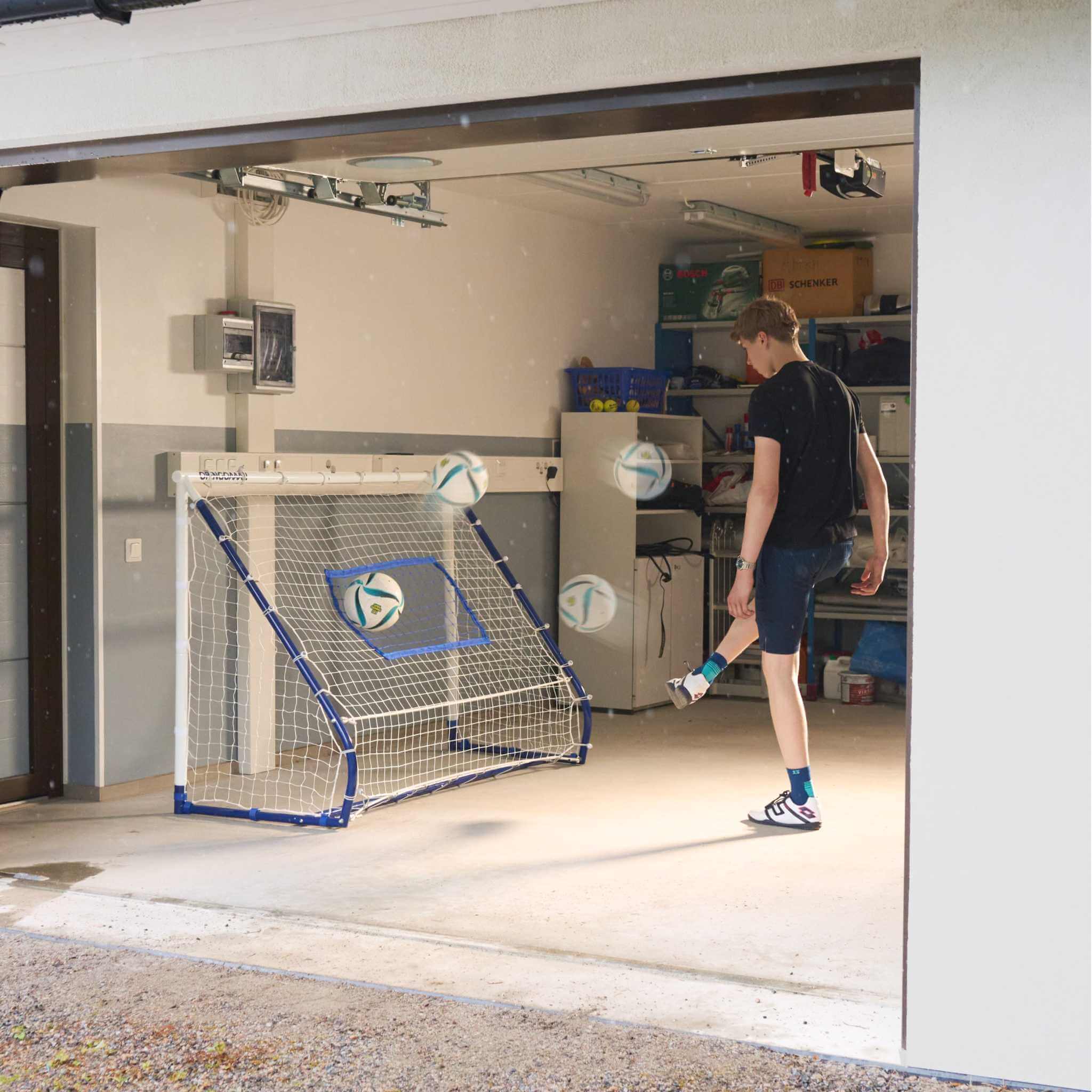
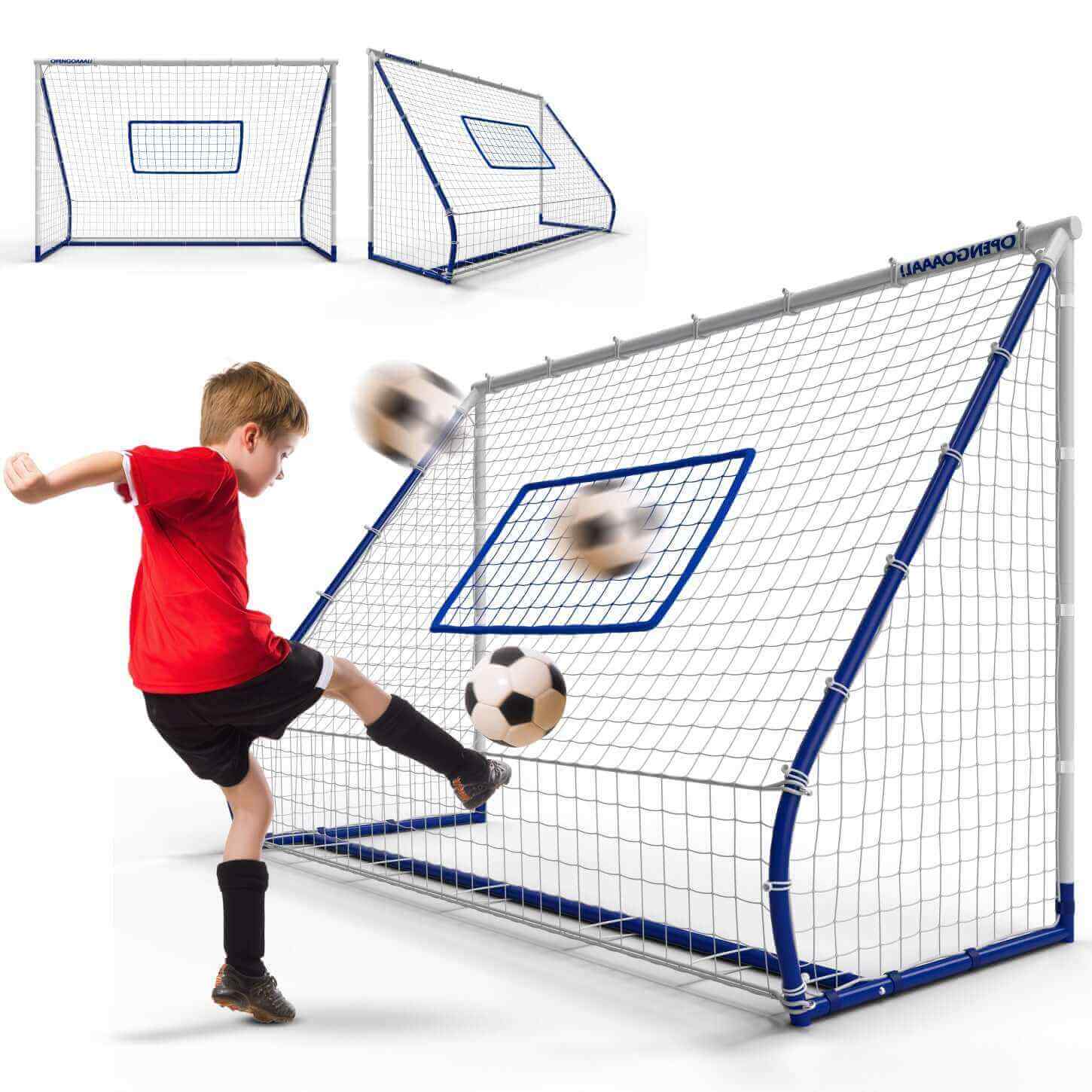
Words stick when you use them. Next time you're out in the backyard, call your shots: near post, far post, upper 90, weak foot. The Open Goaaal® 3-in-1 Soccer Goal Trainer is a goal, rebounder and backstop in one, so a ball that misses comes back to you instead of rolling into the street, and you can keep calling shots without the walk to fetch it.
Which soccer terms matter most?
If you only learn ten, make them goal, offside, free kick, throw-in, corner kick, penalty box, touchline, marking, cross and PK. Those cover nearly every whistle a young player will hear in a game. The slang can wait, since teammates will teach you that part faster than any article. After that, the next thing to learn is how restarts are run, which we cover in what a set piece is.
FAQ
What is the most common soccer lingo used by players?
On a youth field you'll hear "man on" (a defender is right behind you), "time" (you have space), "switch it" (play the ball to the other side) and "line" or "sideline" all game, alongside rule words like offside and corner.
What is the difference between soccer lingo and soccer slang?
Lingo is the working vocabulary of the game, including rule terms like offside and position names like fullback. Slang is the informal part, such as nutmeg, banger or sitter, that you won't find in the Laws of the Game.
What soccer field terms should every beginner know?
Touchline (or sideline), goal line, penalty area, goal area, penalty mark, center circle and corner flag. Between them they cover most of the restarts a referee will give.
Why is understanding soccer lingo important?
Games move fast, and teammates talk in short bursts. A player who knows what "man on" or "drop" means can react to the call instead of looking at the bench for an explanation.
What is a nutmeg in soccer?
A nutmeg is when you play the ball through an opponent's legs and collect it on the other side. Players also shorten it to "meg."